#RPC framework
287 related articles
·3 min
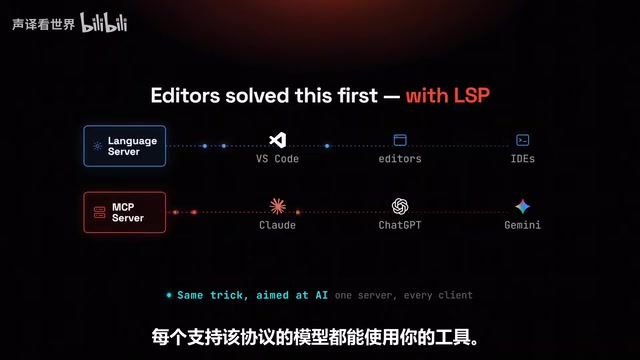
Build an MCP Server in 10 Minutes: Let AI Call Your Code Directly
MCP (Model Context Protocol) is the open standard for AI tool integration. Build your own MCP server with ~20 lines of Python. Learn tools, resources, prompts, and both local and remote deployment.
Read more →
Designing APIs for AI Agents: A Paradi…
·3 min
Designing APIs for AI Agents: A Paradigm Shift from Human Interfaces to Agent-Friendly Design
When AI Agents become the primary API callers, traditional interface design assumptions break down. This article explores agent-friendly API design principles and how MCP is driving this paradigm shift.
Read more →

·3 min
Cherry Studio + MCP: A Practical Guide to Building AI Agents with Local Deployment
Learn how to build an automated AI agent using Cherry Studio, MCP protocol, and locally deployed models — covering DeepSeek integration, web scraping, and private knowledge base setup.
Read more →

·2 min
The Four Core Concepts of AI Agents Explained: Function Calling, Tool, MCP, and Skill
A clear breakdown of the four core AI Agent concepts: Function Calling, Tool, MCP, and Skill — understand the full tech stack behind intelligent agent development.
Read more →

·3 min
Adversarial Testing of AI Agents in the Terminal via MCP
Learn how to use MCP (Model Context Protocol) to run adversarial tests on AI agents in the terminal, covering prompt injection, privilege escalation, and dangerous command execution scenarios.
Read more →

·3 min
Dify + MCP in Practice: Building a Multi-Scene Life Assistant Agent with ModelScope MCP Marketplace
Build a multi-scene life assistant Agent using ModelScope MCP Marketplace and Dify. Integrates Amap, LeetCode, recipe, and news MCP Servers with Qwen3 via Chatflow.
Read more →

·4 min
From Tokens to Agents: A Complete Guide to Core AI Concepts
Master 8 core AI concepts — LLM, Token, Context Window, Prompt, Tool, Agent, MCP, and Agent Skill — and understand the complete logic chain behind AI's evolution.
Read more →

·2 min
MCP vs. Skills: A Clear Breakdown of AI Agent Architecture Layers
MCP and Skills aren't alternatives — they occupy different layers of AI Agent architecture. This article breaks down Function Call, MCP, and Skills to clarify each layer's role.
Read more →

·5 min
The Definitive Guide to Claude Code: Core Methodology and Best Practices for Agentic Programming
A deep dive into Claude Code, the definitive course from DeepLearning.AI and Anthropic: from agentic principles and context optimization to three hands-on cases—RAG chatbot, Figma-to-frontend, and data analysis. Master AI-assisted coding methodology.
Read more →

·4 min
MCP Protocol Deep Dive: Its Relationship with Function Calling and Agents, Plus a Practical Guide
Deep dive into MCP (Model Context Protocol): clarifying the three-layer relationship between MCP, Function Calling, and Agents, covering protocol roles, call flows, transport choices, and production security for AI developers.
Read more →

·4 min
A Deep Dive into ASP.NET Core: The Complete Guide to Microsoft's Cross-Platform Web Framework
A comprehensive analysis of ASP.NET Core's architecture and technical strengths: cross-platform deployment, high-performance Kestrel server, modular middleware, built-in DI, and modern web capabilities like Blazor, gRPC, and SignalR.
Read more →
·3 min
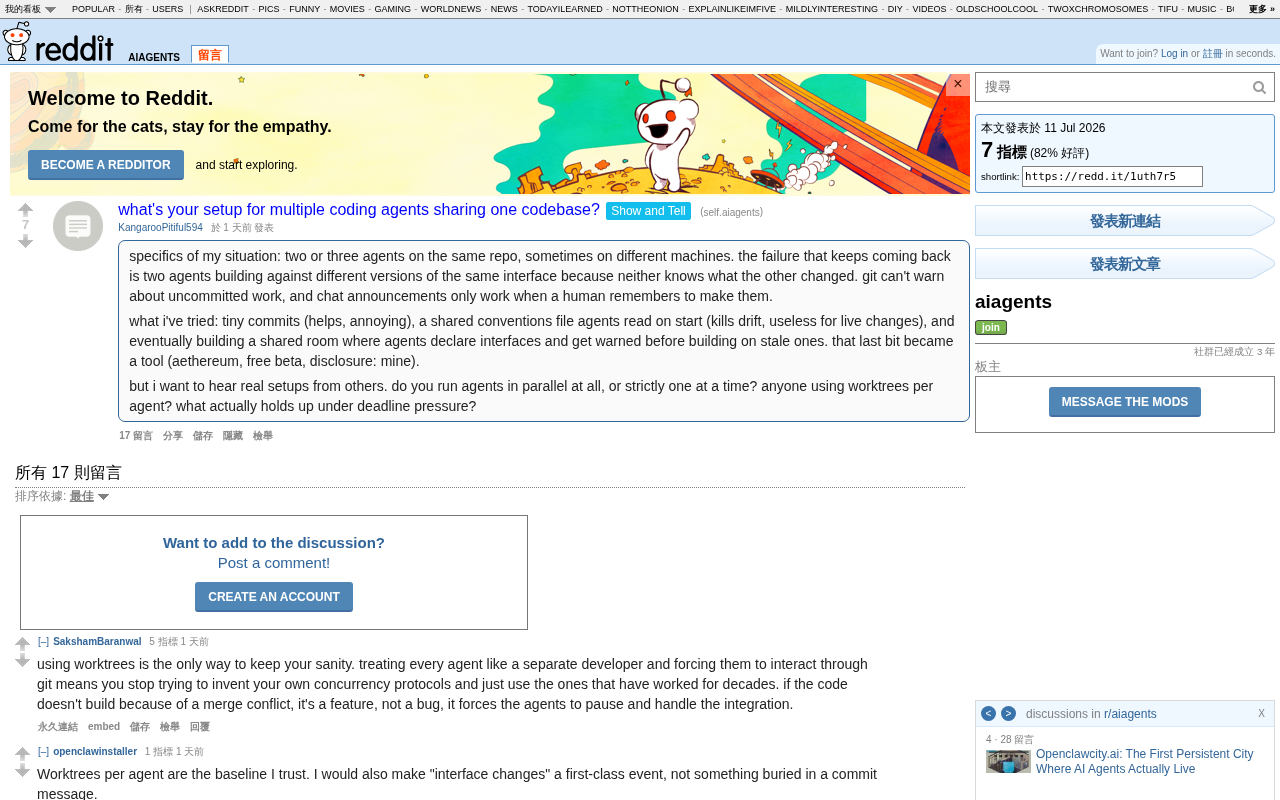
Multiple AI Agents Sharing a Codebase: Parallel Collaboration Conflicts and Practical Solutions
When multiple AI coding agents work on the same codebase simultaneously, how do you avoid interface conflicts and coordination chaos? A deep dive into Git worktree isolation, contract-first design, and intent declaration.
Read more →

·5 min
Hands-On with PageAgent: Add AI Agent Capabilities to Web Pages with a Single Line of Code
In-depth hands-on review of Alibaba's open-source web automation tool PageAgent: three integration methods, script execution analysis, and a full breakdown of current limitations. Add AI Agent capabilities to web pages with one line of JS.
Read more →
·6 min
Hands-On With Hermes Agent's Eight Major Updates: A Complete Guide to AI Automation and Self-Evolution
The Hermes Agent gets a major upgrade with eight new features: native iMessage, parallel background sub-agents, Unreal Engine MCP support, a self-evolving Skill Hub, and more. A hands-on breakdown of the core changes and their real impact on personal AI automation workflows.
Read more →

·4 min
BrowserWing: A Browser Action Recorder That Offers a Pragmatic Approach to AI Web Automation
BrowserWing is an open-source browser action recorder (1300+ GitHub stars) with 78 built-in scripts for GitHub, Bilibili, Zhihu, and more. Record once, run repeatedly, and let AI Agents reliably execute fixed web workflows.
Read more →

·3 min
GPT-5.6 Sol in Action: A 3D Interactive London Website Generated in 5 Minutes
A Reddit user tested GPT-5.6 Sol with a single prompt. In the Row-Bot framework, the model built a 3D interactive London website in 5 minutes—complete with browser verification and vision analysis. A deep dive into AI coding Agents.
Read more →

·3 min
Deep Dive into gRPC: Building High-Performance Microservice Communication with HTTP/2 + Protobuf
An in-depth analysis of gRPC's core architecture: HTTP/2 multiplexing, Protocol Buffers serialization, and unified multi-language implementation, covering microservice communication and cloud-native integration.
Read more →

·4 min
TigrimOSR: An Open-Source Agent Framework in Rust with Configurable Agent Loops
TigrimOSR is an open-source multi-agent system written in Rust, supporting full agent loop definition via YAML config files with only 250MB memory usage. A deep dive into Loop Engineering, Rust advantages, and self-hosted Agentic AI.
Read more →

·5 min
Browser Use: A Deep Dive into the Event-Driven Browser AI Agent Framework
Browser Use is an open-source AI Agent framework that lets LLMs autonomously drive browser operations via natural language. This article breaks down its four-layer architecture, core Agent loop, CDP perception layer, dynamic Tools dispatch, and its Skills, Sandbox, and MCP extension capabilities.
Read more →

·2 min
ComfyUI MCP: AI Autonomously Builds Workflows, Generate Images Locally with a Single Sentence
The open-source ComfyUI MCP project uses Anthropic's MCP protocol to let LLMs like Claude directly control ComfyUI node graphs—describe needs in natural language, AI auto-builds the workflow, and renders locally on your GPU. Zero-click AI image generation.
Read more →