#Recursive Model Improvement
107 related articles

·3 min
The Truth About Codex Ultra Mode: It's Not a Reasoning Level
Deep dive into OpenAI Codex's Ultra mode: it's not a reasoning level but a system prompt switcher. Learn why Ultra burns tokens, the V1/V2 agent system issues, and how Claude Code Workflows gets it right.
Read more →
Training an RL Agent That Can Do RL: A…
·2 min
Training an RL Agent That Can Do RL: A Deep Dive into Meta-Reinforcement Learning Self-Improvement
An independent developer ran a meta-RL experiment at near-zero cost — training an agent to autonomously perform RL training. Explore the technical depth, cost model, and industry implications.
Read more →
Deep Dives
Deep Dive into AI Agent Skill Design: …
·3 min
Deep Dive into AI Agent Skill Design: Engineering Practices from Anthropic and Perplexity
A deep dive into Skill design philosophy from Anthropic's Claude Code team and Perplexity's Agent team, covering the Tax Test, Gotchas Flywheel, progressive disclosure, and Eval-First practices for building high-quality AI Agent skill systems.
Read more →

·4 min
Hands-On with GPT-5.6: A Single Prompt Builds a Real-Time Voice Anime App
Hands-on with GPT-5.6 Sol: auto-generate real-time voice anime characters from one prompt, write physics engines from scratch, and build unfamiliar toolchains autonomously. In-depth review of coding, agentic tasks, benchmarks, and its hallucination weakness.
Read more →

·3 min
The State of Gemini Nano Multilingual Support: When Will Hebrew and Arabic Be Available?
Gemini Nano's on-device AI model currently has limited language support, with no official timeline for RTL languages like Hebrew and Arabic. This article explores the technical bottlenecks, commercial priorities, and future outlook.
Read more →
Rereading Good 1965: The Intellectual …
·3 min
Rereading Good 1965: The Intellectual Origins of Ultraintelligent Machines and the Intelligence Explosion
I.J. Good's 1965 paper 'Speculations Concerning the First Ultraintelligent Machine' first introduced the 'intelligence explosion' and recursive self-improvement, profoundly shaping today's AGI safety debate.
Read more →

·5 min
Multi-Model Tiered Deployment: Is an AI Gateway Worth Adopting?
More teams are adopting multi-model tiered scheduling. AI gateways solve cross-vendor API management, automatic fallback, and cost tracking — but add a new abstraction layer. Learn when a gateway is worth it.
Read more →

·4 min
Four Major LangChain Updates: OpenWiki, Voice Agents, and Sub-Agent Orchestration Explained
LangChain releases four major updates: OpenWiki for auto-generating codebase docs, voice agent tutorials, Harbor evaluation integration, and deepagents programmable sub-agents.
Read more →

·6 min
Zuckerberg Admits AI Progress Falls Short of Expectations: The Industry Truth Behind the Layoffs
Meta laid off 8,000 to bet on AI, yet Zuckerberg admits AI agents fell short of expectations. A look at the collective 'AI reflection' among OpenAI, Microsoft, and Google, plus research on AI's selective impact on jobs.
Read more →

·6 min
GPT Live Full-Duplex, Grok 4.5 Coding, Seedream 5.0 Images: AI Accelerates Across Three Tracks Simultaneously
OpenAI's GPT Live full-duplex voice model, Grok 4.5 coding model with Cursor, and ByteDance's Seedream 5.0 Pro image generation launched together. A deep dive into three AI releases.
Read more →

·6 min
GPT-5.6 Now Widely Available: The Era of Three-Tier Models and Multi-Agent Orchestration Arrives
OpenAI releases GPT-5.6 (SOUL/TERRA/LUNA), with Ultra mode running four agents in parallel; Meta launches Muse Spark 1.1 with million-token context; ChatGPT desktop unifies Chat, Work, and Codex.
Read more →

·3 min
GPT-5.6 Released: Sol, Terra, and Luna Reshape AI Programming and Office Automation
OpenAI launches GPT-5.6 with three models — Sol, Terra, and Luna — plus ChatGPT Work, a new desktop app, and Hosted Sites. Codex now autonomously trains models.
Read more →

·7 min
Getting Started with AI Agents: A Deep Dive into the Perception-Decision-Action Loop
A clear, in-depth guide to how AI Agents work: the paradigm shift from traditional programs, the perception-decision-action loop, and the four pillars—LLMs, tool calling, memory, and RAG.
Read more →

·4 min
Reinforcement Learning for AI Agents: A Deep Dive into RLHF and Agentic RL
A deep dive into RL for AI agents: from RLHF to Agentic RL, covering PPO vs. GRPO, sparse rewards, tool-calling optimization, and verifiable rewards.
Read more →
·5 min
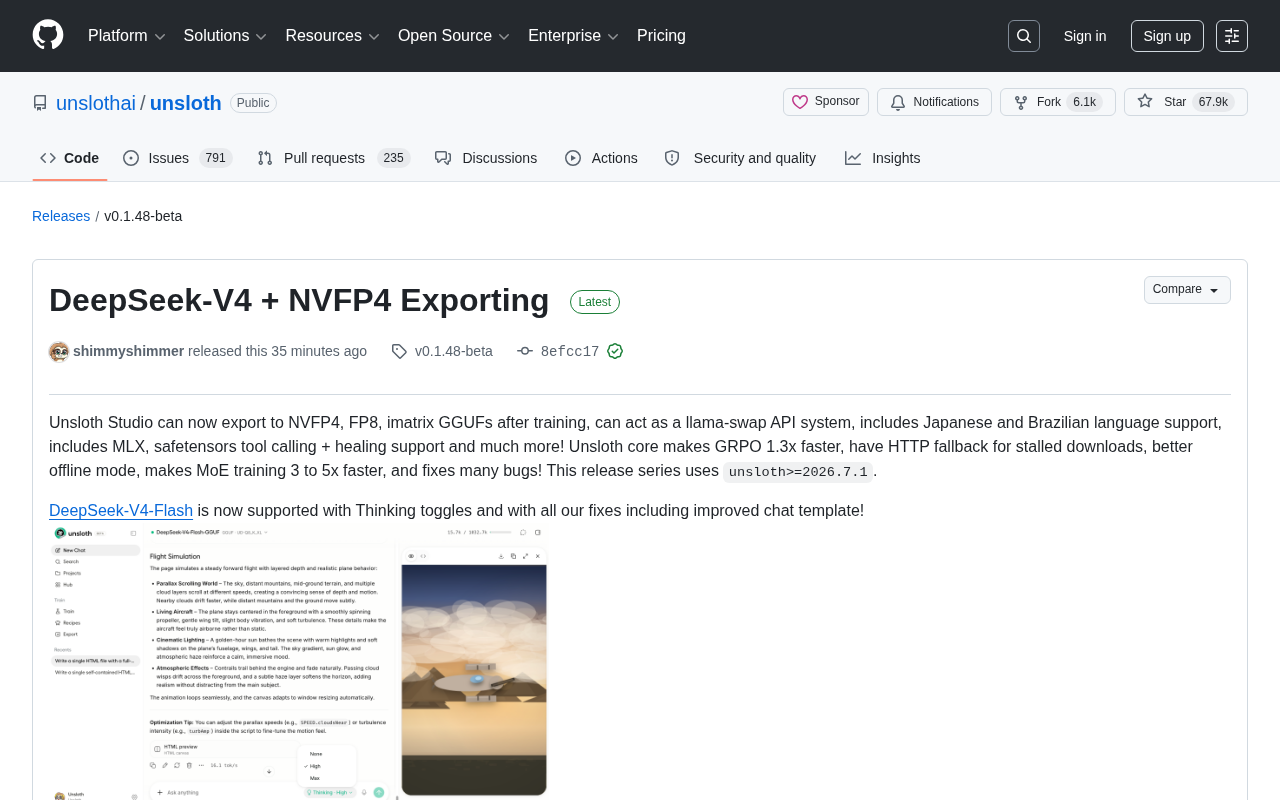
Major Unsloth Update: NVFP4 Quantization Export and DeepSeek-V4 Training Support
Unsloth v0.1.48-beta released, adding NVFP4/FP8 quantization export, OpenAI-compatible API hot-swapping, 3-5x faster MoE training, and 1.3x faster GRPO, covering the full LLM fine-tuning, quantization, and local deployment pipeline.
Read more →

·6 min
GPT-5.6 Released: Three-Tier Soul/Terra/Luna Lineup, Orchestration Baked Into the Model
OpenAI releases the GPT-5.6 series with Soul, Terra, and Luna models. Ranked first on Terminal Bench coding evaluation, Ultra mode natively bakes agent orchestration into the model, while revealing Agentic Trace data as the core competitiveness of next-gen AI training.
Read more →

·6 min
The Seven Core Components of Building Long-Running AI Agents
An in-depth look at the seven core components for building long-running AI agents: Goal, Evaluator, Verifier, Outer Loop, Orchestration, Observability, and Memory. Master this control system for reliable autonomous agents.
Read more →

·4 min
Python Tutorial: Build a Gomoku Game from Scratch with Pygame
Build a complete Gomoku game in Python using Pygame. Covers board rendering, mouse events, win detection, and game state management — great for beginners.
Read more →

·5 min
Cursor Reshapes AI Programming: Cloud Agents, the Origin Platform, and a Custom-Built Foundation Model
Cursor launches three major products: cloud agents on mobile, Origin — an agent-native Git platform challenging GitHub, and a custom foundation model with 10-20x compute. AI coding enters the Agent-First era.
Read more →
Mocking AI Superintelligence Anxiety: …
·2 min
Mocking AI Superintelligence Anxiety: Has History Ever Seen This Before?
A sarcastic tweet exposes a core AI debate: history has never seen superintelligence, so why assume it's safe? Exploring the e/acc vs. AI safety divide.
Read more →