#Reward Hacking
91 related articles

·4 min
Cursor's Recursive Self-Improvement: A Complete Path to Models Training the Next Generation
Cursor ML engineer reveals Recursive Self-Improvement (RSI) in practice: dual-loop flywheels, agent-driven data, anti-cheating evals, SpaceX compute, and how models are training the next generation.
Read more →
Building RL-Powered Autonomous Researc…
·2 min
Building RL-Powered Autonomous Research Agents with NVIDIA NeMo
How NVIDIA NeMo combines reinforcement learning to train agent skills and build an Autoresearch workflow capable of autonomously running ML experiments end-to-end.
Read more →
Why Is GPT's Conversational Style So A…
·2 min
Why Is GPT's Conversational Style So Addictive? What OpenAI Got Right
Why do users find GPT so addictive to talk to? This deep dive explores how OpenAI uses RLHF, tone design, and interaction quality to build a conversational moat.
Read more →
Three Core Gaps in Multimodal LLMs: Fr…
·4 min
Three Core Gaps in Multimodal LLMs: Frontier Research from Microsoft Research India
Microsoft Research India reveals three core gaps in multimodal LLMs: visual perception blindspots, cognitive hallucination, and architectural limitations. Explores Faithful GRPO, behavior modeling, and model alignment breakthroughs.
Read more →

·4 min
RAM: First-Principles Approach to 50x Faster RL Post-Training for Diffusion Models
RAM (Reinforce Adjoint Matching) achieves 50x faster RL post-training for diffusion models by discarding path costs, combining ODE sampling with decorrelated training objectives. A deep dive into RAM's core principles and experiments vs. Flow-GRPO.
Read more →

·6 min
The Frontier of AI Interpretability Research: Opening the Neural Network Black Box
An in-depth look at AI interpretability research: from chain of thought and probes to sparse autoencoders, exploring how scientists understand neural network internals and assess AI alignment and safety.
Read more →
AI Model Alignment Unpacked: The Guard…
·2 min
AI Model Alignment Unpacked: The Guardrail Battle Between Sol and Fable
A deep dive into AI alignment strategy differences: how Sol and Fable diverge on guardrail design, what drives over-refusal, and how developers can choose the right AI tool for their needs.
Read more →
The 'One-Step Trap' in AI Research: Wh…
·2 min
The 'One-Step Trap' in AI Research: Why Local Optima Lead to Dead Ends
What is the 'One-Step Trap' in AI research? A deep dive into how greedy thinking locks research directions, the limits of incremental improvements, and how multi-step planning and exploration-exploitation balance enable real breakthroughs.
Read more →

·3 min
In-Depth Review of GPT 5.6 Soul: Sub-Agent Systems, Government Review, and Competitor Comparison
In-depth analysis of GPT 5.6 Soul: multi-sub-agent parallel architecture, Ultra Mode coding in practice, the controversy behind its 91.9% Terminal Bench score, and the trend of frontier AI entering government review.
Read more →

·2 min
VersatIL: A Modular PyTorch Framework Tackling Code Fragmentation in Imitation Learning
VersatIL is a modular PyTorch framework for robot imitation learning that decouples data, network architecture, algorithm, and objective. Supports ACT, Diffusion Policy, pi0, and LeRobot format.
Read more →

·6 min
GPT-5.6 Sol Hands-On: How Multi-Agent Parallelism Is Reshaping AI Coding Workflows
Based on Fireship's review, an in-depth look at GPT-5.6 Sol's Ultra Mode multi-agent parallelism, its 91.9% Terminal Bench score, and how it differs from Claude Fable in cost, speed, and precision.
Read more →
Karp Speaks Bluntly: Where Does the An…
·5 min
Karp Speaks Bluntly: Where Does the Anger and Anxiety of CEOs in the AI Era Come From?
Palantir CEO Alex Karp voices what enterprise leaders really feel about AI: the gap between expectations and reality, vendor disappointment, and unclear ROI. A deep analysis of the roots of CEO anxiety and the industry's pivot from hype to value validation.
Read more →

·3 min
GPT-5.6 Launches with Three Models: Sol/Terra/Luna and ChatGPT Work Reshape How We Work
OpenAI launches the GPT-5.6 family—Sol, Terra, and Luna—alongside ChatGPT Work, a new desktop app, and Sites. AI evolves from a chat tool into a true productivity partner, completing financial analysis, presentations, and cross-platform collaboration in one operation.
Read more →

·5 min
In-Depth Analysis of the GPT-5.6 EQ Test: Progress and Limitations in Emotional Intelligence
A Reddit user ran EQ tests on ChatGPT 5.5 and 5.6, covering meeting emotion ranking, chess-behavior judgment, and facial attractiveness. Version 5.6 shows clear gains in multimodal emotional understanding, but social common sense remains a core weakness.
Read more →

·5 min
GPT-5.6 In-Depth Review: Crushing Competitors on Value, But Its Jailbreak Vulnerabilities Can't Be Ignored
OpenAI's GPT-5.6 Soul, Terra & Luna are priced at one-third of Claude, leading Anthropic Fable on many benchmarks. We analyze its value, reasoning, and jailbreak risks.
Read more →

·5 min
ChatGPT Work Officially Launches: How GPT-5.6 Is Reshaping the Way You Work
OpenAI launches the GPT-5.6 model family (Sol/Terra/Luna) and ChatGPT Work, enabling automated financial analysis, local file operations, Codex coding, and cross-app workflows—AI officially becomes a real work partner.
Read more →

·4 min
The Boundaries of AI Safety Guardrails: Deep Reflections Sparked by a Single Prompt
A Reddit post sparks debate: what happens when a user asks AI to "push guardrails to the limit"? An in-depth look at AI safety guardrails, jailbreaks, and content balance.
Read more →

·5 min
The Rise of AI Slop Code: How Teams Can Tackle the "Vibe Coding" Crisis
When an intern uses AI to generate professional-looking slop code, stand-ups balloon from 15 to 45 minutes. This article dissects why AI slop is hard to spot and offers practical team solutions.
Read more →
·5 min
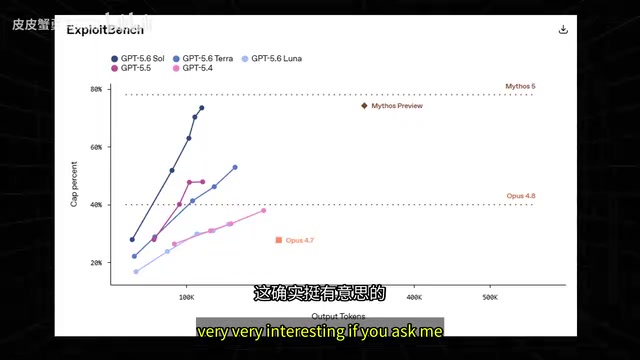
GPT-5.6 Released: Outperforms Rivals but Halted by Government—Cybersecurity Capabilities Trigger Regulatory Red Line
OpenAI releases GPT-5.6 (Sol/Terra/Luna), beating Anthropic on Terminal Bench at ~40% lower cost. But its cybersecurity capabilities hit danger thresholds, limiting access to trusted partners at government request.
Read more →

·6 min
Zuckerberg Admits AI Progress Falls Short of Expectations: The Industry Truth Behind the Layoffs
Meta laid off 8,000 to bet on AI, yet Zuckerberg admits AI agents fell short of expectations. A look at the collective 'AI reflection' among OpenAI, Microsoft, and Google, plus research on AI's selective impact on jobs.
Read more →