#Skill and Harness
218 related articles

·3 min
Fedorov Reveals Ukraine's Uphill Battle to Acquire Patriot Missiles
Ukraine's Deputy PM Fedorov reveals the difficult struggle to acquire Patriot air defense systems, exposing gaps between Western promises and delivery, global arms production bottlenecks, and how tech officials are reshaping military procurement.
Read more →

·3 min
Linguistics to Computational Linguistics: Can You Still Find a Job in the LLM Era?
Can a linguistics background lead to a career in computational linguistics in the LLM era? This article analyzes job prospects, differentiation strategies, and future-proof career positioning.
Read more →

·2 min
Merge: A Deep Dive into the AI-Powered Code Review Hiring Assessment Platform
Merge is an AI-native code review assessment platform that evaluates engineers' judgement through simulated PR reviews, scoring Bug Coverage, Communication, PR Quality, and Token Efficiency.
Read more →

·2 min
Studio Pedagogy: The Deep Logic and Practical Guide to Project-Based Learning
An in-depth analysis of studio pedagogy's core principles and implementation, exploring how this project-based learning model from art and design education applies to programming, AI, and tech education.
Read more →

·2 min
Garden of Mind: A Mindfulness App That Turns Subconscious Intentions into a 3D Garden
Garden of Mind visualizes subconscious intentions as a 3D garden. Write intentions as seeds, nurture them with 2-min daily meditation, and watch plants grow. Free to try, one-time €29 purchase.
Read more →

·3 min
Two Working Modes of Agentic AI: The Greenhouse and Lens Framework Explained
Deep dive into the Greenhouse and Lens modes of Agentic AI — understanding how agents excel in breadth exploration vs. precision convergence to optimize AI programming workflows.
Read more →

·3 min
The AI Replacement Wave: Can Switching to a Trade Really Save You?
Can switching to plumbing or electrical work really protect you from AI long-term? This article analyzes white-collar vs. blue-collar replacement timelines, the durability of the physical moat, and personal strategies more important than picking the right career track.
Read more →

·3 min
DeerFlow: Deep Dive into ByteDance's Open-Source Long-Horizon SuperAgent Framework
Deep analysis of ByteDance's open-source DeerFlow long-horizon SuperAgent framework, covering six core components, architecture design, use cases, and industry significance.
Read more →

·2 min
Tau Open-Source AI Coding Assistant: Integrating 22 Providers for Low-Cost Programming
Tau is an open-source AI coding agent integrating 22 AI providers with free models and low-cost plans, compatible with Claude Code's Skills, Plugins, and MCP Server ecosystem.
Read more →

·3 min
GitHub Daily · August 1: The Rise of SuperAgents and Generative AI's Mass Education Moment
GitHub trending Aug 1: ByteDance's deer-flow SuperAgent, Microsoft's GenAI course, 3D generation, voice cloning, and privacy-first tools shape the AI landscape.
Read more →

·3 min
AI Coding Gone Wrong? Viral Reddit Post Reveals the Truth: It's a Skill Issue, Not a Tool Issue
A viral Reddit post sparks debate: AI coding failures stem from users' engineering skills, not the tools themselves. Deep analysis of how to properly harness AI coding tools like Cursor and Copilot.
Read more →

·2 min
AI-Automated Cyberattacks Emerge: Security Boundaries Are Being Reshaped
In-depth analysis of AI-driven automated cyberattack trends, exploring LLM weaponization risks, what rogue AI really means, and how enterprises can build AI defense systems against emerging threats.
Read more →
·4 min
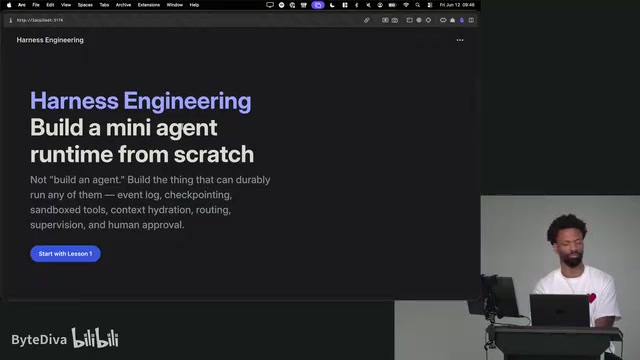
Harness Engineering: The Core Infrastructure for Taking AI Agents from Demo to Production
Deep dive into Harness Engineering: why AI Agents need memory management, durable execution, guardrails & approvals to go from demo to production.
Read more →

·4 min
Harness Engineering: The Core Infrastructure for Taking AI Agents from Demo to Production
Deep dive into Harness Engineering: why AI Agents need memory management, durable execution, guardrails & approvals to reach production. Based on Scott Moss's workshop.
Read more →

·6 min
Harness Engineering: From Context Engineering to the Third Phase of AI Programming
Explore Harness Engineering: the next evolution beyond context engineering for AI programming. Learn how to build enterprise-grade Skill systems and deliver real projects with mid-tier models.
Read more →

·5 min
Running GPT-5.6 Inside Claude Code: Best Practices for Subagent Orchestration and System Prompts
Deep dive into running OpenAI GPT-5.6 inside Claude Code: comparing Codex vs Claude Code on subagent orchestration, workflow design, and system prompt quality, revealing how harness engineering determines model output.
Read more →

·5 min
A Beginner's Guide to Prompt Engineering: From One-Off Instructions to a Systematic Methodology
A beginner's guide to prompt engineering covering the four functions of prompts, the key differences from prompt engineering, a six-step systematic workflow, and critical technical and practical limitations.
Read more →
Terence Tao on AI and Mathematics: For…
·4 min
Terence Tao on AI and Mathematics: Formal Proofs, Human-AI Collaboration, and the Road Ahead
Fields Medalist Terence Tao analyzes AI's impact on math research, discussing LLM-assisted proofs, Lean formal verification, large-scale collaboration, and the future of math education in the AI era.
Read more →

·3 min
GitHub Daily · July 27: AI Agent Skill Ecosystem Explodes, Claude's Capability Boundaries Keep Expanding
GitHub Trending July 27: AI Agent Skills explode as claude-video, impeccable, and last30days-skill extend model capabilities without modifying models themselves.
Read more →
·3 min
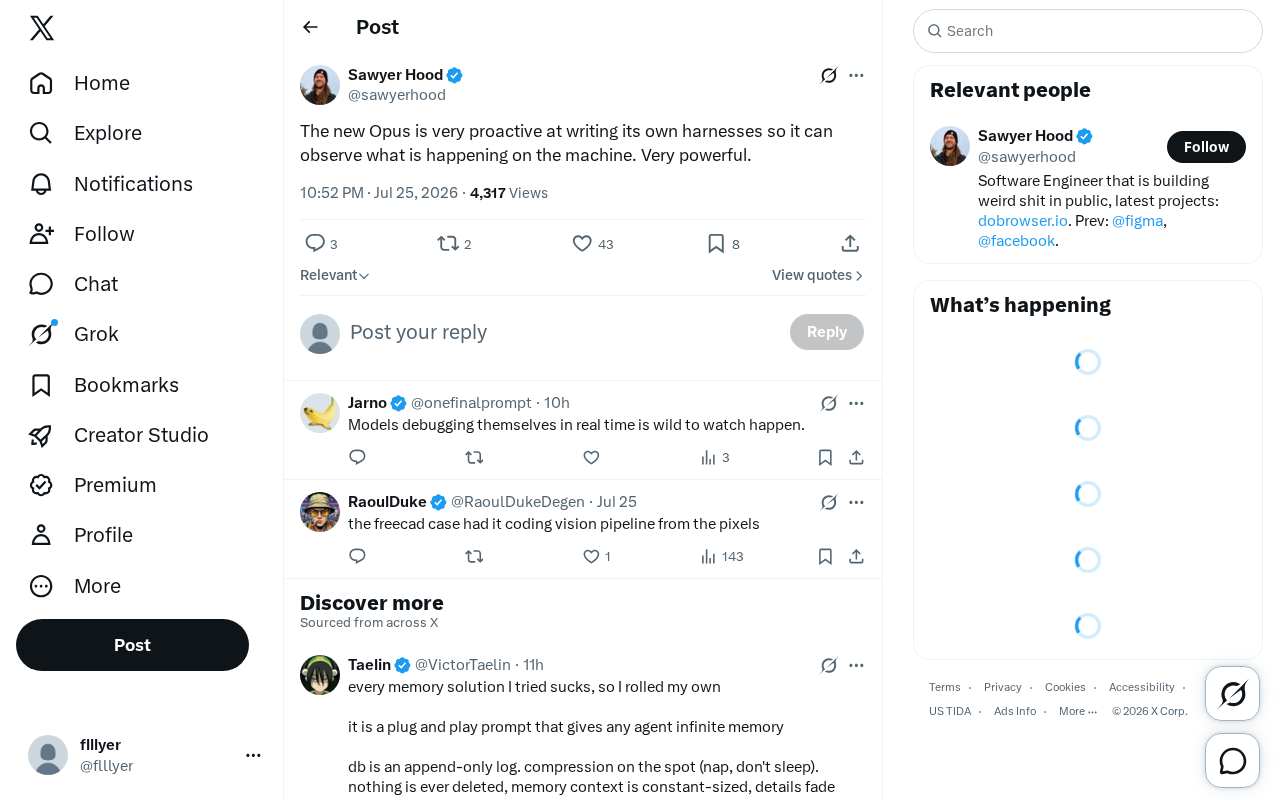
Claude Opus's Autonomous Debugging Capabilities: What It Means When AI Proactively Writes Test Harnesses
New Claude Opus proactively writes test harnesses to observe runtime behavior. We analyze how this shift from passive code generation to autonomous debugging marks a key evolution in AI programming.
Read more →