#TensorRT inference
142 related articles

·3 min
AMD Ryzen AI Halo Local AI Dev Kit Deep Dive: Is $4,000 Worth It?
AMD Ryzen AI Halo dev kit at $4,000 features 128GB unified memory and XDNA 2 NPU for local LLM inference. Deep dive into architecture, performance trade-offs, vs. Mac Studio, and software ecosystem challenges.
Read more →

·6 min
14x Speedup: How Manticore Rebuilt the ONNX Embedding Inference Path
Manticore Search restructured its ONNX inference path to achieve 14x faster text embeddings. Deep dive into batching, session reuse, zero-copy memory, and thread tuning for vector search systems.
Read more →

·3 min
Programmers Pivoting to AI: Opportunities in Application Development and Pitfalls to Avoid
How can ordinary programmers break into AI? This guide breaks down the gap between algorithm engineers and AI app developers, covering Agent development, model fine-tuning, salary trends, and the three hidden risks behind the current opportunity window.
Read more →
From a Single Prompt to an AI Product:…
·3 min
From a Single Prompt to an AI Product: Starting Is Easy, Shipping Is Hard
AI startups begin with a prompt, but going from idea to product means overcoming major technical, product, and business challenges. A low barrier to entry doesn't mean a low barrier to success.
Read more →
·4 min
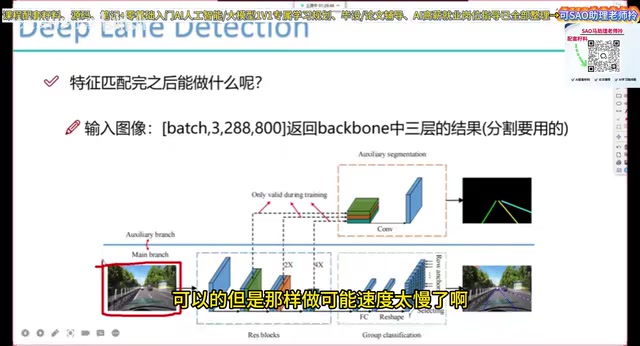
Deep Learning Lane Detection: From Segmentation to Classification for 300+ FPS Real-Time Inference
Deep learning lane detection algorithm that simplifies dense segmentation into efficient grid classification, achieving 300+ FPS real-time inference with row selection, Focal Loss, and expectation-based localization.
Read more →

·3 min
NVIDIA ACE SDK: On-Device AI Inference for Intelligent Game NPC Companions
Deep dive into NVIDIA ACE Game Agent SDK's integration with Unreal Engine 5, exploring how on-device AI inference enables low-latency, privacy-safe intelligent NPC dialogue and behavior.
Read more →

·3 min
DAQIRI Platform Explained: Deep Integration of High-Speed Data Acquisition and Real-Time AI Inference
Deep dive into how the DAQIRI platform embeds NVIDIA GPU-accelerated computing into high-speed data acquisition pipelines, enabling real-time AI inference for industrial inspection, scientific experiments, and autonomous driving.
Read more →

·3 min
748-Episode AI Large Language Model Development Tutorial: Seven Core Modules from Zero to Project Deployment
Analysis of a 748-episode, 198-hour AI LLM development tutorial covering API integration, prompt engineering, RAG, AI Agents, fine-tuning, multimodal development, and deployment.
Read more →

·3 min
The Complete Skill Map for AI Application Engineers: A Progressive Roadmap from Fundamentals to Production
A systematic breakdown of the complete skill structure for AI application engineers, covering Python & deep learning fundamentals, small model engineering, LLM fine-tuning, Agent development, and enterprise projects.
Read more →

·2 min
Baseten Raises $1.5 Billion: Why AI Inference Infrastructure Has Become a Capital Darling
AI inference startup Baseten is raising $1.5B at a $130B valuation. We analyze why inference infrastructure is booming, the competitive landscape, and what this mega-round signals.
Read more →

·4 min
Local Deployment of Claude Code: Principles and Practical Guide for Three Approaches
A detailed guide to locally deploying Claude Code with three approaches (LM Studio, Ollama, vLLM), covering architecture, protocol translation, hardware selection, and model recommendations.
Read more →

·2 min
A Complete Guide to LLM Infrastructure: Core Challenges from GPU Clusters to Inference Optimization
A deep dive into core challenges and key technologies for LLM infrastructure, covering GPU cluster management, inference optimization, distributed training, cost control, and observability.
Read more →

·4 min
AI Engineer Job Search: The Capability Leap from Demo to Production System
AI job demand is surging but companies can't find qualified candidates. Learn the 3 core skills—advanced RAG, local model deployment, and full-stack monitoring—to leap from demo builder to production engineer.
Read more →

·4 min
The Five-Tier Pyramid of IT Careers in the AI Era: Your Position Determines Your Career Ceiling
AI is reshaping IT careers into a five-tier pyramid from tool usage to self-developed models. Learn where you fit and how to maximize your career potential.
Read more →

·3 min
vLLM Deep Dive: How PagedAttention Enables High-Throughput LLM Inference
Deep dive into vLLM's core technologies for high-throughput LLM inference, including PagedAttention memory management, continuous batching, distributed deployment, and comparisons with TensorRT-LLM.
Read more →

·2 min
Aleph 2.0 Deep Dive: Edit One Frame to Transform an Entire Video
Aleph 2.0 introduces single-frame edit propagation: modify one frame and automatically apply changes across the entire video. Deep dive into Edit Studio, temporal consistency breakthroughs, and industry impact.
Read more →
 Expert Opinions
·3 min
Windsurf CEO Deep Dive Interview: Speed Is the Only Moat
Windsurf CEO Varun Mohan shares insights on AI coding IDE pivots, product methodology, async Agent challenges, and differentiation strategy vs Cursor. Speed is the only moat.
Read more →
 Deep Dives
·3 min
Why Is Python the Top Choice for AI Development? Three Core Reasons Explained in Depth
In-depth analysis of three core reasons Python dominates AI development: simple syntax for quick onboarding, powerful ecosystem, and industry-wide network effects.
Read more →
 Tutorials
·1 min
AI Large Language Model Learning Roadmap: Six Stages from Zero to Engineer
A systematic LLM engineer learning roadmap covering Transformer basics, prompt engineering, RAG, Agent development, API integration, fine-tuning, deployment, and project practice across six stages.
Read more →
 Tech Frontiers
·1 min
Windsurf Integrates Claude Opus 4.7 Fast Mode with 2.5x Speed Boost
Windsurf integrates Claude Opus 4.7 fast mode with 2.5x speed boost while retaining full intelligence. Analysis of its impact on developer productivity and AI coding tool competition.
Read more →