#academic publishing path
104 related articles

·3 min
Carta: Pandoc Rewritten in Rust — 45x Faster, 20x Smaller
Carta is a Rust reimplementation of Pandoc that produces a 9MB binary (1/20th of Pandoc) and achieves up to 45x faster conversion speeds for Markdown, DOCX, LaTeX, and more.
Read more →
·6 min
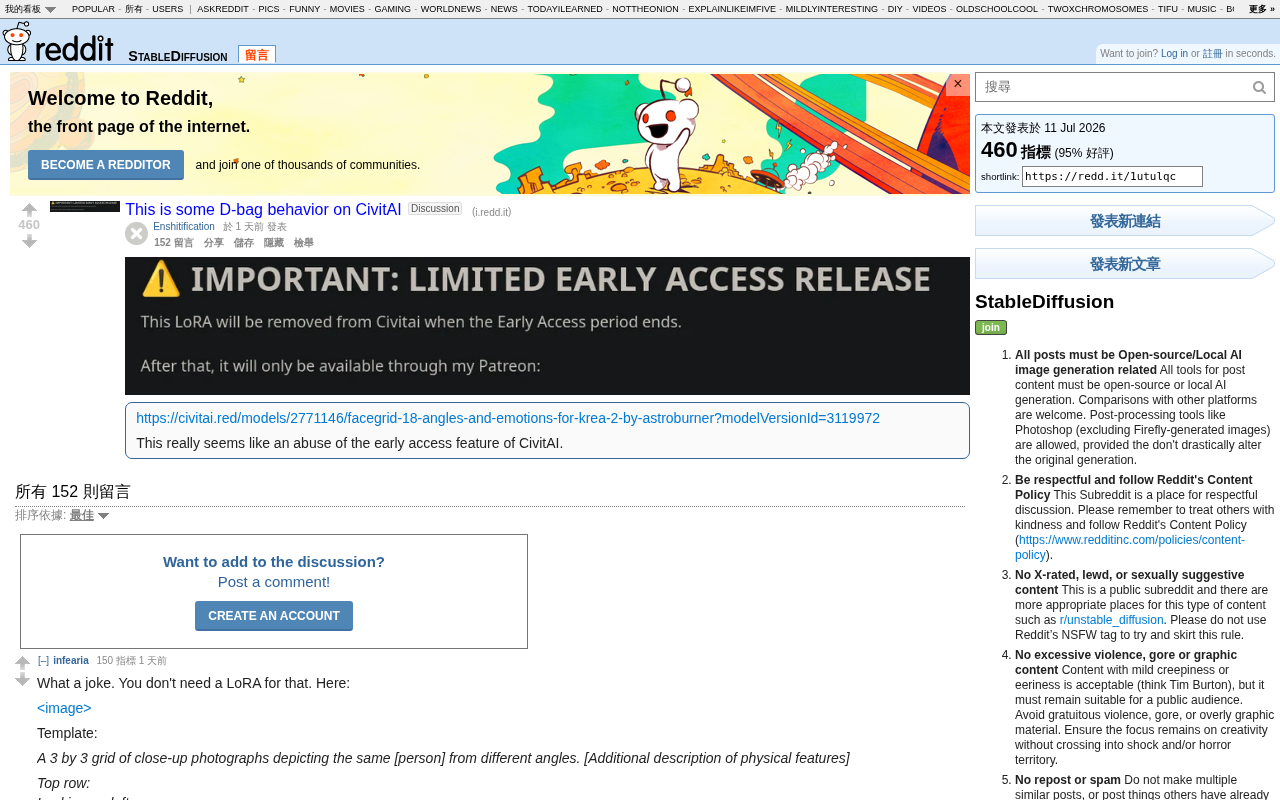
The CivitAI Early Access Controversy: Where Is the Boundary Between Open-Source Ethos and Commercialization?
CivitAI's paid "Early Access" mechanism has sparked heated debate on Reddit: should functional models stay locked behind paywalls long-term? An in-depth look at creator monetization, community consensus, and platform responsibility.
Read more →
Kronos Financial Foundation Model: Usi…
·7 min
Kronos Financial Foundation Model: Using AI to Read the Market Language of Candlesticks
Kronos is the first open-source foundation model treating candlestick data as the "language of financial markets," using an autoregressive Transformer and earning 32K GitHub Stars. A deep dive into its principles, applications, and limits.
Read more →

·4 min
DeepSeek Open-Sources DeepSpec: A Full-Stack Breakdown of Speculative Decoding
DeepSeek open-sources DeepSpec, a full speculative decoding training and evaluation toolkit featuring three draft model algorithms (Ego3, DeepFlash, DeepSpark), 12 checkpoints, MIT license, and 60–85% real-world speedup.
Read more →

·3 min
Zero-Code Research: Using AI Agents to Run Complete Machine Learning Experiments
No coding required: use AI agents like Codex and Claude Code to complete full ML experiments via natural language. A real case study with a heart disease dataset.
Read more →

·3 min
AI Is Conquering World-Class Math Conjectures — Will Mathematicians Become "Curators"?
AI is cracking world-class math conjectures at scale — from IMO gold medals to the Langlands Program. Terence Tao says math has entered a "proof abundance" era, but AI can't judge research significance. The mathematician's edge is shifting from proving to curating.
Read more →

·3 min
Coze Deep Dive: Multi-Agent Collaboration Platform Features & Usage Guide
A comprehensive guide to Coze by ByteDance: multi-agent collaboration, local tool integration, cross-platform sync, and credit system. Compare with Dify to get started fast.
Read more →
Why We Must Actively Fund Open Source …
·2 min
Why We Must Actively Fund Open Source AI: A Public Goods Perspective on Technology Democratization
Open source AI faces soaring compute costs and fierce talent competition that markets alone can't solve. This deep dive explores why actively funding open source AI is essential for tech democratization.
Read more →

·3 min
AirOps in Practice: Building Enterprise-Grade AI Agents with the Claude Agent SDK
How AirOps replaced traditional workflow builders with the Claude Agent SDK to build an AI agent platform for content marketers — covering three architectural iterations, harness engineering, and sub-agent context management.
Read more →

·3 min
Coze for Beginners: A Complete Guide to Building AI Agents
Coze is ByteDance's low-code AI Bot platform — no coding required. Learn the differences between domestic and international versions, core features, and why now is the best time to start building AI agents.
Read more →

·3 min
Over-Concentration in the AI Conference Ecosystem: What Have We Lost?
As NeurIPS and CVPR monopolize academic resources while niche venues like FG and ICASSP fade, quality research disappears into arXiv. A deep analysis of AI conference over-concentration.
Read more →

·6 min
A Deep Dive into OpenAI Codex: How AI Engineers Are Reimagining Software Development with Agents
OpenAI Codex is redefining how AI engineers work: from code completion to autonomous Agents, from single-threaded to parallel Value Maxing. A deep dive into the Codex App architecture, open ecosystem, and Manager of Agents practice.
Read more →

·2 min
A Beginner's Guide to Grokking Machine Learning: Self-Study Paths and Resource Recommendations
Why Grokking Machine Learning is a top pick for ML beginners — covering the author, content, legal access options, and an effective self-study roadmap.
Read more →

·3 min
Linguistics to NLP Engineer: Comparing Three Pathways and Finding the Optimal Strategy
How can linguistics or translation majors transition into NLP engineering? This article compares three pathways and offers a phased strategy covering core skills, project building, and job hunting tips.
Read more →

·1 min
A Growth Guide for Independent AI Researchers: Opportunities, Challenges, and Core Strategies
How can independent AI researchers grow without institutional support? This article analyzes the three core challenges—compute, mentorship, and recognition—and offers practical growth strategies.
Read more →

·5 min
AI Content Floods Social Media: Why Has LinkedIn Become Ground Zero?
Generative AI tools have flooded social media with AI-generated content, hitting LinkedIn hardest due to its professional nature. A deep dive into the causes, ecosystem impact, and solutions.
Read more →

·2 min
Can AI Really Solve Hard Math Problems? A Rational Look at LLM Research Breakthroughs
Claims that GPT solved "unsolved math problems" keep going viral, but do they hold up? A deep dive into LLMs' real problem-solving ability, hallucinations, and verification standards.
Read more →

·5 min
The Real Bottleneck in Materials Innovation: Why Scaling Up Is Harder Than Discovery
Why do lab breakthroughs in materials struggle to reach the market? An in-depth analysis of the core bottleneck from discovery to mass production—covering physical process challenges, economic thresholds, academic incentive imbalances, and paths forward in the AI era.
Read more →
·6 min
GPT-5.6 Sol Limited Preview: The Safety Boundaries Behind AI's Capability Expansion
OpenAI's flagship GPT-5.6 advances on three fronts—Sol, Kara, Luna tiered rollout; ByteDance CGN 5.0 Pro and Meta Muse push image generation toward controllable workflows; AI coding agents expose new supply chain risks.
Read more →

·2 min
AI/ML Engineer Job Search Roadmap: A Systematic Preparation Guide for ECE Students
A practical job-search guide for ECE students pursuing AI/ML roles, covering direction selection, Python skills, project planning, paper strategy, and overseas opportunities.
Read more →