#agent harness design
285 related articles

·3 min
Harness Architecture Explained: The Next-Generation Design Paradigm for Agent Development
A deep dive into Harness Architecture — the next-gen Agent design paradigm. Covers its evolution from prompt engineering and context engineering, multi-agent collaboration, sandbox security, feedback loops, and why it's a must-have for LLM developer interviews.
Read more →

·1 min
HarnessRouter: One API to Access the World's Top AI Agents
HarnessRouter provides a unified API to access top AI agents worldwide, encapsulating sandbox isolation, task orchestration, fault-tolerant retries, and cost control for production deployment.
Read more →

·1 min
HarnessRouter: One API to Access the World's Top AI Agents
HarnessRouter provides a unified API to access top AI agents worldwide, encapsulating sandbox isolation, task orchestration, fault-tolerant retries, and cost control for production-ready integration.
Read more →

·2 min
AI-Driven Biosecurity Defense: A Paradigm Shift from Reactive Response to Proactive Prediction
How Isomorphic Labs leverages AlphaFold and cutting-edge AI to shift biosecurity from reactive response to proactive defense, building bioresilience and accelerating drug design against emerging threats.
Read more →

·3 min
Numbat Open Source: A Cross-Framework AI Agent Security Detection and Response Solution Explained
Numbat is an open-source AI Agent security detection and response tool supporting cross-framework deployment with Agent behavior visibility and pre-execution interception capabilities.
Read more →

·3 min
Local Merge Queues: Solving Code Conflicts for Parallel AI Programming Agents
Deep dive into how local merge queues solve code conflict challenges when multiple AI programming agents work in parallel, covering merge queue principles and multi-agent development trends.
Read more →

·3 min
Local LLM Agent Lagging? Lowering num_gpu Is the Key
Local LLM crashing in Agent frameworks? The issue may be num_gpu set too high. Learn what num_gpu really controls (GPU layer offloading, not GPU count) and how to tune it for stable Agent performance.
Read more →

·3 min
AI Coding Gone Wrong? Viral Reddit Post Reveals the Truth: It's a Skill Issue, Not a Tool Issue
A viral Reddit post sparks debate: AI coding failures stem from users' engineering skills, not the tools themselves. Deep analysis of how to properly harness AI coding tools like Cursor and Copilot.
Read more →

·2 min
AI-Automated Cyberattacks Emerge: Security Boundaries Are Being Reshaped
In-depth analysis of AI-driven automated cyberattack trends, exploring LLM weaponization risks, what rogue AI really means, and how enterprises can build AI defense systems against emerging threats.
Read more →

·2 min
Agenta: A Detailed Look at the Open-Source Self-Hosted Claude Cowork Alternative
Agenta is an open-source AI Agent collaboration platform supporting self-hosted models and any Agent framework, positioned as an open-source Claude Cowork alternative.
Read more →
·4 min
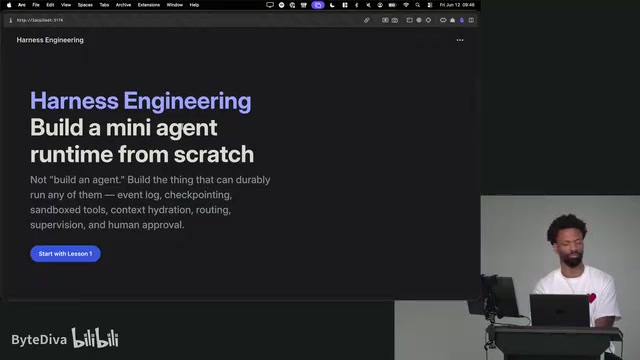
Harness Engineering: The Core Infrastructure for Taking AI Agents from Demo to Production
Deep dive into Harness Engineering: why AI Agents need memory management, durable execution, guardrails & approvals to go from demo to production.
Read more →

·3 min
Claude Code vs Codex: Hands-On Comparison and Installation Guide for AI Programming Tools
In-depth comparison of Claude Code and Codex AI programming tools covering accuracy, installation, and network setup tips to help developers choose the best solution.
Read more →

·4 min
Harness Engineering: The Core Infrastructure for Taking AI Agents from Demo to Production
Deep dive into Harness Engineering: why AI Agents need memory management, durable execution, guardrails & approvals to reach production. Based on Scott Moss's workshop.
Read more →

·6 min
Harness Engineering: From Context Engineering to the Third Phase of AI Programming
Explore Harness Engineering: the next evolution beyond context engineering for AI programming. Learn how to build enterprise-grade Skill systems and deliver real projects with mid-tier models.
Read more →

·4 min
LangChain Guardrails Explained: Building Safe and Controllable AI Agents
A detailed guide to LangChain Guardrails covering layered ecosystem architecture, middleware implementation, deterministic and model-driven protection for building production-grade secure AI Agents.
Read more →
·3 min
Deep Dive into Inkling: The First Frontier Open-Source Multimodal LLM from the West
Thinking Machines releases Inkling, an open-source multimodal LLM with near-trillion MoE parameters, 1M token context, Apache 2.0 license. Deep dive into architecture, benchmarks, and pricing.
Read more →

·4 min
Laguna S 2.1 Deep Dive: Hands-On Local Deployment of a 118B Parameter Coding Model
In-depth review of Poolside's Laguna S 2.1 open-source coding model: MoE architecture, RL training, DGX Spark local deployment, and real-world agentic coding tests with 8B active parameters.
Read more →

·5 min
Running GPT-5.6 Inside Claude Code: Best Practices for Subagent Orchestration and System Prompts
Deep dive into running OpenAI GPT-5.6 inside Claude Code: comparing Codex vs Claude Code on subagent orchestration, workflow design, and system prompt quality, revealing how harness engineering determines model output.
Read more →

·3 min
How to Choose an AI Agent Platform for Your Team: 5 Evaluation Dimensions & Decision Framework
Choose an AI Agent platform by evaluating model flexibility, observability, tool integration, security compliance, and total cost. A complete decision framework to avoid vendor lock-in.
Read more →
·3 min
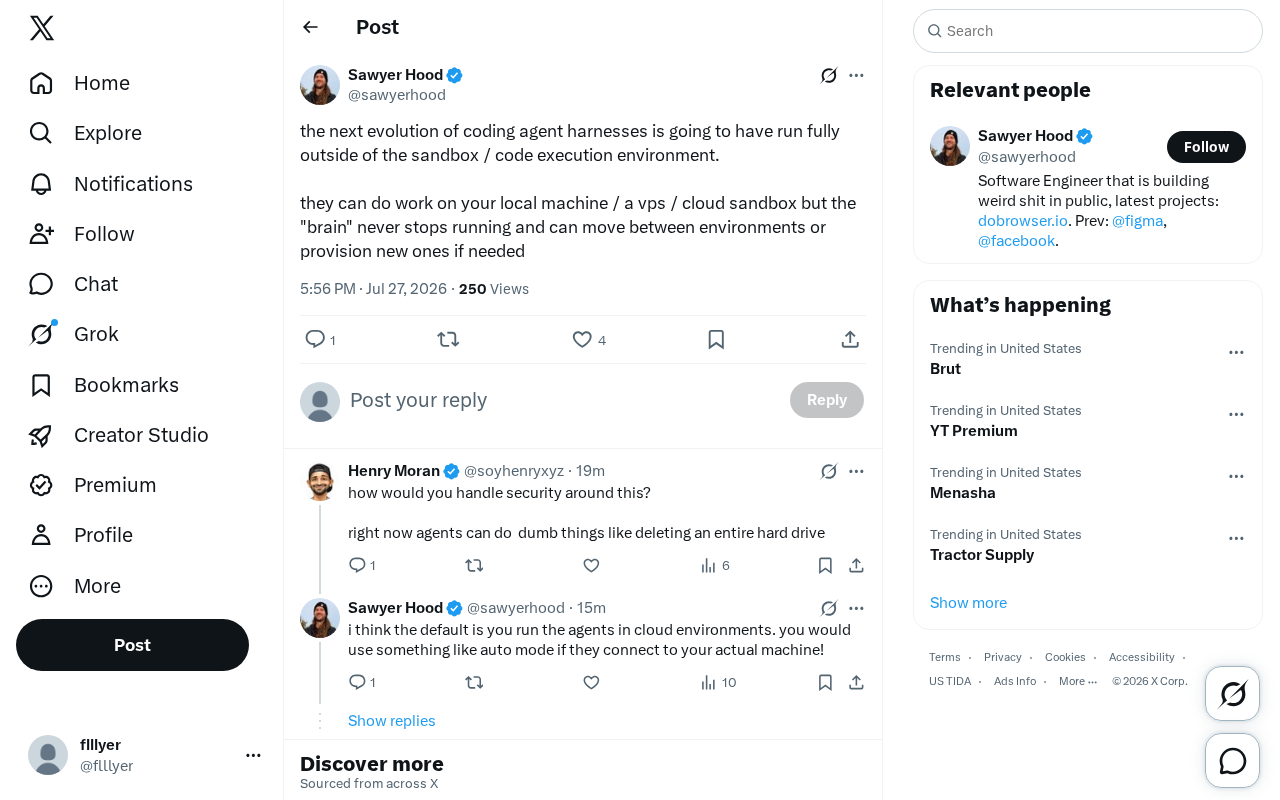
The Next Evolution of Coding Agents: Letting the Brain Break Free from the Sandbox
Exploring the key evolution in coding agent architecture: separating the reasoning core from code execution environments to decouple control and execution planes.
Read more →