#agent testing
2406 related articles

·4 min
Qwen3 27B + DeepSeek Harness Real-World Testing: Local Open-Source Agent Performance Evaluation
Real-world testing of Qwen3 27B with DeepSeek Harness agent framework: deployment setup, visual understanding, reasoning intensity comparison, and token consumption data across multimodal tasks.
Read more →

·5 min
AI Agent Testing in Practice: Five Core Focus Areas and Quantitative Evaluation Methods Explained
A deep dive into AI Agent testing vs. traditional testing, covering intent recognition, slot filling, negation handling, prompt design, security testing, plus quantitative metrics like precision, recall, and F1 score.
Read more →

·3 min
Yadda 3.0: A New BDD Testing Paradigm for the AI Agent Era
Explore how Yadda 3.0 combines BDD with AI Agents, using natural language test specs as human-AI acceptance contracts and redefining BDD's role in the AI era.
Read more →

·4 min
AI-Driven Testing in Practice: A Complete Guide to Building an Agent Testing Workbench
A complete guide to building an AI-driven testing workbench with five-layer architecture, covering Claude Code agent client setup, DeepSeek model integration, and Node.js environment configuration.
Read more →

·3 min
AI Is Reshaping Software Testing: A Practical Guide from Manual Test Cases to Agent-Driven Automation
Learn how AI Agents are leading a new software testing paradigm. Covers PyTest framework, Web and API automation, and the full loop from requirements to CI/CD.
Read more →

·4 min
Hands-On Testing Meta's Open-Source Muse Glimmer: A Lopsided Agent-Specific Model
Hands-on testing of Meta's open-source 30B Muse Glimmer model across vision, reasoning, and full-stack tasks. Excellent vision but weak logic, D-Spark gives 3x speed at quality cost, 128K context is the biggest limitation.
Read more →

·3 min
Nightcrawler: Deep Dive into an AI Penetration Testing Agent Running Locally on Smartphones
Deep analysis of Nightcrawler, an AI penetration testing agent running entirely on smartphones. Exploring how on-device AI empowers cybersecurity testing, its architecture, use cases, and risks.
Read more →

·2 min
Can OpenAI's Most Powerful Agent Independently Run a Business? Real-World Testing Reveals the Answer
OpenAI's top AI Agent was stress-tested in real business scenarios to see if it could independently run a company. The experiment reveals agent capabilities and limitations in decision-making, memory, and strategic planning.
Read more →

·3 min
Cekura: A Deep Dive into the Automated Testing, Monitoring, and Self-Healing Closed-Loop Platform for Voice AI Agents
Deep analysis of how Cekura's five-step closed loop—scenario simulation, failure capture, root cause diagnosis, automatic prompt rewriting, and regression verification—solves voice AI agent quality assurance in production.
Read more →

·3 min
API Mock vs. Sandbox in Agent Testing: A Detailed Layered Strategy Guide
API Mock is fast but misses bugs; Sandbox is realistic but costly. This article analyzes their core differences and provides a layered testing strategy for building reliable Agent test systems.
Read more →
·4 min
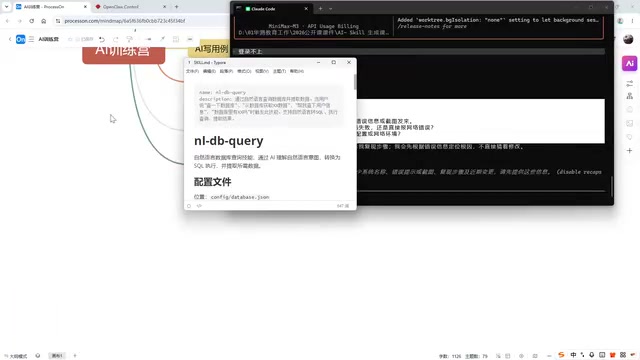
Hands-On Skill Writing and Agent Testing: A Guide to AI Testing Transformation
An in-depth look at AI testing challenges. Learn to write reusable Skill packs and master Agent testing and LLM evaluation—covering the SKILL.md six-dimensional rule, skill-creator, EvalScope, and dataset selection.
Read more →

·2 min
Getting Started with Claude Code: Why Terminal Agents Are the Top Choice for Enterprise AI Testing
What is the fundamental difference between terminal agents and device agents? This article breaks down Claude Code's core positioning, the key logic for enterprise AI testing selection, and the advantages of the Claude Code + DeepSeek combination.
Read more →

·1 min
AI Agents Reshape the Testing Workflow: A Paradigm Revolution from LLMs to Agents
An in-depth look at how AI Agents disrupt traditional software testing: the core differences between LLMs and Agents, four capability dimensions (planning/memory/tools/skills), and how testers achieve 10x efficiency gains.
Read more →

·1 min
AI Agents Rebuild the Entire Testing Workflow: A Paradigm Revolution from LLMs to Agents
An in-depth look at how AI Agents are disrupting traditional software testing: the core differences between LLMs and Agents, four capability dimensions (planning/memory/tools/skills), and how test engineers can achieve 10x efficiency gains in test case generation.
Read more →

·8 min
A Complete Guide to Agent Testing: Five Core Dimensions and Automation in Practice
In-depth analysis of the five core dimensions of AI Agent testing: command safety, tool-calling accuracy, task planning, output consistency, and error self-repair. Master automated testing and the transition path for test engineers.
Read more →

·8 min
The Complete Guide to Agent Testing: Five Core Dimensions and Automation in Practice
An in-depth analysis of the five core dimensions of AI Agent testing: command safety, tool-calling accuracy, task planning, output consistency, and error self-repair. Master automated testing methods and the transition path for test engineers.
Read more →

·2 min
Testing Fan Browser Agent: Auto-Filling a Korean Visa Application End-to-End
A developer tests Fan Browser Agent on a real Korean visa application: autonomous flow planning, filling 30+ form fields automatically, and handling upload errors.
Read more →

·3 min
DeepAgents in Practice: A Complete Guide to Building a HarmonyOS Automated Testing Agent
A deep dive into DeepAgents' core mechanisms, with a hands-on guide to building a HarmonyOS automated testing Agent — covering create_deep_agent, LangChain comparison, and long-chain task planning.
Read more →
·3 min
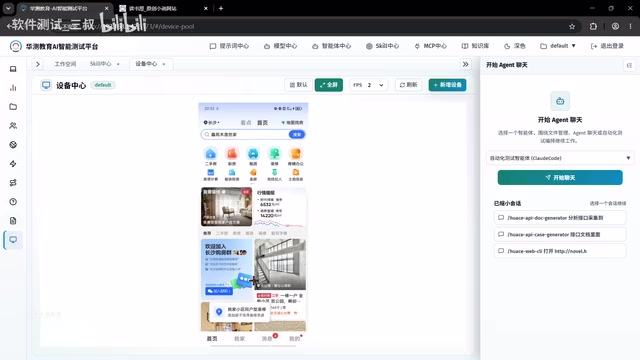
AI Testing in a Closed Loop: Full Pipeline from API Collection and Test Case Generation to Agent-Driven Execution
Full breakdown of a real AI testing pipeline: API collection, doc enrichment, AI test case generation, Agent-driven execution, and test reports — with Skills, RAG, and Harness engineering.
Read more →
·2 min
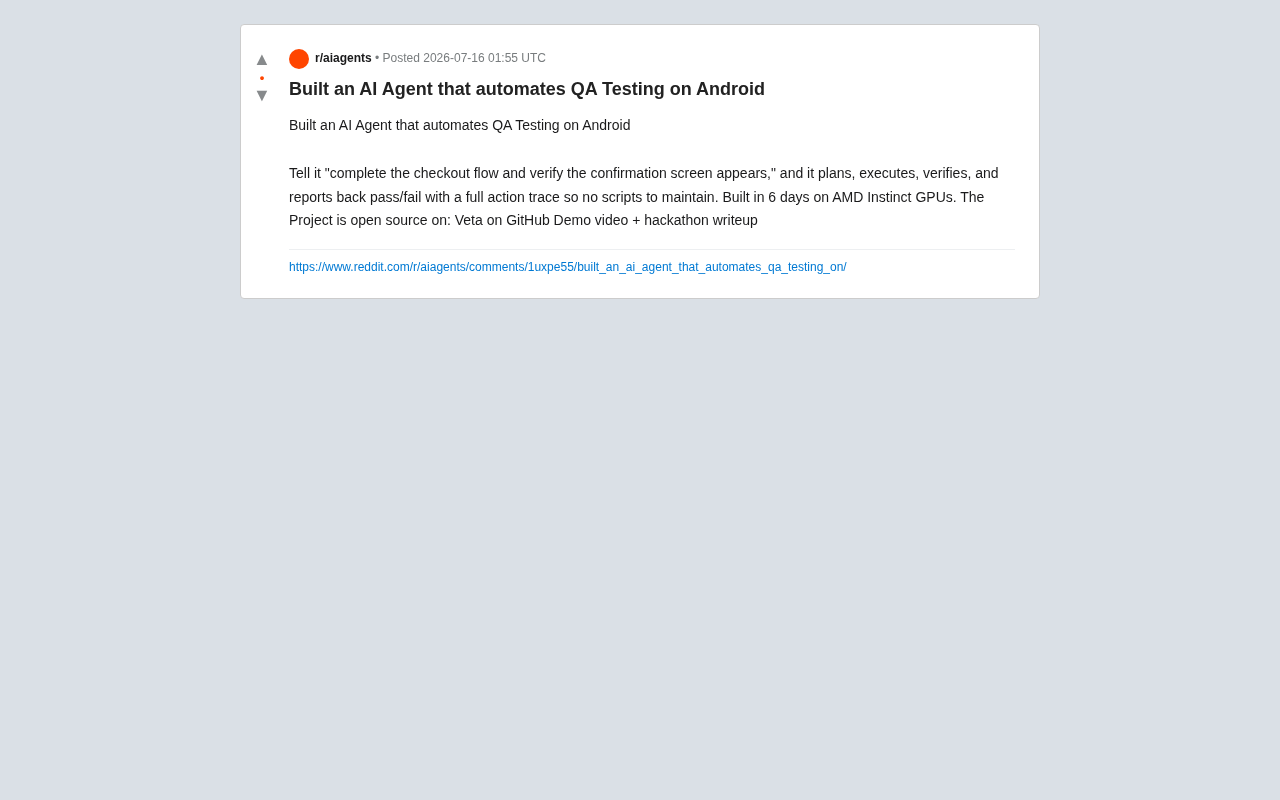
6-Day Open Source AI Agent: Natural Language-Driven Android Automation Testing
Veta is an open source AI testing agent: just describe your test goal in natural language and it autonomously plans, executes, verifies, and reports Android test results — no scripts needed.
Read more →