#auditable AI
311 related articles
·6 min
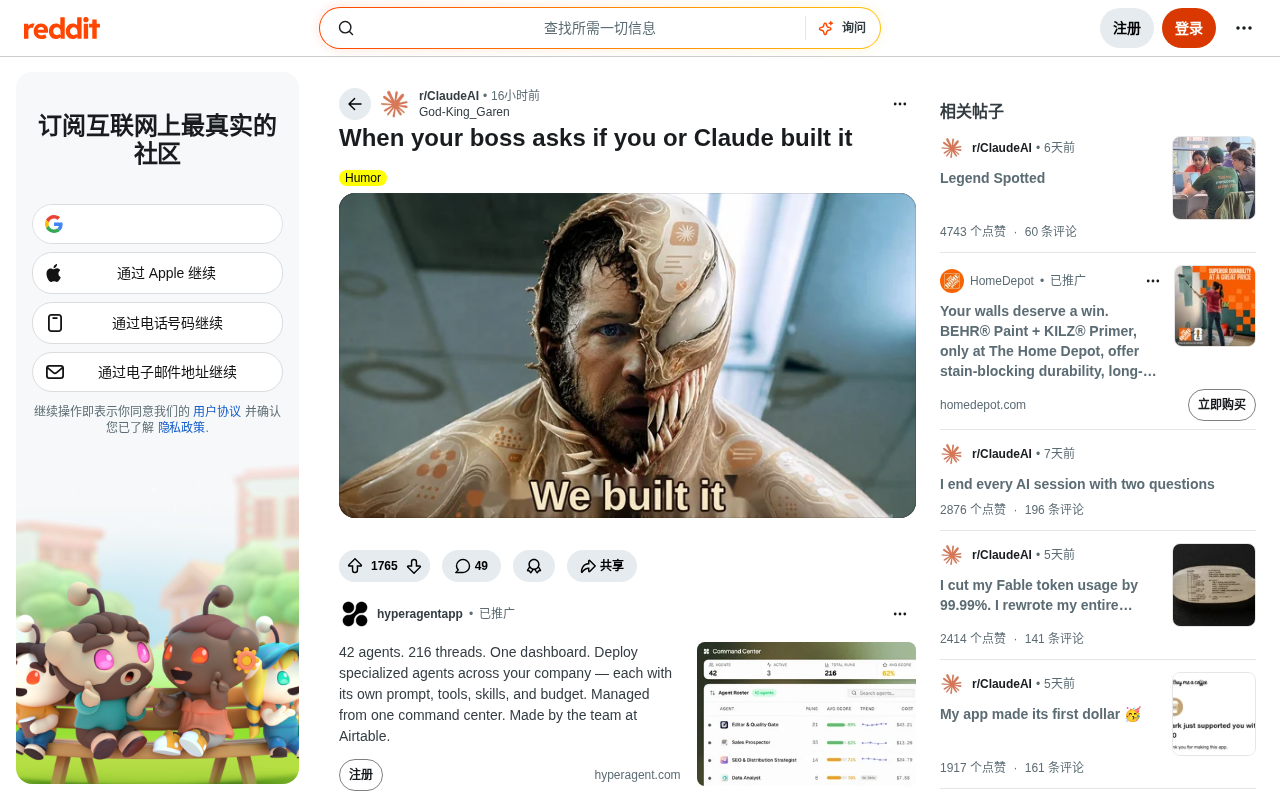
The AI Coding Era: Does Code Written by Claude Count as Yours?
The Reddit meme "did you or Claude build it" struck a chord with developers. This article explores how AI coding assistants reshape workflows, where the boundary of human-AI contribution lies, and how programmers can find irreplaceable value in the AI era.
Read more →
·6 min
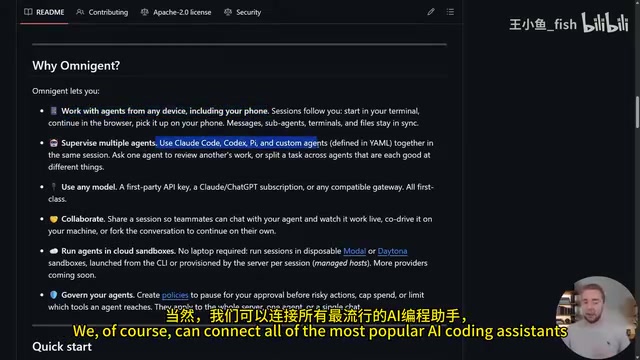
Omnigent Open-Sourced: A Meta-Harness for AI Coding Agents Built by Databricks
Databricks open-sources Omnigent, a Meta-Harness for orchestrating Claude Code, Codex, and more AI coding assistants together—with built-in guardrails, cross-model workflows, and real-time collaboration. Get started in 10 minutes.
Read more →

·4 min
Grok vs GPT vs Claude: Which AI is the Best Coding Assistant?
Grok 4.5, GPT-5.5, and Claude go head-to-head on the same coding tasks. A deep comparison of code quality, UI design, and engineering standards to help you choose the right AI coding assistant.
Read more →

·7 min
The Four-Stage Learning Path for AI Agent Development: From Beginner to Real-World Deployment
A systematic four-stage roadmap for AI Agent development: fundamentals, core principles, enhancement, and real-world deployment. Build complete Agent skills.
Read more →

·4 min
Harness Engineering: The Third Phase of AI Coding and a Practical Guide to agents.md
A deep dive into Harness Engineering — the third phase of AI coding. Based on research across 2,853 GitHub repos, explore agents.md, Skills, MCP, and eight configuration mechanisms to control your AI coding assistant.
Read more →

·6 min
Playwright E2E Builder: Engineering AI-Driven Web Automation Testing
Playwright E2E Builder is an AI Skill installed in Cursor that transforms UI automation from throwaway scripts into sustainable engineering assets through a four-step workflow, with built-in locator health checks.
Read more →

·7 min
Sakana Fugu vs GLM 5.2 Hands-On Test: Who Can Truly Challenge Top-Tier AI Models?
A head-to-head hands-on test of Sakana Fugu vs GLM 5.2 based on real Hermes agent workflows. Covering tool calling, frontend generation, and code improvement to reveal each model's true performance, speed, and value.
Read more →

·7 min
Spec-Driven Development: Andrew Ng Teaches You to Master AI Coding Agents Efficiently
Andrew Ng partners with JetBrains on a new course systematically teaching Spec-Driven Development. By writing high-quality specs, developers can precisely control AI coding agents, eliminate context decay, and boost intent fidelity.
Read more →
·6 min
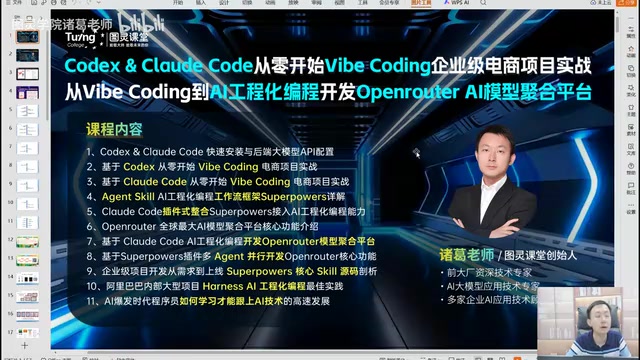
Understanding the Limits of Vibe Coding: A Practical Guide to AI Engineering-Grade Programming
An in-depth look at the difference between Vibe Coding and AI engineering-grade programming. Can AI replace programmers? From Claude Code and Codex to Cursor, revealing the real limits, enterprise pain points, and engineering solutions of AI coding tools.
Read more →
·5 min
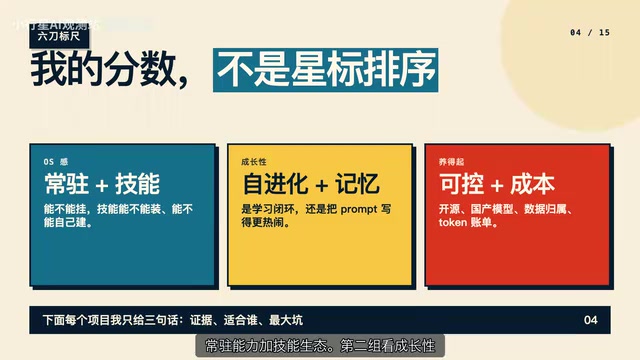
6 Self-Hosted AI Agents Compared: Which One Is a Truly Self-Evolving Digital Employee?
An open-source AI Agent with 380K stars ranks only third? This comparison of 6 self-hosted AI Agents scores them on persistence, self-evolution, and data control—revealing why Generic Agent won with just 3,000 lines of code.
Read more →

·6 min
The Cambridge Guide *Copy That Floppy*: How to Rescue Precious Data from Floppy Disks
Floppy disks face a dual crisis of physical aging and reading device obsolescence. This article breaks down the core methods of Cambridge's Copy That Floppy guide: physical assessment, flux-level reading, and disk imaging.
Read more →

·7 min
Rowboat: An Open-Source, Local-First Alternative to Claude Desktop
Rowboat is an open-source, local-first AI desktop client positioned as a Claude Desktop alternative. Local data storage and fully transparent code help developers control privacy and workflows.
Read more →

·6 min
Sephora's AI Shopping Assistant in Practice: A Complete Methodology for a 5%+ Conversion Lift
Sephora partnered with OpenAI to build an AI beauty shopping assistant, achieving a 5%+ conversion lift. A deep dive into its conversational commerce design, ChatGPT integration, and four key lessons for retail AI transformation.
Read more →

·7 min
Block-Sparse Featurizers: Opening the Black Box of Vision Model Neural Geometry
Block-sparse featurizers remap dense vision model activations into block-sparse representations, making the internal feature spaces of ViT, CNN, and other models readable and interpretable. This article explores their core principles, links to mechanistic interpretability, and applications.
Read more →

·5 min
The Halo Open-Source Project: Building Tamper-Evident Runtime Evidence for AI Agents
Halo is an open-source tool providing tamper-evident runtime evidence for AI agents, recording every action via hash chains and cryptography to solve auditing, compliance, and accountability challenges.
Read more →

·7 min
The Trap of AI Visibility Dashboards: Why Most Metrics Are Meaningless
Can a brand's "visibility" in AI answers really be quantified? This article deeply dissects the methodological flaws of AI visibility dashboards—from LLM output randomness and black-box mechanisms to vanity metric traps.
Read more →

·5 min
Content Screening in Production: Why Non-AI News Shouldn't Be Forced into Articles
Explore why non-AI news shouldn't be forced into tech articles. Learn about content screening mechanisms, topic classification models, and proper editorial gatekeeping.
Read more →

·4 min
Claude Science Launch: Anthropic's AI Assistant Built for End-to-End Scientific Research
Anthropic launches Claude Science (beta), a research-focused AI app with artifact traceability, on-demand environments, and 60+ scientific database integrations.
Read more →

·7 min
TypeScript + Zod: Dual Insurance for Type Safety in AI Agent Development
An in-depth look at the division of labor between TypeScript and Zod in AI Agent development: TypeScript handles compile-time static type checking, Zod handles runtime validation, forming a dual defense.
Read more →
·7 min
LangChain.js + Nuxt.js: An AI Full-Stack Advancement Path for Frontend Engineers
Frontend hiring now treats AI capabilities as a core assessment, covering RAG knowledge bases, AI Agent development, and LangChain.js engineering. Learn how LangChain.js + Nuxt.js helps frontend developers build memory- and retrieval-capable AI full-stack apps.
Read more →