#checkpoint recovery
98 related articles
 Industry Insights
·2 min
Five Design Patterns for Long-Running AI Agents: From Checkpoint Recovery to Cluster Orchestration
Deep dive into five core design patterns for long-running AI Agents from Google Cloud Next 26: checkpoint recovery, delegated approval, hierarchical memory, ambient processing, and cluster orchestration.
Read more →

·4 min
Cross-Cloud GPU Preemption Migration: How to Slash 40% of Compute Costs
Deep analysis of how cross-cloud GPU preemption migration technology helps MLOps teams cut 40% of compute costs through predictive telemetry, cross-cloud state migration, and compute arbitrage.
Read more →

·3 min
DuckLake Time Travel: Version Rollback and Snapshot Queries for a Lightweight Data Lake
Explore DuckLake's time travel feature for lightweight data lakes—how snapshot-based version rollback enables data auditing, error recovery, and historical analysis, compared with Iceberg and Delta Lake.
Read more →

·3 min
DuckLake Time Travel: Version Rollback and Snapshot Queries for a Lightweight Data Lake
Explore DuckLake's time travel feature for lightweight data lake version rollback and snapshot queries, with comparisons to Iceberg and Delta Lake.
Read more →

·2 min
Gemini Spark Goes Global: A Deep Dive into Google's 24/7 Background AI Agent
Gemini Spark is now available globally for Pro/Ultra users with 24/7 background operation. This deep dive covers its core features, use cases, and impact on the AI agent industry.
Read more →

·4 min
SQLite in Production: A Deep Dive into WAL Mode, Concurrency Control, and VFS Optimization
A deep dive into three core SQLite production optimizations: WAL mode for read/write concurrency, single-writer concurrency model best practices, and VFS layer tuning with mmap and custom locking.
Read more →

·4 min
Infrastructure Architecture for Agent Applications: Four Core Patterns Explained
A deep dive into infrastructure architecture patterns for production-grade Agent applications, covering state persistence, sandbox isolation, LLM observability, and cost control.
Read more →

·4 min
Infrastructure Architecture for Agent Applications: Four Core Patterns Explained
Deep dive into infrastructure architecture patterns for production-grade Agent applications, covering state persistence, sandbox isolation, LLM observability, and cost control.
Read more →

·4 min
11-Node LangGraph in Practice: Complete Architecture Breakdown of a Compliance-Grade RAG Agent
Deep dive into an 11-node Agentic RAG agent built with LangGraph, featuring 6-way intelligent routing, hallucination guards, PII masking, circuit breakers, and zero-cost deployment.
Read more →
·4 min
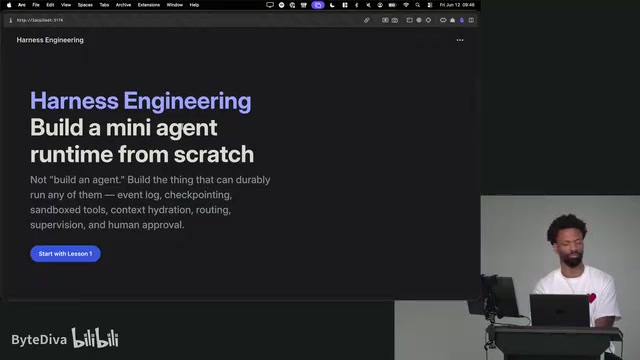
Harness Engineering: The Core Infrastructure for Taking AI Agents from Demo to Production
Deep dive into Harness Engineering: why AI Agents need memory management, durable execution, guardrails & approvals to go from demo to production.
Read more →

·4 min
Harness Engineering: The Core Infrastructure for Taking AI Agents from Demo to Production
Deep dive into Harness Engineering: why AI Agents need memory management, durable execution, guardrails & approvals to reach production. Based on Scott Moss's workshop.
Read more →

·5 min
Loop Engineering Explained: The New Programming Paradigm Where AI Prompts Itself
Loop Engineering is a paradigm shift in AI usage. Learn how to build automated loops where agents explore, execute, and verify tasks autonomously, with a hands-on e-commerce case study.
Read more →

·4 min
Complete Guide to Pi Coding Agent: Core Usage and Extension Techniques for a Minimalist Terminal AI Coding Tool
Complete guide to Pi coding agent: design philosophy, installation, shortcuts, session management, and 7-layer customization architecture. How this 45K-star minimalist terminal tool redefines AI coding workflows.
Read more →
·3 min
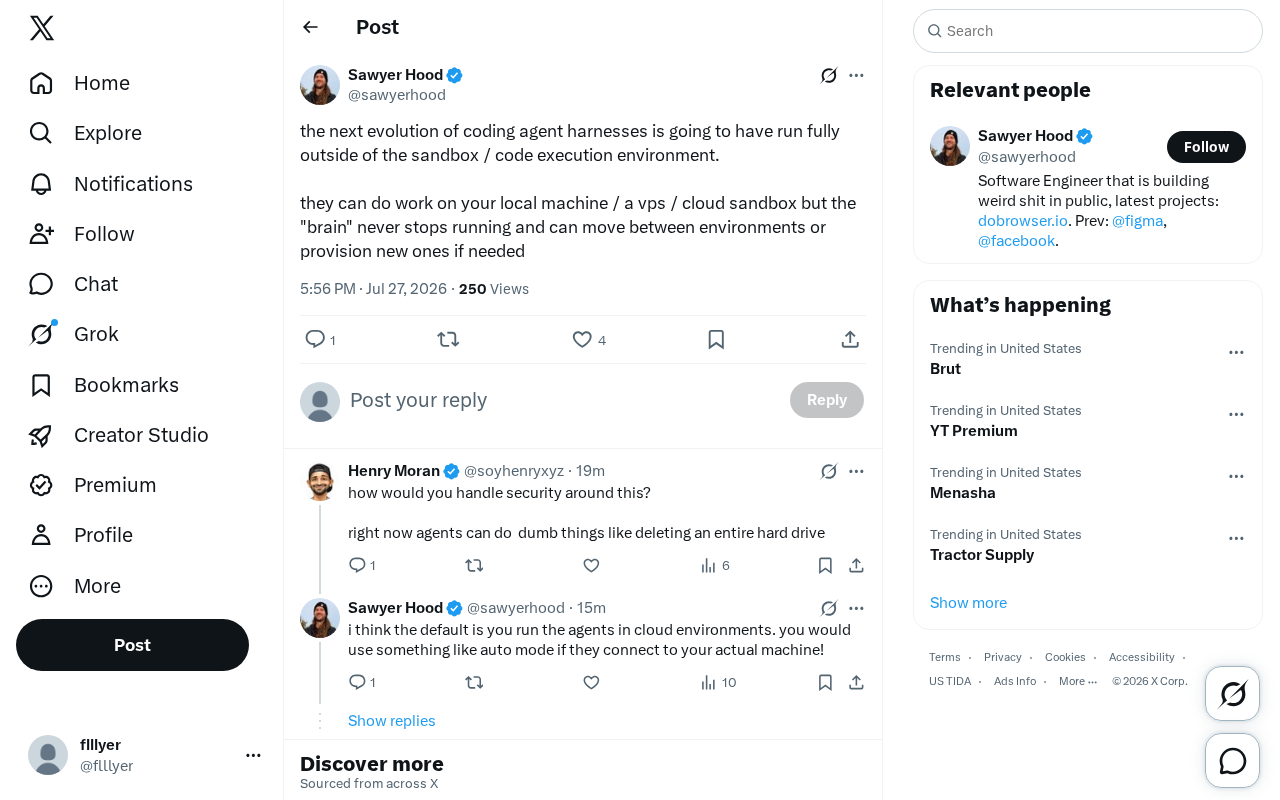
The Next Evolution of Coding Agents: Letting the Brain Break Free from the Sandbox
Exploring the key evolution in coding agent architecture: separating the reasoning core from code execution environments to decouple control and execution planes.
Read more →

·4 min
Choosing the Wrong Agent Ruins Everything: Why the Same Model Can Perform Like Two Completely Different AIs
The same LLM API performs drastically differently under different Agent frameworks. Through a real database crash case, this article analyzes why choosing the right Agent matters more than switching models.
Read more →

·5 min
The Five Stages of AI Agent Architecture Evolution: The Real Path from Model Calls to Production Runtime
Deep dive into the five evolution stages of AI Agent architecture: model calls, tool calls, workflows, Agent loops, and production runtime. Learn the responsibility boundaries and design principles.
Read more →
·3 min
The Next Evolution of Coding Agents: Letting the Brain Escape the Sandbox
Exploring the next evolution in coding agent architecture: decoupling the reasoning core from code execution environments to separate control and execution planes.
Read more →

·8 min
LangChain Crash Course: A Complete Roadmap from Zero to Agent Development
A systematic roadmap from LangChain and LangGraph to multi-agent development, covering RAG, Tool Calling, MCP, and more, helping developers break into AI app development.
Read more →

·5 min
Inside Cursor: How Recursive Model Improvement Enables AI to Self-Evolve
A Cursor ML engineer breaks down AI training methodology: outer/inner loop acceleration, preventing reward hacking, textual feedback, and recursive self-improvement (RSI) where models train the next generation.
Read more →
·3 min
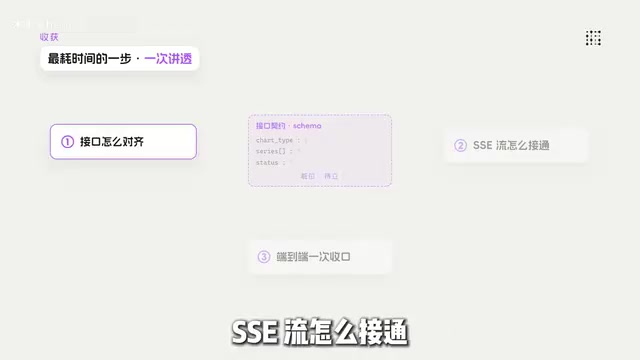
Building an Intelligent Data Analysis Agent: A Complete Guide to Interface Alignment and SSE Streaming Response Integration
A practical guide to interface alignment, SSE streaming integration, and end-to-end testing for enterprise AI Agent projects — eliminate wasted debugging and ship faster.
Read more →