#continuous batching
120 related articles
·7 min
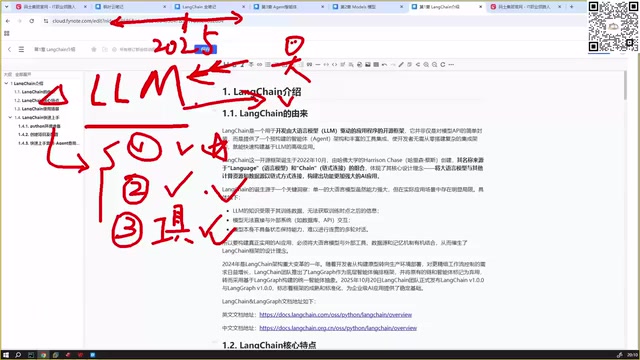
LangChain Hands-On Guide: From LLM Calls to Agent Development
Master LangChain from scratch: the three limitations of LLMs, init_chat_model unified interface config, the Message type system, and the path from LLM calls to Agent development.
Read more →

·5 min
Claude Cowork Arrives on Mobile and Web, with Max Users Getting Early Access
Anthropic's AI collaboration platform Claude Cowork officially expands to mobile and web, breaking free from desktop-only limits. Max subscribers get early access, with other plans rolling out over the coming weeks.
Read more →
·7 min
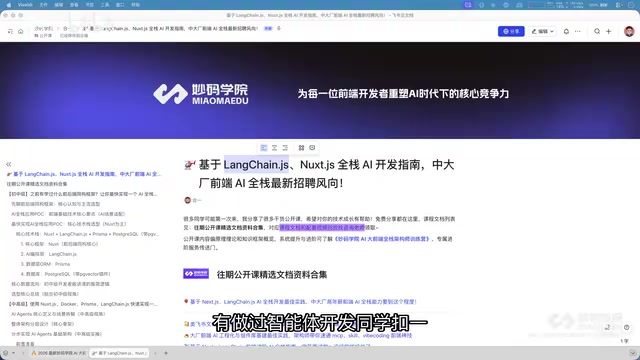
LangChain.js + Nuxt.js: An AI Full-Stack Advancement Path for Frontend Engineers
Frontend hiring now treats AI capabilities as a core assessment, covering RAG knowledge bases, AI Agent development, and LangChain.js engineering. Learn how LangChain.js + Nuxt.js helps frontend developers build memory- and retrieval-capable AI full-stack apps.
Read more →

·6 min
Reverse-Engineering ChatGPT's Source Selection: What Network Traffic Analysis Reveals About AI Citations
By capturing and analyzing ChatGPT's real network traffic during web retrieval, this article reveals the underlying logic of AI source selection—covering the layered mechanisms of retrieval recall and content filtering, domain preference patterns, and practical insights for content creators and SEO professionals.
Read more →

·6 min
GLM 5.2 Arrives: Industry Upheaval on the Eve of AI Margin Collapse
The rise of Zhipu's GLM 5.2 is accelerating the democratization of LLM capabilities. This article analyzes the commoditization of foundation models, the logic behind margin collapse, and the opportunities and challenges facing application-layer and foundation model firms.
Read more →

·4 min
NVFP4 Quantization in Practice: A Guide to Compressing Large Models with NVIDIA Model Optimizer
Deep dive into NVFP4 quantization: using NVIDIA Model Optimizer to compress Nemotron 3 Ultra to FP4 checkpoints, reducing memory by 75% and boosting inference throughput on Blackwell GPUs.
Read more →

·5 min
NVIDIA AI-Q Blueprint × OCI: A Practical Guide to Production Deployment of Enterprise AI Agents
Deep dive into NVIDIA AI-Q Blueprint production deployment on Oracle Cloud Infrastructure, covering NIM microservices, RAG architecture, multi-agent orchestration, and OCI GPU selection for enterprise AI agents.
Read more →

·5 min
NVIDIA AI-Q Blueprint × OCI: A Practical Guide to Production Deployment of Enterprise AI Agents
Deep dive into NVIDIA AI-Q Blueprint production deployment on Oracle Cloud Infrastructure, covering NIM microservices, RAG architecture, multi-agent orchestration, and OCI GPU selection.
Read more →

·6 min
AI Workspace Session and Cache Leaks: A Complete Analysis of Multi-Tenant Isolation Security Risks
AI workspaces face cross-tenant session and cache leak risks that can expose sensitive enterprise data. This article analyzes multi-tenant isolation pitfalls, common architectural flaws, and actionable defenses.
Read more →

·6 min
14x Speedup: How Manticore Rebuilt the ONNX Embedding Inference Path
Manticore Search restructured its ONNX inference path to achieve 14x faster text embeddings. Deep dive into batching, session reuse, zero-copy memory, and thread tuning for vector search systems.
Read more →
Smart Routing to Cut Claude Code Token…
·2 min
Smart Routing to Cut Claude Code Token Costs: How It Works and How to Apply It
Learn how smart routing reduces Claude Code token costs through tiered model scheduling, context compression, and request caching — a practical guide for developers and teams.
Read more →

·7 min
AI Agent Development: A Four-Stage Competency Model from 15K to 40K RMB Salary Growth Path
A detailed four-stage competency model for AI Agent development: from Python/RAG basics (15K) to workflow orchestration (20K), inference optimization (30K), and Agent cluster governance (40K RMB).
Read more →
·8 min
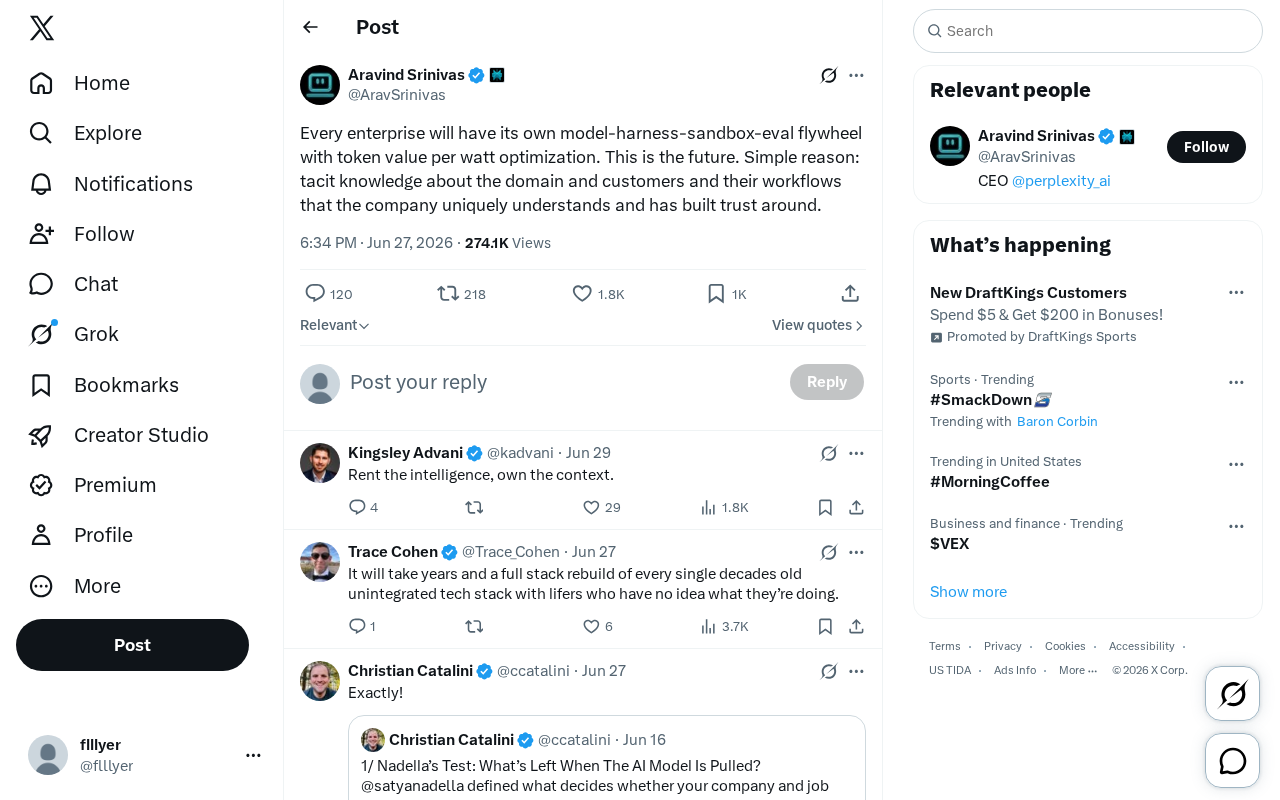
The Enterprise AI Flywheel: Building a Model-Eval Loop as a Competitive Moat
The core of enterprise AI isn't calling general models—it's building a self-reinforcing "model-harness-sandbox-eval" flywheel. This article analyzes the four components, tacit knowledge moats, and the "token value per watt" efficiency metric.
Read more →

·2 min
GLM5.2 Frontend Development Capabilities Tested: Better Aesthetics Than GPT5.5?
Hands-on comparison of GLM5.2 vs GPT5.5 frontend development: GLM5.2 edges ahead in page aesthetics but slow inference and limited API access remain major drawbacks.
Read more →

·3 min
748-Episode AI Large Language Model Development Tutorial: Seven Core Modules from Zero to Project Deployment
Analysis of a 748-episode, 198-hour AI LLM development tutorial covering API integration, prompt engineering, RAG, AI Agents, fine-tuning, multimodal development, and deployment.
Read more →

·3 min
The Complete Skill Map for AI Application Engineers: A Progressive Roadmap from Fundamentals to Production
A systematic breakdown of the complete skill structure for AI application engineers, covering Python & deep learning fundamentals, small model engineering, LLM fine-tuning, Agent development, and enterprise projects.
Read more →

·3 min
AI Agent Loops in Practice: Four PRs Auto-Merged While I Slept
From manual AI prompting to building automated loops — let Agents prompt, review, and merge code themselves. A real-world case: one message triggers four PRs auto-reviewed and merged overnight.
Read more →

·2 min
Baseten Raises $1.5 Billion: Why AI Inference Infrastructure Has Become a Capital Darling
AI inference startup Baseten is raising $1.5B at a $130B valuation. We analyze why inference infrastructure is booming, the competitive landscape, and what this mega-round signals.
Read more →

·3 min
Cursor Composer 2.5: The Secret Behind an Open-Source Model's Reinforcement Training to a Top-3 Coding Benchmark Ranking
Cursor built Composer 2.5 on Kimi K2 open-source model, ranking 3rd on coding benchmarks and surpassing K2.6. Deep dive into Cursor's data flywheel, product architecture, and pricing.
Read more →

·3 min
Fireworks AI Launches Qwen 3.7 Plus: Zero Data Retention and 99.9% SLA for Enterprise Deployment
Fireworks AI launches Qwen 3.7 Plus with latency/throughput optimization, zero data retention, and 99.9% SLA enterprise guarantees. Explore the full-stack deployment solution for commercial open-source model inference.
Read more →