#developer screening
134 related articles

·5 min
Anthropic Updates Cybersecurity Safeguards: How AI Safety Governance Balances Security and Usability
Anthropic updates AI cybersecurity safeguards after U.S. government dialogue. New measures slightly raise false positive rates, with flagged requests downgraded to Opus 4.8 responses. Deep analysis of the security-usability balance in AI governance.
Read more →

·6 min
AI Workspace Session and Cache Leaks: A Complete Analysis of Multi-Tenant Isolation Security Risks
AI workspaces face cross-tenant session and cache leak risks that can expose sensitive enterprise data. This article analyzes multi-tenant isolation pitfalls, common architectural flaws, and actionable defenses.
Read more →

·6 min
Anthropic Launches Life Sciences Hackathon with $100K to Empower AI-Driven Research
Anthropic launches a global life sciences hackathon with Gladstone Institutes, offering $100K in API credits to advance AI-driven scientific research using Claude Science and Claude Code.
Read more →

·3 min
Claude Code Misclassification Appeals Guide: Three Feedback Channels for Optimizing AI Classifiers
Encountering false positives in Claude Code? Learn how to use the /feedback command, thumbs buttons, and other channels to appeal misclassifications and improve AI safety classifiers.
Read more →
OpenAI Europe Employment Report: How A…
·2 min
OpenAI Europe Employment Report: How AI Is Reshaping the EU Labor Market
OpenAI's Europe employment report reveals three pathways AI is reshaping EU labor markets: automation risk, emerging job growth, and human-AI workflow restructuring.
Read more →

·6 min
Python Freelancing Side Hustle in Practice: Platform Channels, Pitfall-Avoidance Guide & Complete Monetization Breakdown
A complete guide to Python tech freelancing: platform comparisons, milestone payment strategies, legal boundaries, delivery management, and building stable client relationships for sustainable side income.
Read more →

·3 min
Python Beginner's Guide from Scratch: Why Python Is Your Best Choice
A complete Python beginner's guide covering language features, six ideal learner profiles, and seven application areas. Discover why Python is the best choice for coding beginners and AI learners.
Read more →

·3 min
CodeRabbit vs DeepSource vs Greptile: In-Depth Comparison of AI Code Review Tools
In-depth comparison of CodeRabbit, DeepSource, and Greptile — three leading AI code review tools analyzed across context understanding, static analysis, and architecture awareness to help teams choose the right solution.
Read more →

·2 min
RAG Recall Rate Optimization: A Full-Pipeline Funnel Engineering Breakdown from Data Ingestion to Reranking
How to fix low RAG recall? A systematic breakdown covering data ingestion, query processing, retrieval strategy, and reranking—including semantic chunking, HyDE, hybrid search, and Cross-Encoder reranking.
Read more →

·3 min
The Complete Evolution of RAG: A Six-Generation Journey from Naive Retrieval to Multimodal
A complete guide to RAG evolution from Naive RAG through Advanced, Agentic, Graph, and Multimodal RAG — covering core techniques, pain points solved, and real-world use cases.
Read more →
·3 min
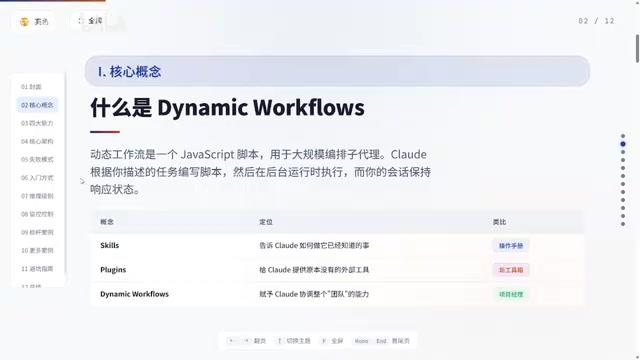
Claude Code Dynamic Workflows: Orchestrating Hundreds of Sub-Agents Working in Parallel
Deep dive into Claude Code Dynamic Workflows: enable parallel sub-agent orchestration via three methods for multi-agent collaboration and automated pipelines.
Read more →

·2 min
Cloning Successful Apps to $35K/Month: An Indie Developer's Validation-First Methodology
A former optometrist self-taught coding and earns $35K/month by cloning validated apps. Learn his 4-step screening, data-driven validation, and growth strategy.
Read more →

·3 min
Google Launches European Robotics Accelerator: 15 Startups Selected as the Physical AI Race Begins
Google launches its European Robotics Accelerator with 15 startups selected. The program offers Gemini Robotics models, AI stack access, and team support to advance Physical AI.
Read more →

·3 min
OpenAI Reveals Its AI Policy Stance: Why Transparency Matters
OpenAI publicly outlines its AI policy stance and advocacy approach. This article analyzes the logic behind transparency, the challenges of tech policy lobbying, and implications for AI regulation.
Read more →

·4 min
AI Full-Stack Development Architecture: A Three-Layer Progressive Path from Prototype to Production
A detailed guide to AI full-stack development architecture covering Node.js+TypeScript+Monorepo engineering, Docker CI/CD deployment, and AI engine design with interview tips.
Read more →

·1 min
Gemma 4 12B: Google's Open-Weight Model Runs Locally on Your Laptop
Google releases Gemma 4 12B, an open-weight model that runs locally on laptops. Learn about its performance, local deployment value, and the open-source LLM competitive landscape.
Read more →

·3 min
Nexent Open-Source Platform: Zero-Code Auto-Generation of Production-Grade AI Agents
Deep dive into Nexent's open-source platform for zero-code production-grade AI Agent generation, covering Harness Engineering, built-in controls, use cases, and comparisons with AutoGen and CrewAI.
Read more →

·2 min
CascadeFlow: Deep Dive into the AI Agent Cascading Runtime Optimization Framework
Deep dive into the CascadeFlow open-source framework and how it optimizes AI Agent cost, latency, quality, and policy decisions through cascading runtime mechanisms for production deployment.
Read more →

·3 min
Deep Dive into LangChain's Social Media Agent Open-Source Project: Architecture, Features, and Practical Value
In-depth analysis of LangChain's open-source social-media-agent: content sourcing, AI curation, scheduled publishing, Human-in-the-Loop design, and LangGraph architecture.
Read more →

·3 min
Connecting Zotero MCP to Claude and Codex: A Deep Writing Workflow Powered by Your Local Reference Library
Learn how to connect your local Zotero library to Claude and Codex via Zotero MCP for AI-assisted academic writing with real citations, PDF-to-Markdown optimization, and ARS command workflows.
Read more →