#digital assistant
557 related articles
 Tech Frontiers
·3 min
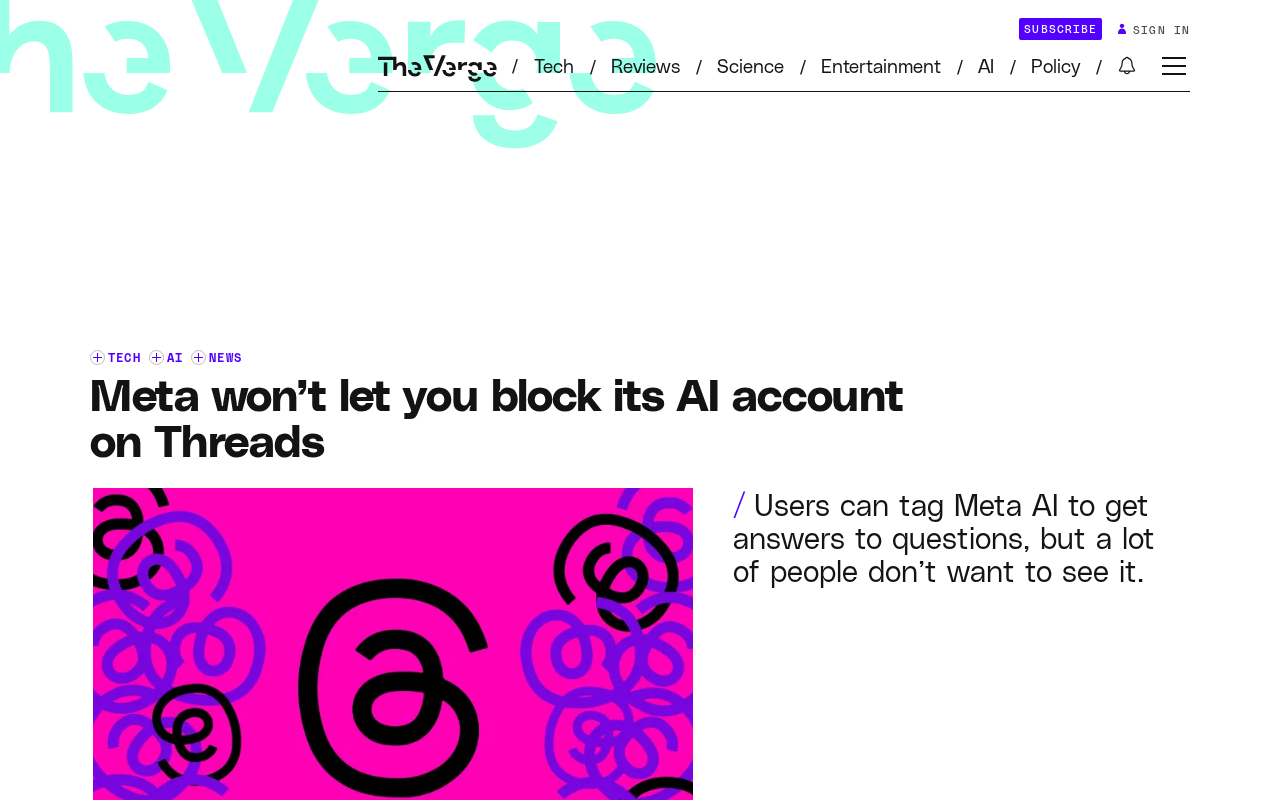
Threads Won't Let Users Block Meta AI Account: Forced AI Integration Sparks User Rights Controversy
Meta is testing an AI account on Threads that users can @mention for information but cannot block. This design sparks controversy over user autonomy, privacy, and platform governance amid Big Tech's AI push.
Read more →
 Product Reviews
·3 min
MaxKB Open-Source Agent Platform: A Deep Dive into the 20K-Star Enterprise Knowledge Base RAG Solution
Deep dive into MaxKB, an open-source enterprise agent platform with 20K+ GitHub Stars. Explore its RAG capabilities, multi-model integration, visual orchestration, and comparison with Dify and FastGPT.
Read more →
 Product Reviews
·2 min
Fay Open-Source Agent Framework: The Connection Layer Between Digital Humans and Business Systems
Fay is an open-source Agent framework with 12,700+ GitHub Stars, connecting digital humans, LLMs like DeepSeek, and enterprise systems for customer service, virtual streaming, and more.
Read more →
 Tutorials
·3 min
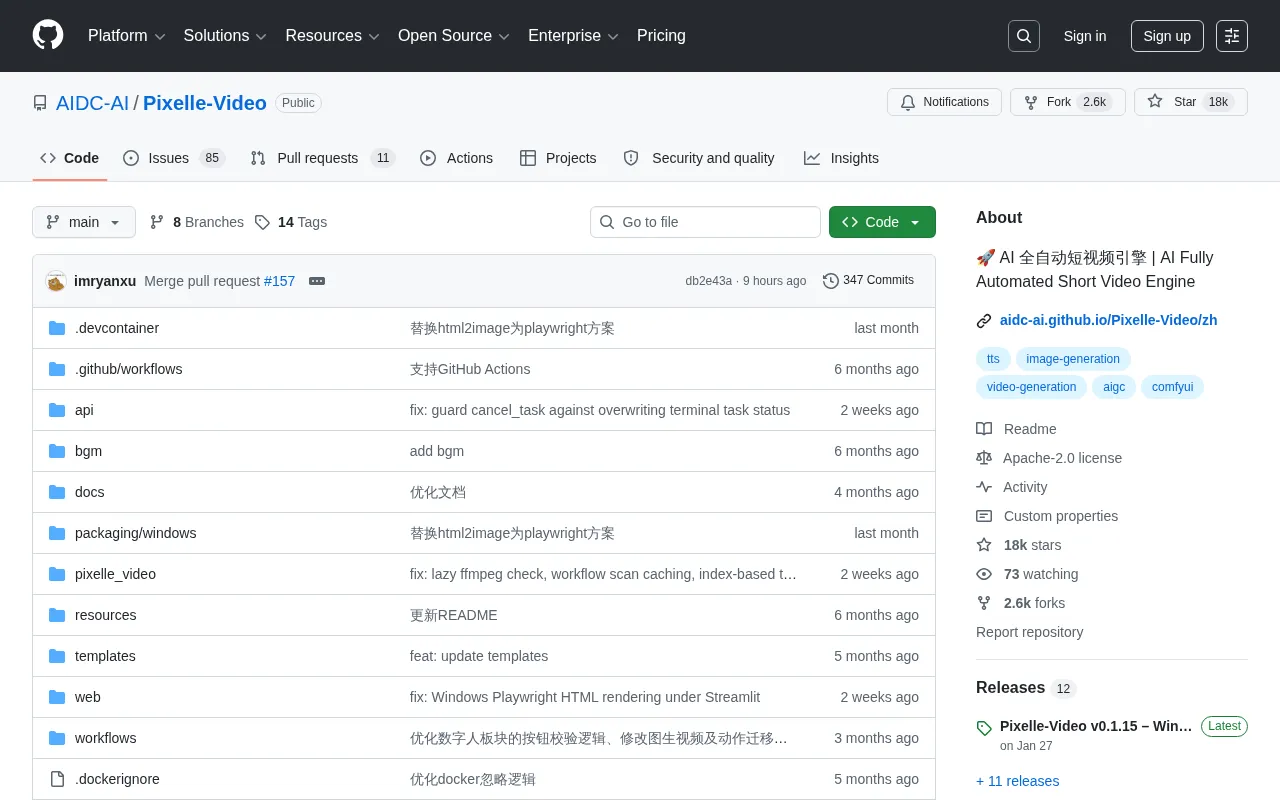
Pixelle-Video Open Source Tutorial: Deep Dive into the AI Fully Automated Short Video Engine with 14K Stars
Deep dive into Pixelle-Video, a trending open-source AI short video engine with 14K+ GitHub Stars. Explore its end-to-end automation, architecture, use cases, and how to get started.
Read more →
 Deep Dives
·3 min
Open Computer Use: An Open-Source Framework for AI Agents to Autonomously Control Computers
Open Computer Use is an open-source TypeScript AI agent framework enabling automated computer control via browser, terminal, and desktop. Learn about its features, architecture, and comparison with Claude Computer Use.
Read more →
 Deep Dives
·3 min
Auto-Use Open Source Project Explained: One AI Agent to Handle Your OS, Browser, and Code
Deep dive into the Auto-Use open source project—an end-to-end AI Computer Use Agent that unifies OS control, browser automation, and coding. Analysis of architecture, competitors, and industry trends.
Read more →
 Deep Dives
·3 min
Factifai: A Deep Dive into the Visual AI-Powered Open-Source Tool for CI/CD Automated Testing
Deep dive into how Factifai Agent Suite uses vision LLMs like Claude and GPT-4o to replace DOM selectors for natural language-driven automated testing with seamless CI/CD integration.
Read more →
 Tutorials
·3 min
DeepSeek API Integration Guide: Deep Dive into a 37K-Star GitHub Open Source Project
Deep analysis of the 37K-star awesome-deepseek-integration GitHub project, covering DeepSeek API integration with VS Code, Obsidian, LangChain, and more mainstream tools.
Read more →
 Product Reviews
·2 min
LobeHub Open Source Project Deep Dive: How a Multi-Agent Collaboration Platform is Reshaping AI Workflows
Deep dive into LobeHub's open-source multi-agent collaboration platform, covering core features, technical architecture, and industry trends. Learn how this 75K+ Star GitHub project redefines human-AI collaboration through Agent team design and multi-agent coordination.
Read more →
 Product Reviews
·3 min
Deep Dive into CowAgent: What's Behind This 44,000-Star Open Source AI Assistant?
Deep dive into CowAgent, a GitHub project with nearly 44,000 stars. Explore its task planning, multi-platform integration, multi-model support, and how this LLM-powered AI assistant serves as both personal helper and enterprise digital employee.
Read more →
 Product Reviews
·3 min
Deep Dive into CowAgent: The Open-Source AI Agent Framework with 44,000 Stars
Deep analysis of CowAgent (formerly chatgpt-on-wechat), a 44K-star open-source AI Agent framework with proactive thinking, task planning, skill creation, and multi-platform support for building personal AI assistants and enterprise digital employees.
Read more →
 Product Reviews
·3 min
Deep Dive into CowAgent: How This 44K-Star Open Source Project Builds a Super AI Assistant
Deep dive into CowAgent (chatgpt-on-wechat), a 44K-star GitHub project featuring AI Agent capabilities, multi-platform integration with WeChat/Feishu/DingTalk, and multi-model support for building your own AI assistant.
Read more →
 Product Reviews
·3 min
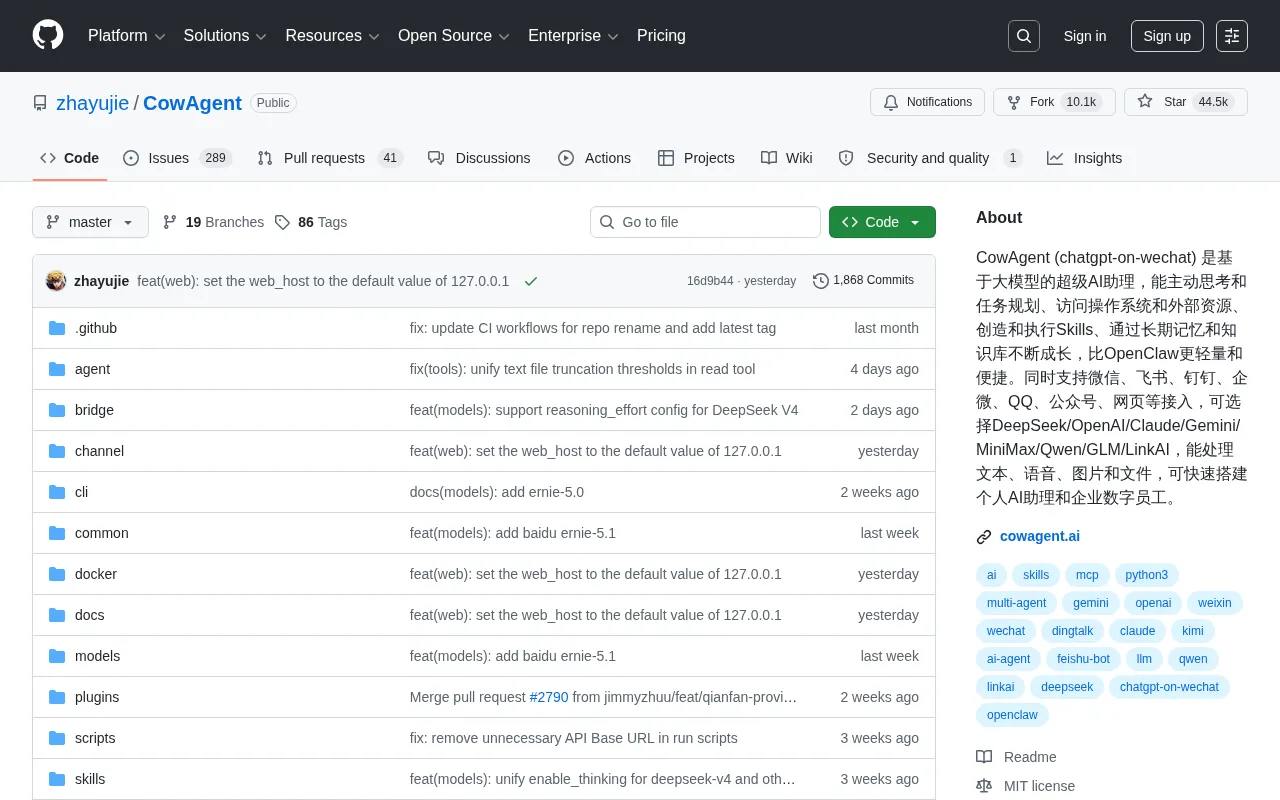
Deep Dive into CowAgent: The Open-Source AI Assistant with 44,000 Stars
Deep dive into CowAgent (formerly chatgpt-on-wechat), a 44K-star GitHub project offering Agent capabilities, multi-platform integration with WeChat/Feishu, and multi-model support including DeepSeek.
Read more →
 Product Reviews
·3 min
CowAgent Open-Source AI Agent Deep Dive: The Super Intelligent Assistant with 44K GitHub Stars
A deep dive into CowAgent, the 44K-star open-source AI Agent on GitHub. Supports WeChat, WeCom, Feishu, and more, with DeepSeek, GPT-4o, Claude compatibility and full Agent capabilities.
Read more →
 Product Reviews
·1 min
CowAgent: An Analysis of the Super AI Assistant Open-Source Project Powered by Large Language Models
CowAgent is an open-source super AI assistant powered by LLMs with 44K GitHub Stars, supporting WeChat, Feishu, DingTalk with agent capabilities.
Read more →
 Product Reviews
·1 min
nanobot: Ultra-Lightweight Personal AI Agent Goes Viral on GitHub
nanobot, an ultra-lightweight personal AI Agent from HKUDS, has gone viral on GitHub with 41K+ Stars. Learn why this minimalist framework is reshaping the AI Agent landscape.
Read more →
 Tech Frontiers
·3 min
Programmer Yupi Open-Sources yupi-skill: Distilling Personal Experience into an AI Agent Skill Package
Programmer Yupi open-sources yupi-skill on GitHub, distilling coding experience into an Agent Skill package for Claude Code, Cursor, and other AI tools.
Read more →
 Product Reviews
·2 min
Simon Willison Used Claude Code on His Phone to Add Wildlife Sightings to His Blog
Simon Willison used Claude Code's web version on his phone to integrate a decade of iNaturalist wildlife observations into his blog, showcasing AI-assisted mobile development.
Read more →
 Product Reviews
·4 min
LibreChat: A Complete Guide to the Open-Source Multi-Model AI Chat Platform
In-depth guide to LibreChat, an open-source AI chat platform covering multi-model aggregation, MCP protocol, Agents, code interpreter, deployment tutorials, and comparisons with alternatives.
Read more →
 Expert Opinions
·5 min
In the Age of Vibe Coding, How Does RSS Become the Best Distribution Solution for Personal Micro-Apps?
Vibe Coding makes building apps as simple as blogging, but how to distribute the flood of micro-apps? Matt Webb proposes RSS as the ideal protocol for sharing vibe-coded tools. Deep analysis inside.
Read more →