#dynamical systems
1550 related articles
 Deep Dives
·2 min
Cursor SDK /orchestrate Explained: Recursive Multi-Agent Collaboration for Complex Programming Tasks
Cursor SDK launches /orchestrate skill, using recursive multi-agent spawning for complex tasks with 20% Token savings and 80% faster cold starts.
Read more →
 Deep Dives
·3 min
AgentPay: A Deep Dive into the Decentralized Payment Marketplace for Autonomous AI Agent Transactions
Deep dive into AgentPay, an open-source project enabling AI agents to autonomously provide DeFi optimization, smart contract auditing services and settle payments via stablecoins in a decentralized marketplace.
Read more →
 Tech Frontiers
·2 min
DeadEnd-CLI: Open-Source AI Penetration Testing Tool Achieves 81% Pass Rate on Black-Box Benchmark
DeadEnd-CLI is an open-source AI agentic penetration testing tool achieving 81% full black-box pass rate on the XBOW benchmark using KIMI K2.5, with multi-model support and self-hosted deployment.
Read more →
 Deep Dives
·4 min
Context Engineering Explained: The AI Paradigm Shift from Prompt to Context Engineering
Deep dive into Context Engineering: its core principles and practices. From Prompt Engineering to context design, orchestration, and optimization—exploring how Karpathy's new AI paradigm reshapes LLM app development and AI Agent construction.
Read more →
 Product Reviews
·3 min
ZeroClaw: Deep Dive into the Multi-MCP Router & SDK Toolkit for Claude Code
Deep dive into ZeroClaw Plugin Hub, a multi-MCP router and SDK toolkit for Claude Code. Explore its routing capabilities, Agentic CLI design, SDK architecture, and how it solves AI tool ecosystem fragmentation.
Read more →
 Tech Frontiers
·2 min
Kimi K2 Official Verification Tool K2-Vendor-Verifier: One-Click API Vendor Model Accuracy Detection
Moonshot AI open-sources K2-Vendor-Verifier to verify third-party Kimi K2 API vendor inference accuracy. Learn how this tool helps developers detect over-quantization, model substitution, and other API market risks.
Read more →
 Tech Frontiers
·3 min
Kimi-Writer: An Open-Source AI Novel Writing Agent Powered by Deep Reasoning
Deep dive into the Kimi-Writer open-source project — an AI novel writing Agent built on Kimi-K2-Thinking with deep reasoning, autonomous planning, and long-form narrative capabilities.
Read more →
 Product Reviews
·3 min
TRE Regex Engine Python Binding in Practice: From Principles to ReDoS Defense
Deep dive into TRE regex engine's backtracking-free design, Python ctypes binding implementation, and ReDoS defense testing compared to Python's re module for security-sensitive applications.
Read more →
 Research
·3 min
SVDQuant: 4-bit Quantization Enables Efficient Diffusion Model Inference on Consumer GPUs
SVDQuant, an ICLR 2025 Spotlight paper, achieves 4-bit diffusion model quantization via low-rank decomposition that absorbs outliers, reducing memory by 75%. Open-source engine Nunchaku (3800+ stars) enables FLUX inference on consumer GPUs like RTX 4060.
Read more →
 Tech Frontiers
·2 min
Codex Adds OpenAI Developers Plugin — Building AI Apps with AI Just Got Easier
OpenAI Codex adds the Developers plugin, letting developers directly access OpenAI API docs and best practices to rapidly build AI Agents and smart apps.
Read more →
 Tutorials
·3 min
Claude Code Domestic Alternative: Low-Cost Deployment and Six Core Architecture Components Explained
Detailed guide on deploying Claude Code domestic alternatives via compatible API interfaces. Deep dive into six core systems: built-in tools, hierarchical memory, multi-Agent collaboration, and more.
Read more →
 Tech Frontiers
·2 min
Android 17 Officially Released: A Deep Dive into Nine New Features and How It Balances AI with Practicality
Google officially releases Android 17 with nine new features including AI voice input, vibe-coded widgets, Emoji overhaul, and screen time management tools.
Read more →
 Deep Dives
·3 min
Augment Code Architecture Revealed: Dedicated Subagents Replace KV Cache, Cutting Costs by 90%
Deep dive into how Augment Code uses Mercury 2 dedicated subagents to replace traditional KV cache, achieving 82% faster context compaction, 90% lower summarization costs, and 30% reduced LLM spending.
Read more →
 Tech Frontiers
·2 min
Augment Launches Prism Smart Routing: Automatically Selects Optimal Models to Cut Costs by 30%
Augment launches Prism, an intelligent model router that automatically assigns requests to the optimal AI model during multi-turn coding, matching frontier quality while cutting costs 20-30%.
Read more →
 Tech Frontiers
·2 min
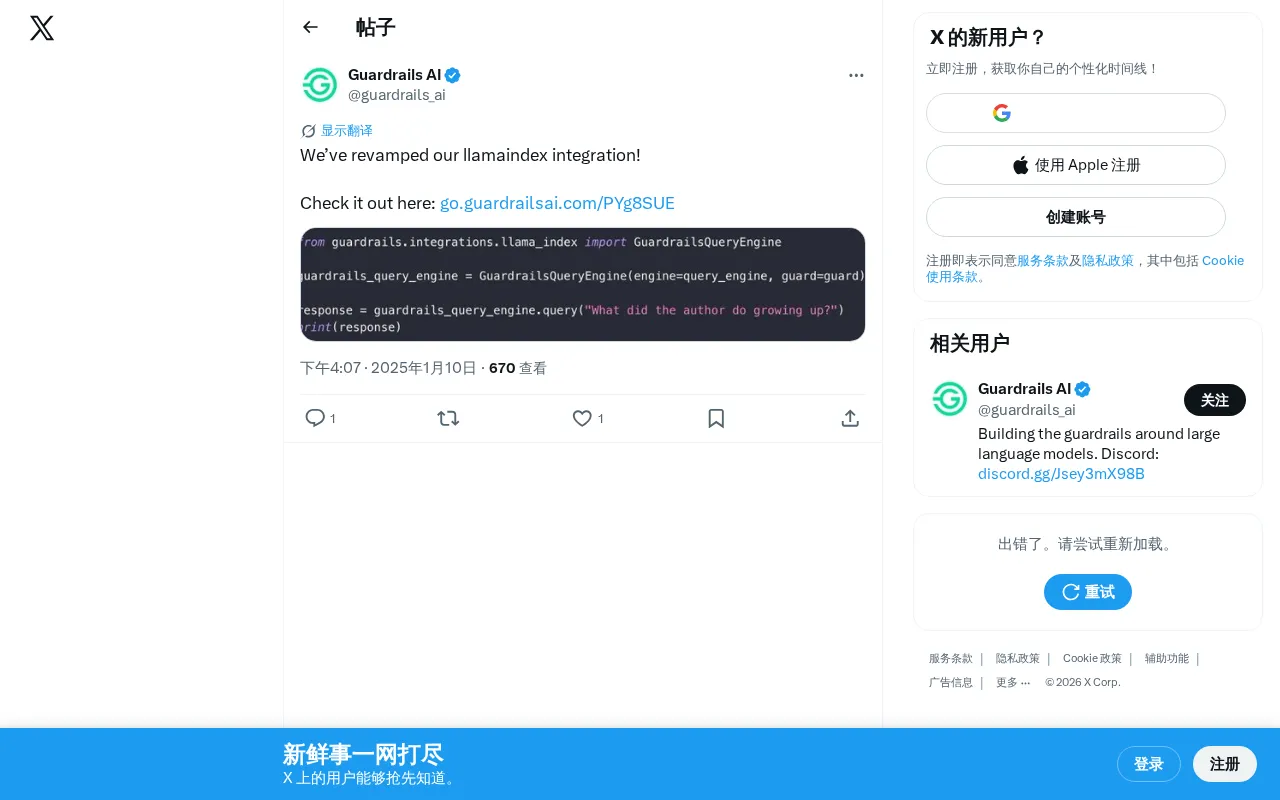
LlamaIndex Integrations Get a Major Overhaul: Key Upgrade Points Every Developer Should Know
LlamaIndex official integrations get a major overhaul covering API optimization, documentation improvements, and unified interfaces. Learn the impact on RAG and LLM app development with migration tips.
Read more →
 Tech Frontiers
·3 min
Google Intercepts AI-Generated Zero-Day Exploit for the First Time: Cybersecurity Enters the Age of AI Warfare
Google's threat intelligence team intercepted the first AI-assisted zero-day exploit targeting 2FA bypass. Explore how AI is reshaping cyberattacks and what enterprises must do to defend against AI-driven threats.
Read more →
 Product Reviews
·3 min
MiroFlow Open-Source AI Workflow Framework Review: The Strengths and Concerns Behind Top Rankings Across Multiple Benchmarks
In-depth review of MiroFlow open-source AI workflow framework: technical architecture behind 5+ benchmark Top-1 rankings, multi-model support, Web UI, and comparison with LangChain and Dify.
Read more →
 Tech Frontiers
·2 min
DeepAgents: LangChain's Deep Agent Development Framework Built on LangGraph
DeepAgents is LangChain's open-source Agent framework built on LangGraph, supporting multi-step reasoning, state management, and multi-Agent collaboration for production-grade AI development.
Read more →
 Deep Dives
·3 min
LangGraph Deep Dive: An Open-Source Framework for Building Resilient AI Agents
Deep dive into LangGraph's core architecture, StateGraph design, multi-Agent collaboration, and deployment. Learn how this 31K+ Star project helps build reliable AI Agents.
Read more →
 Product Reviews
·3 min
Team Memory MCP: A Deep Dive into the Shared Memory System for AI Coding Agents
Deep dive into team-memory-mcp, an open-source shared memory system for AI coding agents like Claude Code and Cursor, featuring Bayesian confidence scoring and temporal decay via MCP protocol.
Read more →