#fair use doctrine
20 related articles

·3 min
AirTag Tracking Reveals: Amazon Suspected of Destroying Rare Books to Train AI
404 Media journalists used AirTags to track rare books, discovering they were sent to Amazon AI training facilities. The investigation reveals AI companies may be destructively scanning rare books for training data.
Read more →

·3 min
Court Rejects Fair Use Defense, Orders YouTube to Reveal Identity of Anime Recap Channel Operators
Court rejects anime recap channels' fair use defense and orders YouTube to reveal anonymous operators' identities, signaling growing legal risks for video commentary creators.
Read more →

·3 min
San Francisco Civil Servant Pay Exposed: The Truth Behind the $900K Annual Salary
Deep analysis of SF municipal employee pay report: the truth behind $900K salaries, overtime-driven compensation, fiscal sustainability concerns, and the value of public pay transparency.
Read more →

·3 min
Japan Asks the U.S. to Stop Using Mario and Other IPs for Memes: IP Protection Meets Cross-Border Diplomatic Tensions
Japan formally asks the U.S. to stop using Mario, Pokémon, and Naruto for memes. Explore the IP protection, government social media compliance, and cross-border cultural asset issues at stake.
Read more →

·3 min
Can the MIT License Be Used for Closed-Source Code? A Complete Analysis
Can the MIT License be used for closed-source proprietary software? Must code be public for the MIT License to work? A complete guide for developers on MIT licensing and closed-source code.
Read more →

·2 min
Anthropic's Call to Restrict Open-Source Models Sparks Outrage: Safety or Monopoly?
Anthropic CEO's call to restrict "dangerous capabilities" in open-source AI models sparks fierce backlash. Developers question double standards and fear monopoly disguised as safety.
Read more →

·4 min
AI Companies Buy Books, Scan Them, Then Destroy Them: Pulping of Rare Books Sparks Cultural Preservation Debate
Some AI companies are mass-purchasing physical books for destructive scanning and pulping to obtain training data, even targeting rare antiquarian volumes. This article analyzes the technical motivations, legal gray areas, and cultural preservation controversies.
Read more →

·4 min
AI Companies Buy, Scan, and Destroy Books: Pulping Rare Volumes Sparks Cultural Preservation Debate
Some AI companies are mass-purchasing physical books for destructive scanning and pulping—even rare and antiquarian volumes—to obtain training data, sparking heated cultural preservation debates.
Read more →

·3 min
AI Companies Destroying Rare Books for Training Data: The Cultural Cost Behind Efficiency
Some AI companies are buying rare antique books, using destructive scanning for training data, then destroying the originals. This raises urgent questions about AI data ethics and cultural heritage.
Read more →

·3 min
AI Companies Are Destroying Rare Books to Obtain Training Data
AI companies are using destructive scanning to shred physical books—including rare editions—for training data. This article examines the efficiency logic, cultural costs, and copyright gray areas.
Read more →

·4 min
Qwen-Image 3.0 Released: Image Generation Moves Toward Production-Ready Design
Qwen-Image 3.0 supports 4.5K token instructions, 10px text rendering, and 12-language typography for production-ready posters and infographics. Plus: Anthropic settlement, Grok in Excel, Tencent HRAP 1.0.
Read more →
Getting Legal AI Right: Why the Coding…
·2 min
Getting Legal AI Right: Why the Coding Agent Paradigm Doesn't Translate
Most legal AI products are just general-purpose models wrapped in RAG and prompt engineering scaffolding. Learn why the coding agent paradigm fails in law and what real legal AI requires.
Read more →

·4 min
New York Times Accuses OpenAI of Concealing Evidence, Escalating ChatGPT Copyright Lawsuit
The New York Times and other publishers accuse OpenAI of withholding key tools and datasets in the ChatGPT copyright lawsuit, filing a sanctions motion. A deep analysis of the Discovery dispute, AI training data copyright dilemmas, and implications for AI industry compliance.
Read more →

·2 min
NYT Accuses OpenAI of Hiding Billions of Logs: A Deep Dive into the AI Copyright Lawsuit
NYT accuses OpenAI of faking inability to search training data and hiding billions of logs. A deep dive into the allegations, legal implications, and impact on AI copyright compliance.
Read more →

·3 min
GPT-5.6 Three-Tier Model Lineup Leaked, OpenAI May Delay IPO to Next Year
OpenAI previews GPT-5.6 models Sol, Terra, Luna; Codex launches on mobile; SenseTime develops U1 Pro rivaling GPT Image; Gemini enters Android Auto; OpenAI IPO may slip to next year.
Read more →

·4 min
ABC Pushes Back Against FCC Investigation: Government Must Not Interfere with Editorial Independence
ABC publicly rebukes the FCC for investigating The View, warning against government intrusion into editorial independence. A deep dive into the First Amendment, broadcast regulation, and the chilling effect.
Read more →

·6 min
America's 250th Anniversary: Behind the Fireworks, Founding Ideals Still Face Serious Challenges
As the U.S. marks its 250th anniversary with France lighting the Eiffel Tower and Japan setting off fireworks, its founding ideals of liberty and democracy face ongoing threats.
Read more →
·2 min
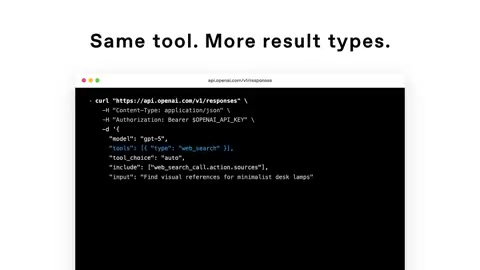
OpenAI Responses API Image Search Feature Explained: A Practical Guide to Multimodal Search Development
OpenAI Responses API adds image search capability, letting developers get text and image results via a single interface. Learn the feature details, use cases, and impact on AI development.
Read more →
 Tech Frontiers
·2 min
Chris Olah Invited to Papal Encyclical Launch: A Historic Dialogue Between AI Safety and Religious Ethics
Anthropic co-founder Chris Olah was invited to speak at Pope Leo XIV's encyclical launch, marking a new milestone in the dialogue between AI safety and Vatican ethics.
Read more →
 Industry Insights
·3 min
The Border Is Everywhere: How Security Surveillance Technology Is Infiltrating Everyday Life
Security surveillance tech is spreading from national borders to city streets, schools, and phones. This article examines AI surveillance, facial recognition, predictive policing, and the fear economy threatening privacy and civil liberties.
Read more →