#iterative AI writing workflow
545 related articles

·6 min
Using RL to Please the Reward Model: The Reward Hacking Concern Behind Soaring Elo Scores
When RL continuously optimizes models to please reward models, do soaring Elo scores truly represent capability gains? A deep dive into Reward Hacking in RLHF, Goodhart's Law in AI, and industry countermeasures.
Read more →

·3 min
AI Cybersecurity Assessment: Capability Boundaries Revealed by Three Real-World Attack Incidents
Analysis of three real cyberattack incidents reveals AI's actual capability boundaries in offensive operations, exposing gaps between lab benchmarks and real-world threats for better security assessment.
Read more →

·3 min
AI Cybersecurity Assessment: Capability Boundaries Revealed by Three Real-World Attack Incidents
Investigating three real cyberattack incidents to analyze AI's true role in offensive operations, examining the gap between lab assessments and real threats for better AI security evaluation.
Read more →

·3 min
No Python Required: A Unified Multimodal Local AI Generation CLI Tool
A CLI tool that enables local text, image, video, music, and 3D generation without Python. Explore its technical approach, advantages, limitations, and the growing trend of local AI tooling.
Read more →

·4 min
G.I.A.ac: An AI Architect That Generates Working Apps from a Single Sentence
G.I.A.ac (General Intelligence Architect) is an AI architect tool that generates runnable apps from a single sentence. Deep dive into its positioning, competitive landscape, target users, and core challenges.
Read more →

·2 min
Prompt Anything Review: Is This AI Prompt Auto-Generation Tool Worth Using?
In-depth review of Prompt Anything, an AI prompt generation tool with 13 scenario modes, smart questioning, and cost-optimized routing to help users create expert-level prompts for ChatGPT, Midjourney, and more.
Read more →

·3 min
Why AI Products Always Fall Short: The Key Is Deletion, Not Creation
jQuery UI creator Paul Bakaus identifies the core quality problem in AI products: it's not insufficient generative power, but a lack of editorial judgment. When AI output density is too high, human aesthetic trade-offs become the key differentiator.
Read more →

·4 min
9 Hours, 4 Million Tokens: AI Creates a Stunning WebGPU Snow Rendering Masterpiece with Claude Code
Reddit user Noniv used Claude Code with the Opus model to build SNOWFLOW, a stunning WebGPU real-time snow renderer, in just 9 hours using 4 million tokens. A deep dive into prompt strategy, snow shaders, and performance optimization.
Read more →

·2 min
Bun Now Generates CLAUDE.md by Default: The AI-Native Development Era Has Arrived
Bun runtime now generates a CLAUDE.md file by default with bun init, signaling AI assistants becoming first-class citizens in the development toolchain.
Read more →
·4 min
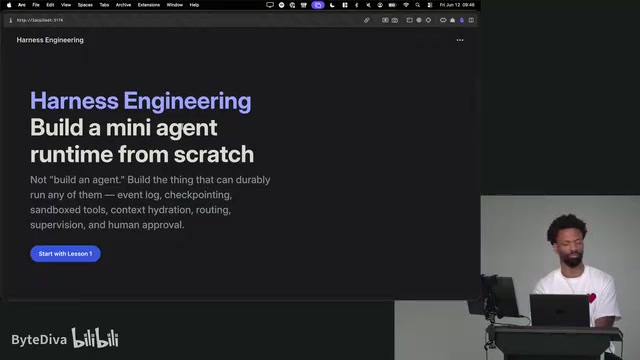
Harness Engineering: The Core Infrastructure for Taking AI Agents from Demo to Production
Deep dive into Harness Engineering: why AI Agents need memory management, durable execution, guardrails & approvals to go from demo to production.
Read more →

·4 min
Harness Engineering: The Core Infrastructure for Taking AI Agents from Demo to Production
Deep dive into Harness Engineering: why AI Agents need memory management, durable execution, guardrails & approvals to reach production. Based on Scott Moss's workshop.
Read more →

·3 min
How to Elegantly Access Top AI Models Like GPT and Claude from China
Chinese users face registration, payment, and network barriers when accessing GPT, Claude, and other top AI models. This guide covers AI aggregation platforms as a one-stop solution.
Read more →

·3 min
Backend Developer Transition to AI/LLM: 4 Core Skills and a Practical Learning Roadmap
Complete guide for backend developers transitioning to AI/LLM engineering. Covers the 4 core skills—Python, RAG, Fine-tuning, and Agents—with a phased learning roadmap and practical project advice.
Read more →

·4 min
Spring AI 2.0 in Practice: Building an Enterprise RAG Knowledge Base Q&A System with Cursor
Build an enterprise RAG knowledge base Q&A system using Spring AI 2.0, Cursor AI programming, Ollama local deployment, and Redis vector storage. Runs on just 4GB VRAM.
Read more →

·2 min
How Gamma Uses AI to Reinvent Presentations: A Complete Revolution from Product to Workflow
Gamma CEO Grant Lee shares how the company deeply integrates OpenAI technology to drive presentation innovation with AI—from image generation to content creation and internal development workflows.
Read more →

·5 min
Running GPT-5.6 Inside Claude Code: Best Practices for Subagent Orchestration and System Prompts
Deep dive into running OpenAI GPT-5.6 inside Claude Code: comparing Codex vs Claude Code on subagent orchestration, workflow design, and system prompt quality, revealing how harness engineering determines model output.
Read more →

·4 min
Getting Started with AI Agent Development: A Complete Guide from Concept to Practice
A comprehensive guide to AI Agent architecture and development, covering automated marketing, intelligent customer service, and investment analysis scenarios with single and multi-agent collaboration.
Read more →

·3 min
A Beginner's Guide to AI Agents: Two Learning Paths for Developers and Practitioners
How to learn AI Agents from scratch? This guide covers two clear paths: developers go from Python to LLMs to open-source framework source code; practitioners use Claude Code or similar tools to get results fast.
Read more →

·3 min
From RAG to Agent Tuning: A Complete Guide to Deploying LLM Agents
A deep dive into LLM Agent frameworks covering RAG, Agent core components (tools, memory, planning), and Agent Tuning workflows with cost considerations for production deployment.
Read more →
·2 min
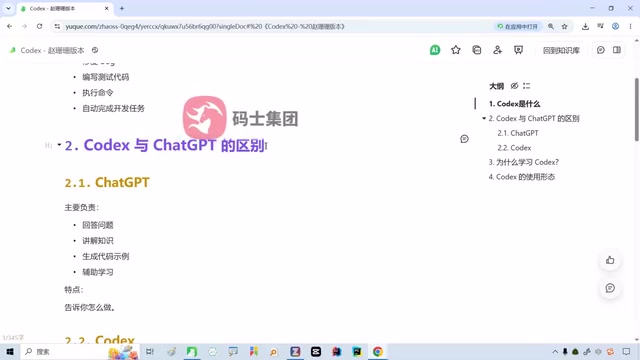
Codex Beginner's Guide: Understanding the Difference Between OpenAI's Coding Agent and ChatGPT
A detailed guide to OpenAI Codex coding agent: understand how it differs from ChatGPT, how AI agents autonomously generate, debug, and test code, and why developers need to learn this new paradigm.
Read more →