#open-source physics engine
139 related articles

·5 min
Natively Porting Command & Conquer: Generals to macOS and iOS with the Fable Framework
Using the Fable porting framework, Command & Conquer: Generals has been natively ported to macOS, iPhone, and iPad. Explores DirectX-to-Metal challenges, touch adaptation, and game preservation.
Read more →

·6 min
14x Speedup: How Manticore Rebuilt the ONNX Embedding Inference Path
Manticore Search restructured its ONNX inference path to achieve 14x faster text embeddings. Deep dive into batching, session reuse, zero-copy memory, and thread tuning for vector search systems.
Read more →

·4 min
Godot Game AI Development: Building Autonomous NPC Planning with GOAP
A deep dive into building a GOAP (Goal-Oriented Action Planning) AI system in Godot — moving beyond FSMs and behavior trees to enable autonomous NPC planning. Covers core mechanics, extensions, and real-world test cases.
Read more →

·2 min
Building an FPS Game with ECS Architecture and AI: A First-Person Shooter from Scratch
Learn how to build an FPS game from scratch using ECS architecture (Entity-Component-System) and AI-assisted coding, featuring movement, shooting, magazine management, and minimap.
Read more →

·2 min
AIVenture: Master Agent Development and Vibe Coding Through a Dungeon Game
AIVenture is an open-source retro dungeon game by Google that teaches Vibe Coding, agentic workflows, and tool calling through playable levels. Built with Angular, Phaser.js, and Gemma.
Read more →

·3 min
Liang Wenfeng and DeepSeek: How an Idealist Is Disrupting Global AI with Algorithmic Efficiency
Why did DeepSeek go open-source? How does a 300-person team beat tech giants? A deep dive into Liang Wenfeng's logic: flat org, algorithmic efficiency, and open-source disruption.
Read more →

·3 min
Claude Sonnet 5 Hands-On Review: The Hidden Token Trap That Makes 'Low Cost' an Illusion
Claude Sonnet 5 promises near-Opus 4.8 performance at lower cost, but hands-on tests reveal a critical trap: a new tokenizer inflates token consumption, making real costs far higher than expected.
Read more →
·8 min
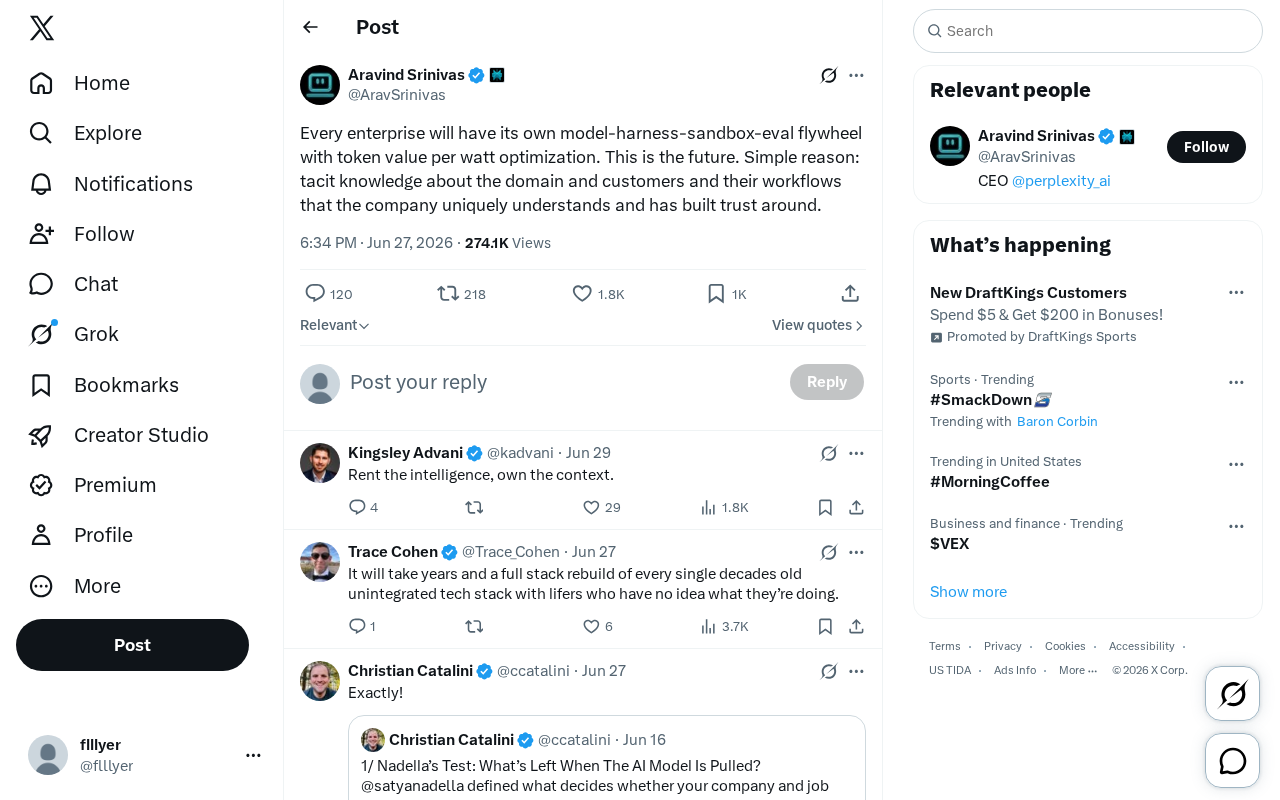
The Enterprise AI Flywheel: Building a Model-Eval Loop as a Competitive Moat
The core of enterprise AI isn't calling general models—it's building a self-reinforcing "model-harness-sandbox-eval" flywheel. This article analyzes the four components, tacit knowledge moats, and the "token value per watt" efficiency metric.
Read more →

·2 min
GLM4 Open-Source Flagship Tested: Crushes Claude and Other Commercial Models in Frontend Development
In-depth testing of Zhipu AI's GLM4 open-source flagship model, ranked #1 on Design Arena, outperforming Claude 3.5 and Gemini in frontend development at one-sixth the cost of Claude Opus.
Read more →

·3 min
VibeFlow: A Practical Deep Dive into Natural Language-Driven CFD/CAE Post-Processing Automation
Explore how VibeFlow uses natural language and AI Agents to automate CFD/CAE post-processing, with demos of velocity contours, pressure isolines, and bending moment calculations.
Read more →

·3 min
Python Beginner's Guide from Scratch: Why Python Is Your Best Choice
A complete Python beginner's guide covering language features, six ideal learner profiles, and seven application areas. Discover why Python is the best choice for coding beginners and AI learners.
Read more →

·2 min
Vibe Coding in Practice: Creating Particle Effects and Retro Camera Filters with Zero Code
A hands-on Vibe Coding walkthrough using Qwen 3.7 Max and CoderWork to build gesture-controlled 3D particle systems and retro camera filters with zero code.
Read more →

·4 min
Claude + Hexels MCP Hands-On: Three Multiplayer Games from a Single Prompt, Total Cost $68
Creator Adil used Claude Fable 5 and Hexels MCP to build three multiplayer games in one afternoon with zero code for just $68, attracting nearly 4,000 players.
Read more →

·2 min
Kimi K2.7 Code Hands-On Review: What Makes This Trillion-Parameter Open-Source Coding Model Stand Out?
In-depth hands-on review of Kimi K2.7 Code open-source coding model across 6 scenarios including 3D games, frontend design, and STL parsing. Trillion-parameter MoE with 30% token efficiency gains at 1/12.5 the price of closed-source models.
Read more →

·3 min
GPT-5.6 Pro Hands-On Review: In-Depth Evaluation of Game Development, 3D Modeling, and SVG Design Capabilities
Comprehensive hands-on review of GPT-5.6 Pro covering SVG vector design, 3D modeling, game generation, and image-to-web conversion. Detailed analysis of breakthroughs in spatial understanding, code reasoning, and One-Shot generation.
Read more →

·3 min
OpenLLMVTuber: A Deep Dive into the Open-Source AI Virtual Character Framework
Deep dive into OpenLLMVTuber, a 10K-star open-source AI virtual character framework integrating ASR, LLM, TTS, and Live2D with voice interruption, visual perception, and modular architecture.
Read more →

·2 min
1700+ Top Developer Personal Website Collection: A Treasure Trove of Frontend Design Inspiration
A GitHub repo with 24,000+ stars featuring 1,700+ personal websites from top developers and designers worldwide. Styles range from minimalist to cyberpunk to 3D effects — perfect for design inspiration.
Read more →

·3 min
DeepSeek V4 Pro In-Depth Review: Performance Rivaling GPT-5.5 at 1/12 the Cost
Comprehensive review of DeepSeek V4 Pro across coding, reasoning, and Agent benchmarks. Compare pricing vs GPT 5.5 and Claude Opus, plus hands-on coding demo with Pi Agent.
Read more →

·3 min
OpenAI's Head of Evaluations: Never Underestimate a Model's Capabilities
OpenAI's Frontier Evaluations lead Tejal Patwardhan shares insights on O1's jailbreak breakthrough, wet lab experiments beating human baselines, and building the AGI Index—revealing AI capabilities evolving faster than imagined.
Read more →

·3 min
One Person + AI Agent Team: Building a Web Game from Idea to Finished Product
A developer built a self-designed AI Agent collaboration system that turns a one-sentence idea into a complete playable Web game, auto-generating GDD docs and code.
Read more →