#position interpolation
87 related articles

·3 min
Premation: Can an Open-Source AI Motion Graphics Editor Replace After Effects?
Premation is an open-source AI-native motion graphics editor with timeline editing, 2D/3D design, and AI assistance—positioned as a free After Effects alternative.
Read more →

·3 min
Canvas + SVG Path Animation: A Complete Guide to Smooth Element Motion Along Curves
Learn how to combine Canvas and SVG for smooth path animations using getPointAtLength, easing functions, and coordinate caching for data visualization and interactive effects.
Read more →

·2 min
Krea 2 Turbo + Wan 2.2: A Detailed Workflow for Turning Static Images into Dynamic AI Videos
A detailed guide on using Krea 2 Turbo for high-quality static images and Wan 2.2 i2v to add dynamic motion—covering technical principles, key steps, and practical tips.
Read more →

·2 min
Running Manim in the Browser: Rebuilding 3Blue1Brown's Animation Engine with WebGPU
Explore how WebGPU brings 3Blue1Brown's Manim math animation engine to the browser, enabling zero-install, real-time mathematical visualization with interactive education potential.
Read more →

·4 min
Kimi K3 Released: 2.8 Trillion Parameter Open-Source Model Tops Global Coding Leaderboard
Moonshot AI releases Kimi K3, a 2.8 trillion parameter open-source model using MoE architecture that tops the global frontend coding arena at under $1 per task, beating GPT and Claude.
Read more →

·5 min
Opus 5 Builds a No Man's Sky-Style Exploration Game in One Day: MCP and Sub-Agent Architecture Explained
A developer used Anthropic's Opus 5 model to build a No Man's Sky-style space exploration game in one day using Blender MCP and sub-agents. Deep dive into the technical architecture and industry implications.
Read more →
·3 min
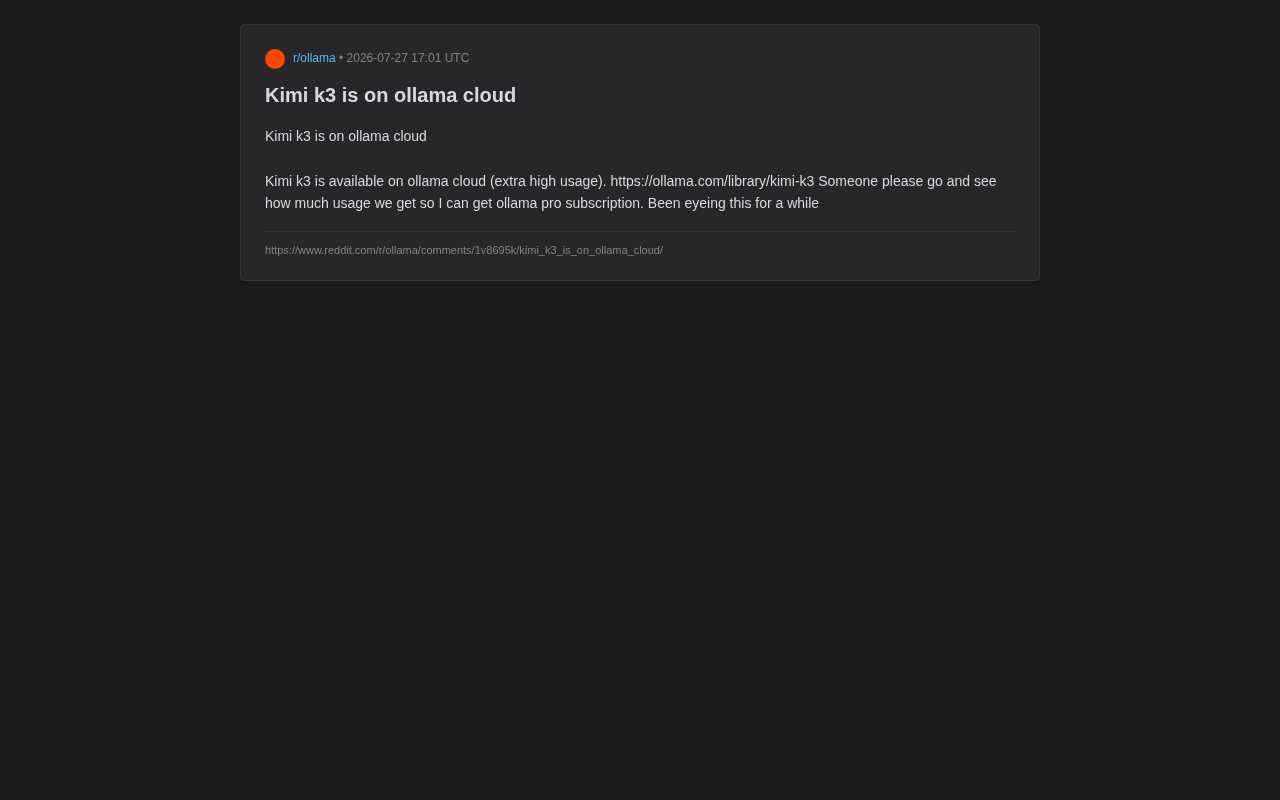
Kimi K3 Launches on Ollama Cloud: Free Tier, User Experience, and Developer Guide
Kimi K3 officially launches on Ollama Cloud as an "extra high usage" model. This guide covers free tier quotas, cloud inference experience, technical advantages, and how developers can seamlessly call this high-performance LLM.
Read more →

·3 min
Flux 3 Hands-On: Generating Dual-Camera Synchronized Video from a Single Prompt — How Good Is It?
Flux 3 demo generates dual-camera synchronized video from one complex prompt, featuring fluid dynamics, multi-view consistency, and precise temporal control.
Read more →
·3 min
Flux 3 Hands-On: Generating Dual-Camera Synchronized Video from a Single Prompt — How Good Is It?
Flux 3 demo generates dual-camera synchronized video from a single complex prompt, featuring fluid dynamics, multi-view consistency, and precise temporal control.
Read more →
·6 min
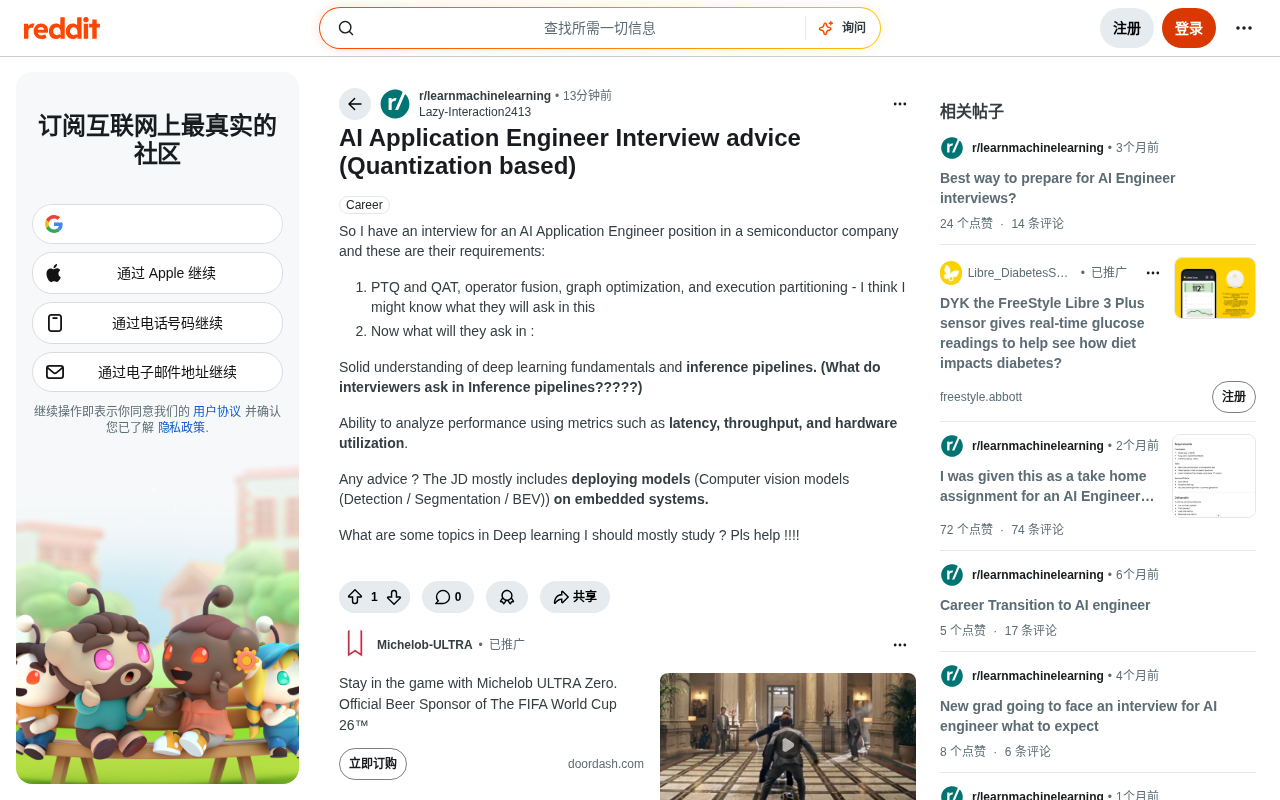
AI Application Engineer Interview Guide: Core Topics on Model Quantization and Inference Deployment
A systematic guide to must-know AI application engineer interview topics: PTQ/QAT quantization, operator fusion, inference pipelines, latency/throughput analysis, and edge deployment of detection/segmentation/BEV models.
Read more →
·6 min
AI Application Engineer Interview Guide: Core Topics in Model Quantization and Inference Deployment
A systematic review of must-know topics for AI Application Engineer interviews: PTQ/QAT quantization, operator fusion, inference pipelines, latency/throughput analysis, and edge deployment of detection/segmentation/BEV models.
Read more →

·6 min
Hands-On with Qwen 3.8 Max: How an Open-Source Model Closes In on Top-Tier Closed Models
Qwen 3.8 Max has 2.4 trillion parameters and will be open-sourced. In KingBench testing it scored 81.25%, ranking second, beating Claude Opus 4.8 and trailing only Fable 5. A deep dive into its performance across 8 tests.
Read more →

·3 min
Qwen's Six-Generation Evolution: A Complete Breakdown from Architecture Innovations to the Reasoning Race
From Qwen1 to Qwen3-2507: a complete breakdown of six generations of evolution over two years — GQA, MoE, GRPO, dynamic thinking, and the core shift from architecture to reasoning.
Read more →
Microsoft's Two-Track AI Coding Strate…
·3 min
Microsoft's Two-Track AI Coding Strategy: A Deep Dive into Claude Code and GitHub Copilot CLI
Microsoft plans to launch Claude Code and GitHub Copilot CLI, making the terminal the new frontier for AI coding. A deep dive into Microsoft's multi-model strategy and its impact on developer workflows.
Read more →

·3 min
Zero-Code Cinematic Websites: A Complete Guide Using GPT Image 2 + Claude Code
No coding needed: use GPT Image 2 for assets, Claude Code for development, and Vercel for free deployment to build a cinematic scroll-driven brand website.
Read more →

·3 min
GPT + Codex in Action: Building a Real-Time Typhoon Detection System in 20 Minutes
A developer used GPT and Codex to build a real-time typhoon detection system with 3D maps, timeline playback, and risk analysis — all in just 20 minutes.
Read more →

·2 min
Building 3D Aerial Combat Game AFTERBURN Solo with Claude Code: A Full Development Diary
An indie developer built low-poly aerial combat game AFTERBURN using Claude Code, covering flight controls, dogfight AI, weapon systems, and cinematic replay. A real look at AI-assisted game development.
Read more →

·2 min
ComfyUI v0.28.0: Native Video Super-Resolution, 3D Support, and PixelDiT Architecture — A Complete Breakdown
ComfyUI v0.28.0 adds SeedVR2 native video super-resolution, PixelDiT architecture, 3D Gaussian Splatting export, int4 quantization, and lip-sync integration for a major multimodal AI workflow upgrade.
Read more →

·4 min
RAM: First-Principles Approach to 50x Faster RL Post-Training for Diffusion Models
RAM (Reinforce Adjoint Matching) achieves 50x faster RL post-training for diffusion models by discarding path costs, combining ODE sampling with decorrelated training objectives. A deep dive into RAM's core principles and experiments vs. Flow-GRPO.
Read more →

·2 min
Real-Time Data Augmentation for Single-Class Segmentation Models: Frequency, Combinations, and Boundary Precision Explained
How many augmentations per image is enough? This guide breaks down on-the-fly augmentation strategy for single-class segmentation with 3,000 labeled images, covering controlled mixing, domain matching, and mask boundary precision.
Read more →