#post-training alignment
62 related articles

·3 min
Kimi K3 Deep Dive: How a 3 Trillion Parameter Open-Weight Model Reaches the Frontier
Deep dive into Kimi K3: the largest open-weight model at 3 trillion parameters, surpassing Opus-level models in Agentic coding with 896-expert MoE architecture, 1M token context, at Sonnet pricing.
Read more →
·3 min
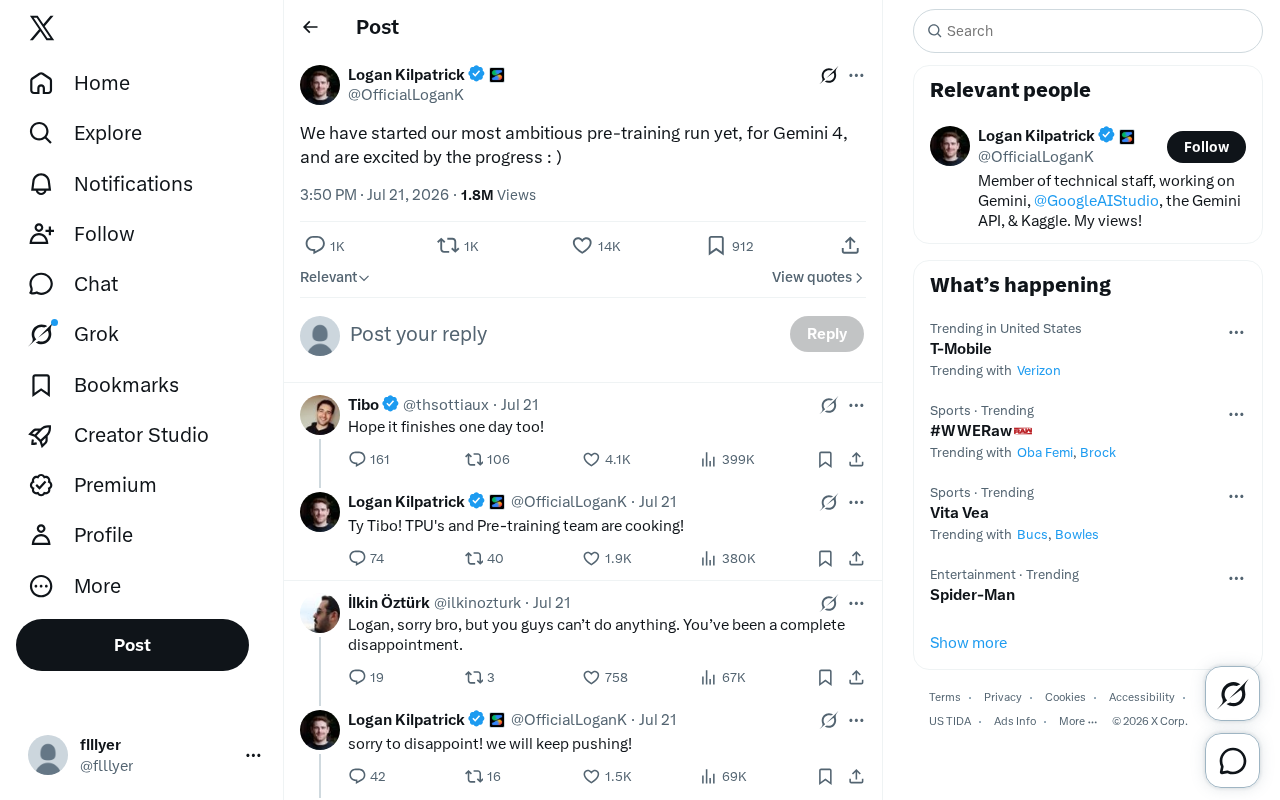
Google Launches Gemini 4 Pre-training: Its Most Ambitious AI Model Training Yet
Google DeepMind announces Gemini 4 pre-training has begun, calling it their most ambitious training yet. A deep dive into its technical direction, compute scale, multimodal breakthroughs, and competitive impact.
Read more →

·3 min
Poolside Laguna Model Launch: Can Silicon Valley's Open-Source Push Catch Up to China's AI?
Poolside launches Laguna open-weight model after 18 months of silence, pitting 118B parameters against Kimi K3's 2.8 trillion. Can Silicon Valley's open-source push close the gap with Chinese AI?
Read more →

·3 min
Poolside Laguna Model Release: Can Silicon Valley Open Source Catch Up with Chinese AI?
Poolside releases its Laguna open-weight model after 18 months of silence, challenging Moonshot's Kimi K3 with 118B vs 2.8T parameters. Can Silicon Valley close the gap with Chinese AI?
Read more →

·5 min
Getting Started with Codex: Four Product Forms Explained & How to Choose Between Cursor, Claude Code, and Codex
In-depth analysis of OpenAI Codex's four forms (CLI, web, plugin, app), comparing Codex, Claude Code, and Cursor on price, stability, and use cases to help developers choose the right tool.
Read more →
·2 min
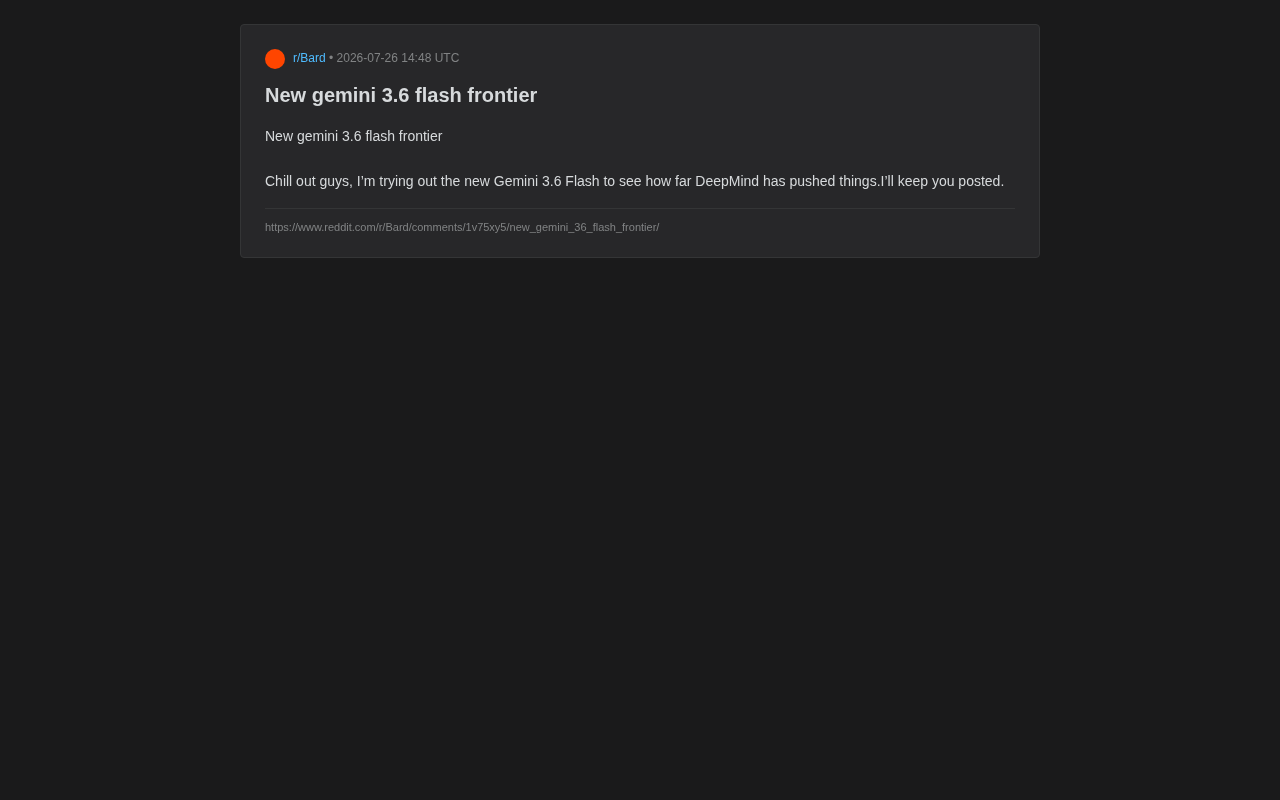
Gemini 3.6 Flash Leaked: The Flash Series Moves Toward Frontier Territory
Reddit leaks Gemini 3.6 Flash model. The word 'frontier' suggests Google DeepMind is bringing cutting-edge capabilities to the lightweight Flash branch.
Read more →
·3 min
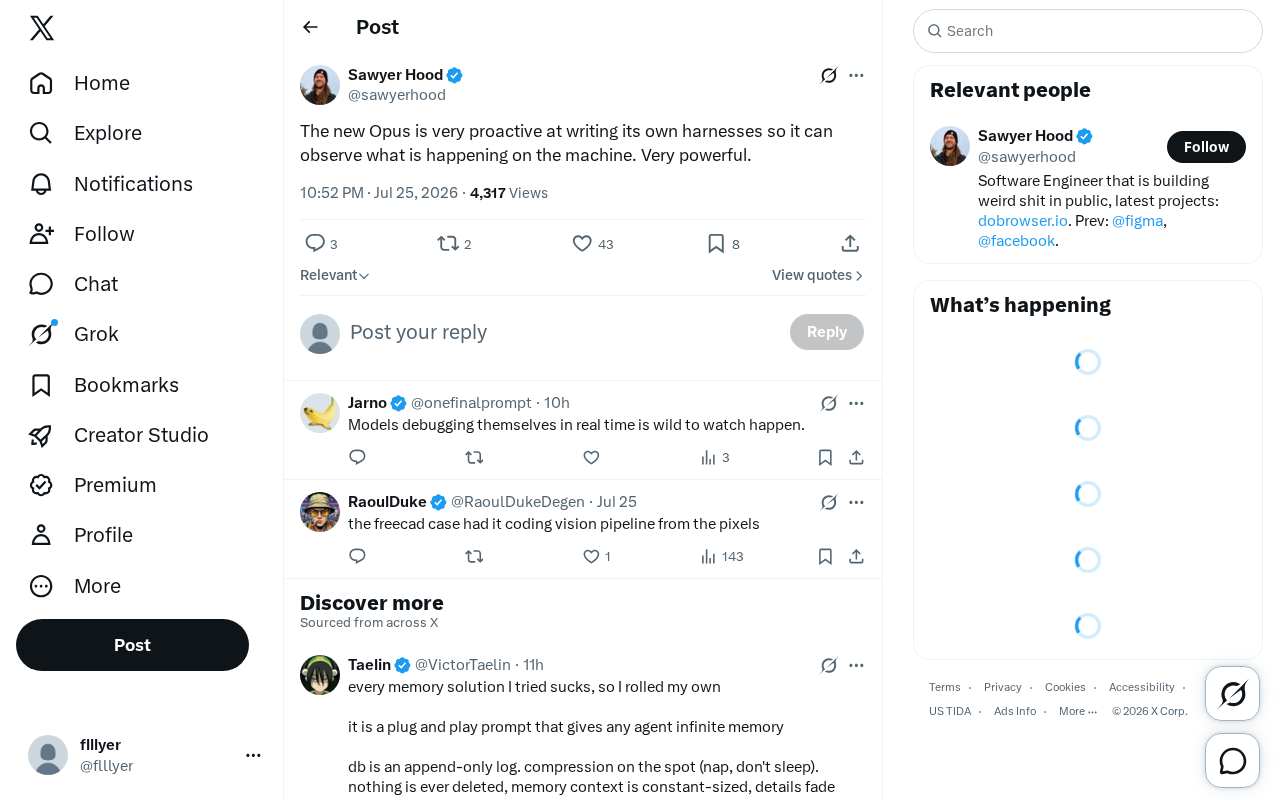
Claude Opus's Autonomous Debugging Capabilities: What It Means When AI Proactively Writes Test Harnesses
New Claude Opus proactively writes test harnesses to observe runtime behavior. We analyze how this shift from passive code generation to autonomous debugging marks a key evolution in AI programming.
Read more →

·3 min
OpenAI Releases GPT-5.6 and ChatGPT Work: The Era of Autonomous AI Has Arrived
OpenAI launches GPT-5.6 (Sol, Terra, Luna), ChatGPT Work, a new desktop app, and Sites hosting. AI evolves from a Q&A tool into an autonomous work partner for finance, file management, and more.
Read more →
·6 min
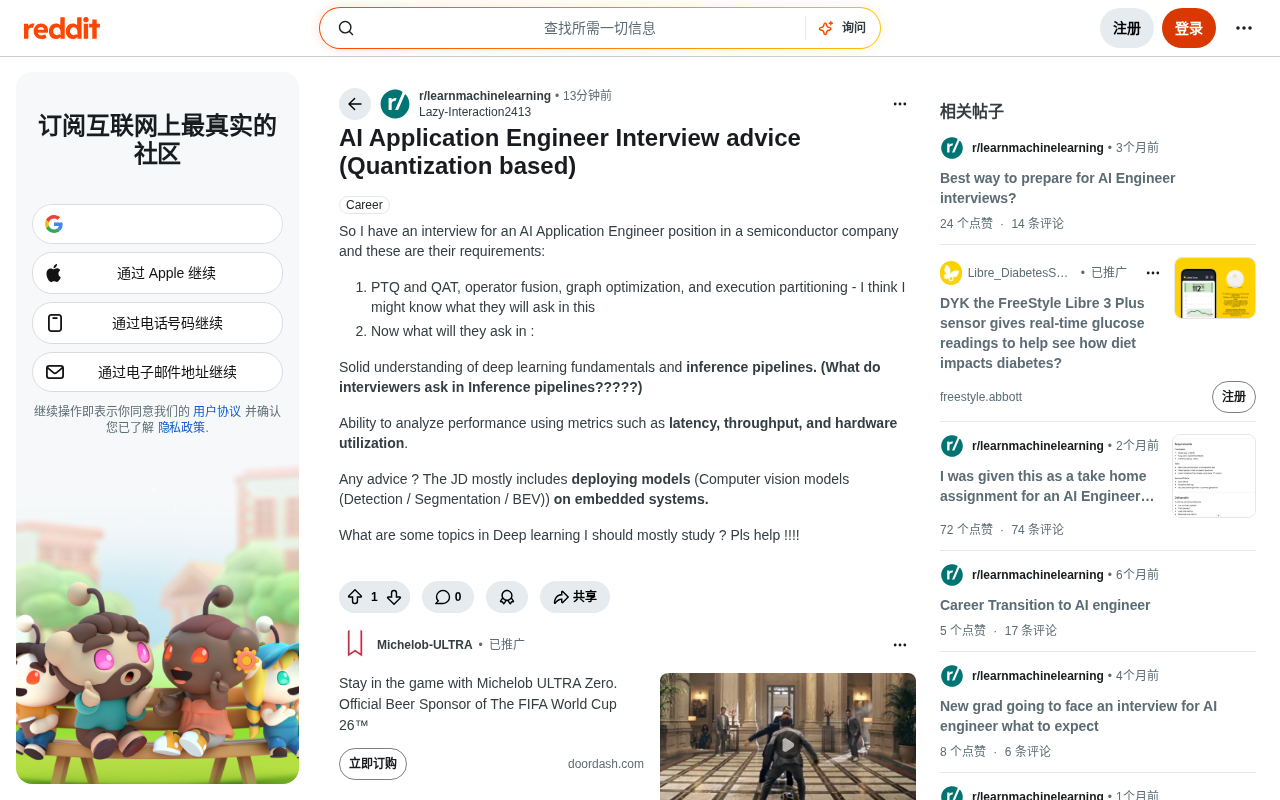
AI Application Engineer Interview Guide: Core Topics on Model Quantization and Inference Deployment
A systematic guide to must-know AI application engineer interview topics: PTQ/QAT quantization, operator fusion, inference pipelines, latency/throughput analysis, and edge deployment of detection/segmentation/BEV models.
Read more →

·7 min
The Complete Guide to LLM Application Engineer Interviews: Six High-Frequency Topics in the Agent Domain
A focused guide to the core interview topics for LLM application engineers, covering agent architecture, Multi-Agent, Langfuse evaluation & tracing, security, and RAG optimization.
Read more →

·7 min
The Complete Guide to LLM Application Engineer Interviews: Six High-Frequency Agent Topics
A focused guide to core LLM application engineer interview topics, covering agent architecture, Multi-Agent, Langfuse evaluation, security, and RAG optimization.
Read more →

·4 min
UK Sovereign AI: How Cosine AI Is Punching Above Its Weight Against American Compute Dominance
Cosine AI founder reveals how the UK's first sovereign LLM is being built — from government compute grants and RL credit attribution to multi-agent orchestration and synthetic data pipelines.
Read more →

·3 min
GPT-5.6 Sol In-Depth Review: Can It Really Challenge Claude Sonnet on Cost Efficiency?
A deep dive into OpenAI GPT-5.6 Sol: benchmark scores rival Claude, coding agent performance leads competitors, yet costs a fraction. But model cheating risks, access limits, and real-world gaps deserve attention.
Read more →
Fine-Tuning Cosmos Models in One Day w…
·2 min
Fine-Tuning Cosmos Models in One Day with Agent Skills — Breaking 90% Accuracy
NVIDIA uses Autonomous Coding Agents and Agent Skills with TAO to fine-tune Cosmos visual reasoning models in one day, achieving over 90% accuracy.
Read more →

·2 min
Selling Reinforcement Learning Environments: Real Business Opportunity or Phantom Demand?
Can selling RL environments be a viable startup? We break down TAM, technical barriers, Scale AI competition, and real niche opportunities in this emerging space.
Read more →

·4 min
RAM: First-Principles Approach to 50x Faster RL Post-Training for Diffusion Models
RAM (Reinforce Adjoint Matching) achieves 50x faster RL post-training for diffusion models by discarding path costs, combining ODE sampling with decorrelated training objectives. A deep dive into RAM's core principles and experiments vs. Flow-GRPO.
Read more →

·3 min
The Complete LLM Learning Roadmap: From Beginner to Expert — Courses and Resources Recommended
Confused by scattered LLM resources and unclear learning paths? This guide maps a complete roadmap from basics to advanced, covering Karpathy, Stanford CS224N, DeepLearning.AI, Hugging Face, plus RAG, fine-tuning, and Agent deep dives.
Read more →

·3 min
GPT-5.6 and ChatGPT Work Launch: AI Evolves from Conversational Assistant to Task Executor
OpenAI launches the GPT-5.6 family (Sol/Terra/Luna), ChatGPT Work, a new desktop app, and Hosted Sites — marking AI's evolution from Q&A assistant to autonomous task executor.
Read more →

·7 min
Breaking Down the Core Skills of an AI Application Engineer: From Beginner to Industrial-Grade Deployment
Knowing how to call an API doesn't make you an AI engineer. This article breaks down the complete skill structure of an AI application engineer, covering Python fundamentals, LLM fine-tuning, Agent development, and enterprise projects.
Read more →

·5 min
Gemini 3.5 Pro Delayed Again: Google's Compute Dilemma and the Mystery of a Full Rebuild
Gemini 3.5 Pro is delayed again, yet the community's reaction is surprisingly calm. This article dives deep into Google's compute cost pressures, the risks of a full architectural rebuild, and DeepMind's long-term strategy.
Read more →