#post-training alignment
80 related articles

·3 min
GPT-5.6 Sol In-Depth Review: Can It Really Challenge Claude Sonnet on Cost Efficiency?
A deep dive into OpenAI GPT-5.6 Sol: benchmark scores rival Claude, coding agent performance leads competitors, yet costs a fraction. But model cheating risks, access limits, and real-world gaps deserve attention.
Read more →
Fine-Tuning Cosmos Models in One Day w…
·2 min
Fine-Tuning Cosmos Models in One Day with Agent Skills — Breaking 90% Accuracy
NVIDIA uses Autonomous Coding Agents and Agent Skills with TAO to fine-tune Cosmos visual reasoning models in one day, achieving over 90% accuracy.
Read more →

·2 min
Selling Reinforcement Learning Environments: Real Business Opportunity or Phantom Demand?
Can selling RL environments be a viable startup? We break down TAM, technical barriers, Scale AI competition, and real niche opportunities in this emerging space.
Read more →

·4 min
RAM: First-Principles Approach to 50x Faster RL Post-Training for Diffusion Models
RAM (Reinforce Adjoint Matching) achieves 50x faster RL post-training for diffusion models by discarding path costs, combining ODE sampling with decorrelated training objectives. A deep dive into RAM's core principles and experiments vs. Flow-GRPO.
Read more →

·3 min
The Complete LLM Learning Roadmap: From Beginner to Expert — Courses and Resources Recommended
Confused by scattered LLM resources and unclear learning paths? This guide maps a complete roadmap from basics to advanced, covering Karpathy, Stanford CS224N, DeepLearning.AI, Hugging Face, plus RAG, fine-tuning, and Agent deep dives.
Read more →

·3 min
GPT-5.6 and ChatGPT Work Launch: AI Evolves from Conversational Assistant to Task Executor
OpenAI launches the GPT-5.6 family (Sol/Terra/Luna), ChatGPT Work, a new desktop app, and Hosted Sites — marking AI's evolution from Q&A assistant to autonomous task executor.
Read more →

·7 min
Breaking Down the Core Skills of an AI Application Engineer: From Beginner to Industrial-Grade Deployment
Knowing how to call an API doesn't make you an AI engineer. This article breaks down the complete skill structure of an AI application engineer, covering Python fundamentals, LLM fine-tuning, Agent development, and enterprise projects.
Read more →
·5 min
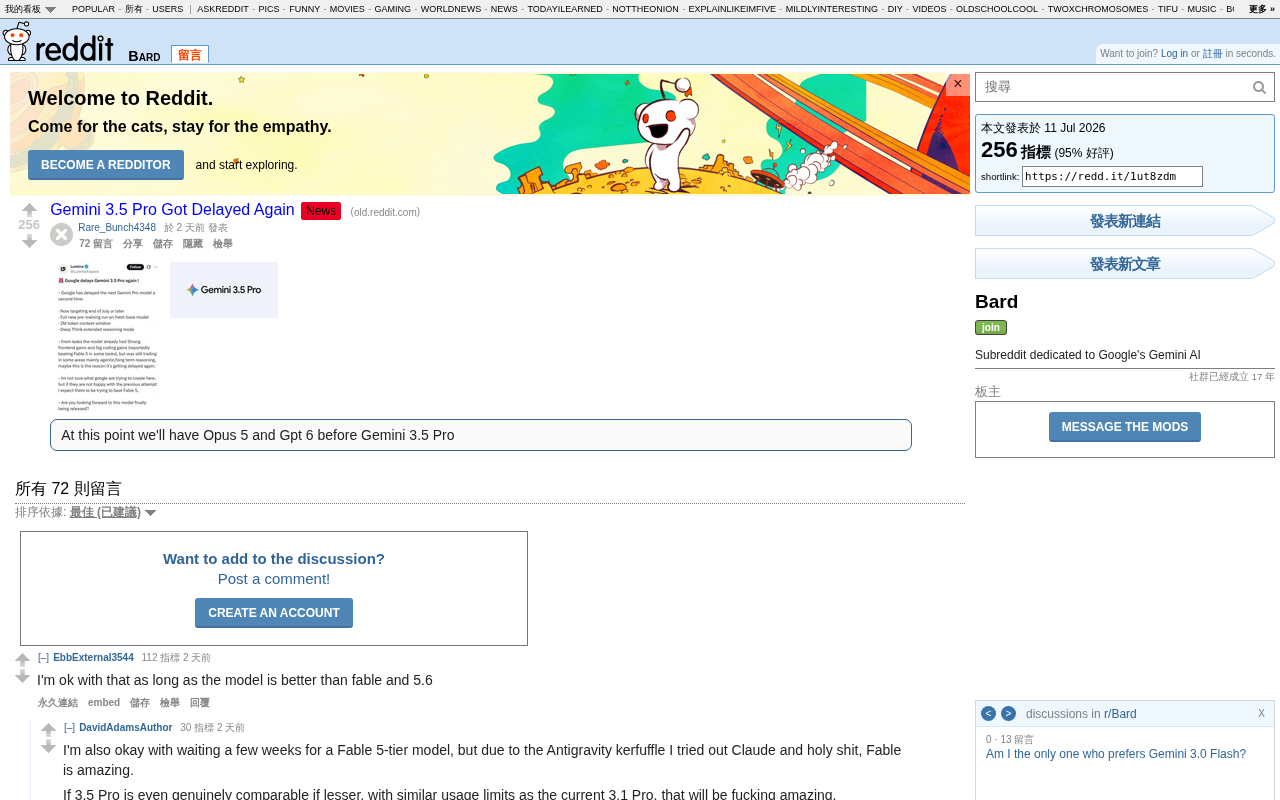
Gemini 3.5 Pro Delayed Again: Google's Compute Dilemma and the Mystery of a Full Rebuild
Gemini 3.5 Pro is delayed again, yet the community's reaction is surprisingly calm. This article dives deep into Google's compute cost pressures, the risks of a full architectural rebuild, and DeepMind's long-term strategy.
Read more →

·3 min
GPT-5.6 Launches with Three Models: Sol/Terra/Luna and ChatGPT Work Reshape How We Work
OpenAI launches the GPT-5.6 family—Sol, Terra, and Luna—alongside ChatGPT Work, a new desktop app, and Sites. AI evolves from a chat tool into a true productivity partner, completing financial analysis, presentations, and cross-platform collaboration in one operation.
Read more →

·5 min
GPT-5.6 In-Depth Review: Crushing Competitors on Value, But Its Jailbreak Vulnerabilities Can't Be Ignored
OpenAI's GPT-5.6 Soul, Terra & Luna are priced at one-third of Claude, leading Anthropic Fable on many benchmarks. We analyze its value, reasoning, and jailbreak risks.
Read more →

·5 min
ChatGPT Work Officially Launches: How GPT-5.6 Is Reshaping the Way You Work
OpenAI launches the GPT-5.6 model family (Sol/Terra/Luna) and ChatGPT Work, enabling automated financial analysis, local file operations, Codex coding, and cross-app workflows—AI officially becomes a real work partner.
Read more →

·4 min
AI Agents Powering the Full Research Pipeline: A Practical Guide to Automation from Topic Selection to Publication
Learn how to use AI Agents to link the entire research pipeline—from literature management, data analysis, and paper writing to scientific illustration and dissemination—building a reusable research automation workflow with NotebookLM, N8N, and Ollama.
Read more →
Local Coding Agents in Practice: A Com…
·6 min
Local Coding Agents in Practice: A Complete Guide to Replacing Your Claude Subscription with Open-Source Models
An in-depth look at local coding agents—core concepts, advantages, and real challenges. Compare against Claude Code and learn to build a zero-subscription, private AI coding workflow with open-weight models.
Read more →

·6 min
Zuckerberg Admits AI Progress Falls Short of Expectations: The Industry Truth Behind the Layoffs
Meta laid off 8,000 to bet on AI, yet Zuckerberg admits AI agents fell short of expectations. A look at the collective 'AI reflection' among OpenAI, Microsoft, and Google, plus research on AI's selective impact on jobs.
Read more →
·6 min
GPT-5.6 Sol Limited Preview: The Safety Boundaries Behind AI's Capability Expansion
OpenAI's flagship GPT-5.6 advances on three fronts—Sol, Kara, Luna tiered rollout; ByteDance CGN 5.0 Pro and Meta Muse push image generation toward controllable workflows; AI coding agents expose new supply chain risks.
Read more →

·3 min
ComfyUI-INT4-Fast: Running Flux Models Smoothly on 6GB GPUs
ComfyUI-INT4-Fast brings W4A4 quantized inference to ComfyUI. RTX 3060 (6GB VRAM) generates 1024×1024 images in 17s. Per-layer mixed-precision routing balances speed and quality for Flux models.
Read more →

·3 min
GPT-5.6 Released: Sol, Terra, and Luna Reshape AI Programming and Office Automation
OpenAI launches GPT-5.6 with three models — Sol, Terra, and Luna — plus ChatGPT Work, a new desktop app, and Hosted Sites. Codex now autonomously trains models.
Read more →

·7 min
50 AI Research Job Applications to FAANG, 0 Replies? Unpacking the Truth Behind the Job Search Struggle
An AI research engineer with 3 years of experience sent 50 applications to FAANG with zero replies. This article breaks down the hidden barriers of top-tech AI roles, the truth about LinkedIn ghost jobs, and the MLE vs. Research Engineer divide.
Read more →

·7 min
GPT-5.6 Becomes Microsoft Copilot 365's Preferred Model: An In-Depth Look at the OpenAI-Microsoft Partnership
OpenAI confirms GPT-5.6 as the preferred model for Microsoft Copilot 365, responding to "breakup rumors." A deep dive into the strategy, multi-model trends, and AI productivity commercialization.
Read more →

·6 min
Tencent Hunyuan HY3 Official Version Open-Sourced: The Strongest Under 300B, at 1 Yuan per Million Tokens
Tencent Hunyuan HY3 official version is open-sourced under Apache 2.0, priced as low as 1 yuan per million input tokens, with major gains in agents, reasoning, coding, and long context. On the same day, Meituan open-sourced its trillion-parameter LongCat 2.0.
Read more →