#pretraining scaling laws
17 related articles

·1 min
The Third Dimension of Pretraining: A New Paradigm Claiming 6.2x Sample Efficiency and 250x Inference Speedup
Harvard and UIUC propose a third axis of pretraining, claiming 6.2x sample efficiency and 250x inference speedup. Deep analysis of this new paradigm's implications and key caveats.
Read more →
Kronos Financial Foundation Model: Usi…
·7 min
Kronos Financial Foundation Model: Using AI to Read the Market Language of Candlesticks
Kronos is the first open-source foundation model treating candlestick data as the "language of financial markets," using an autoregressive Transformer and earning 32K GitHub Stars. A deep dive into its principles, applications, and limits.
Read more →
Bonsai 27B: The First 1-bit LLM That R…
·3 min
Bonsai 27B: The First 1-bit LLM That Runs on Your Phone — A New Milestone for On-Device AI
Bonsai 27B is the first 27B-parameter LLM that runs on smartphones via 1-bit quantization, compressing to 3–4GB. We break down the tech, privacy benefits, and community debate.
Read more →

·3 min
Continual Learning and AGI: Conceptual Confusion, Core Bottlenecks, and the Real Challenges
Dario Amodei and Demis Hassabis both call continual learning key to AGI, yet the term remains undefined. This article clarifies five interpretations and analyzes three core bottlenecks.
Read more →
Continual Learning: The Overlooked Cor…
·3 min
Continual Learning: The Overlooked Core Bottleneck on the Road to AGI
Why is Continual Learning the biggest barrier to AGI? This deep dive covers catastrophic forgetting, real-world deployment challenges, and the Amodei vs. Dwarkesh debate on AGI pathways.
Read more →

·5 min
Gemini 3.5 Pro Delayed Again: Google's Compute Dilemma and the Mystery of a Full Rebuild
Gemini 3.5 Pro is delayed again, yet the community's reaction is surprisingly calm. This article dives deep into Google's compute cost pressures, the risks of a full architectural rebuild, and DeepMind's long-term strategy.
Read more →

·7 min
AI Coding in Practice: Generating a Minecraft Clone in 90 Minutes as LLMs Enter Project-Level Development
A major breakthrough in AI coding! Hands-on tests show new LLMs generating a Minecraft clone in 90 minutes and a TMNT game in 30 minutes, building 3D scenes, animation, and game logic in one shot.
Read more →

·8 min
GPT-5.6 Hands-On: Farm Automation, Mathematical Breakthroughs, and End-to-End AI Execution
GPT-5.6 (Sol, Terra, Luna) hands-on testing: a Hokkaido farmer controls a greenhouse with AI, a NYC small business builds custom software, and a Polish mathematician breaks a 3-year problem. A deep dive into end-to-end autonomous execution.
Read more →
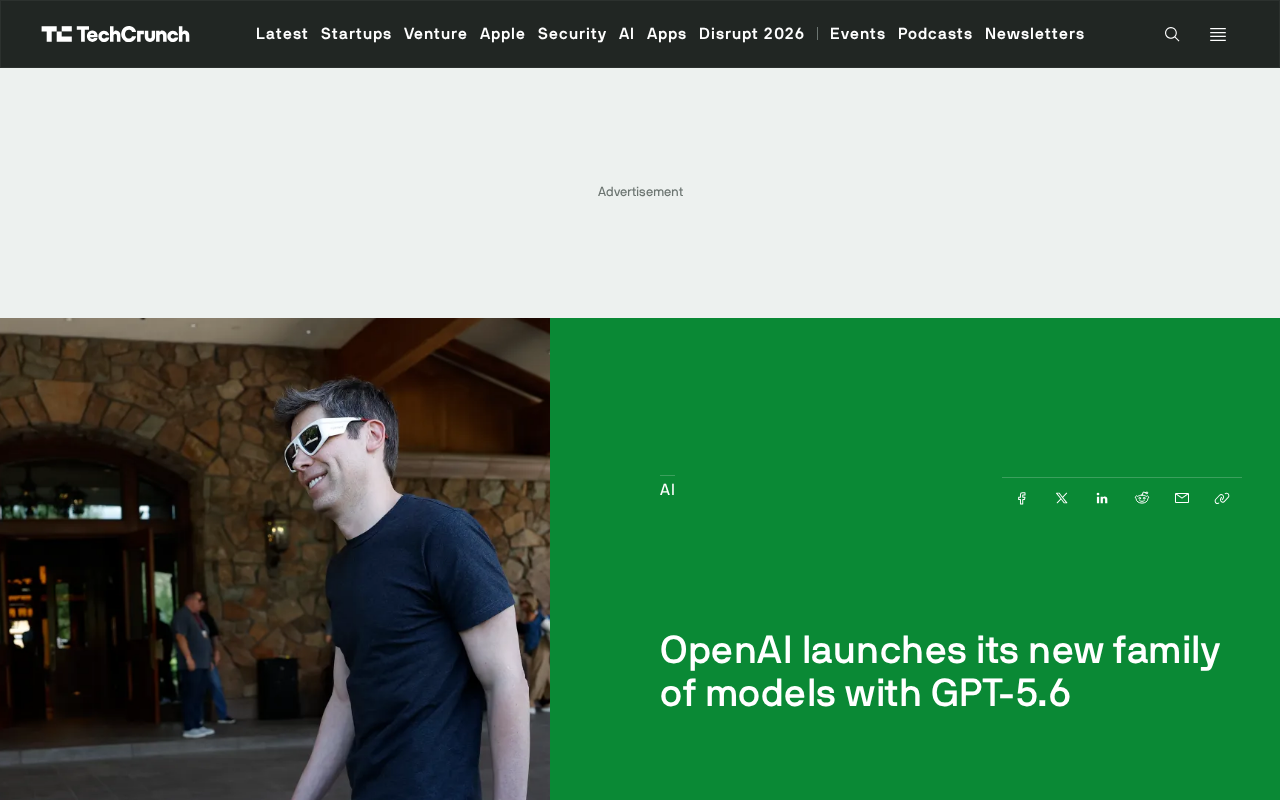
·6 min
OpenAI Releases GPT-5.6: Cybersecurity Capabilities Take Center Stage
OpenAI launches the GPT-5.6 model family with cybersecurity as its biggest highlight. A deep analysis of GPT-5.6's differentiation, double-edged-sword effect, and enterprise strategy.
Read more →

·7 min
Krea2 Tested: Does the FP8 vs BF16 Quality Gap Still Exist?
A Reddit user compared FP8 and BF16 precision on the Krea2 model and found almost no difference in image quality. This article analyzes the technical reasons behind the shrinking quantization gap and its real-world impact on VRAM usage and inference speed.
Read more →

·7 min
GLM-5.2 Released: Open-Source Coding Capability Approaches Closed-Source Flagships for the First Time
GLM-5.2 tops open-weight models in coding with a 74.4 Frontiers-WE score, beating GPT-5.5. Its MIT license enables local deployment, and the gap with closed-source flagships is closing fast.
Read more →

·7 min
The Trap of AI Visibility Dashboards: Why Most Metrics Are Meaningless
Can a brand's "visibility" in AI answers really be quantified? This article deeply dissects the methodological flaws of AI visibility dashboards—from LLM output randomness and black-box mechanisms to vanity metric traps.
Read more →

·5 min
U.S. Treasury Warns of AI Bubble Risk: Systemic Concerns and Investment Rationality
The U.S. Treasury has issued a rare internal warning that the AI investment boom may be forming an asset bubble, with valuations detached from fundamentals and systemic risks mounting.
Read more →

·7 min
GPT-5.6 Sol vs. Fable 5: Can Half the Price Match the Flagship?
OpenAI launches GPT-5.6 Sol at half the price of Anthropic's Fable 5. We compare both models on HealthBench, cybersecurity and more using hard system-card data, analyzing Sol's cost-effectiveness and shifts in AI power.
Read more →

·6 min
Anthropic Launches Life Sciences Hackathon with $100K to Empower AI-Driven Research
Anthropic launches a global life sciences hackathon with Gladstone Institutes, offering $100K in API credits to advance AI-driven scientific research using Claude Science and Claude Code.
Read more →

·7 min
Building an AI Agent from Scratch: Implementing Core Conversational Agent Features in Python
Learn AI Agent development from scratch. This tutorial covers LLMs and prompts, then builds a conversational agent in Python using the DeepSeek API with multi-turn dialogue and system prompts.
Read more →

·2 min
Andrej Karpathy Joins Anthropic: A Top AI Researcher Returns to the Frontier
Andrej Karpathy officially joins Anthropic. The former OpenAI co-founder and Tesla AI director returns to frontier LLM R&D, signaling a pivotal moment in AI.
Read more →