#pull request comments
89 related articles

·3 min
ChatGPT Now Handles Documents, Spreadsheets, and Slides: A New Breakthrough in AI Office Automation
ChatGPT adds document, spreadsheet, and slide processing capabilities, supporting information consolidation, data analysis, presentation generation, and in-file editing — directly competing with Microsoft Copilot and Google Workspace AI.
Read more →

·4 min
Advice from the Creator of Claude Code: Automation Is an Engineer's True Moat
Claude Code creator Boris argues top engineers should embrace AI-era automation leverage. By encoding domain knowledge into infrastructure, preview environments, and lint rules, engineers multiply output—the core path to Staff Engineer.
Read more →
·3 min
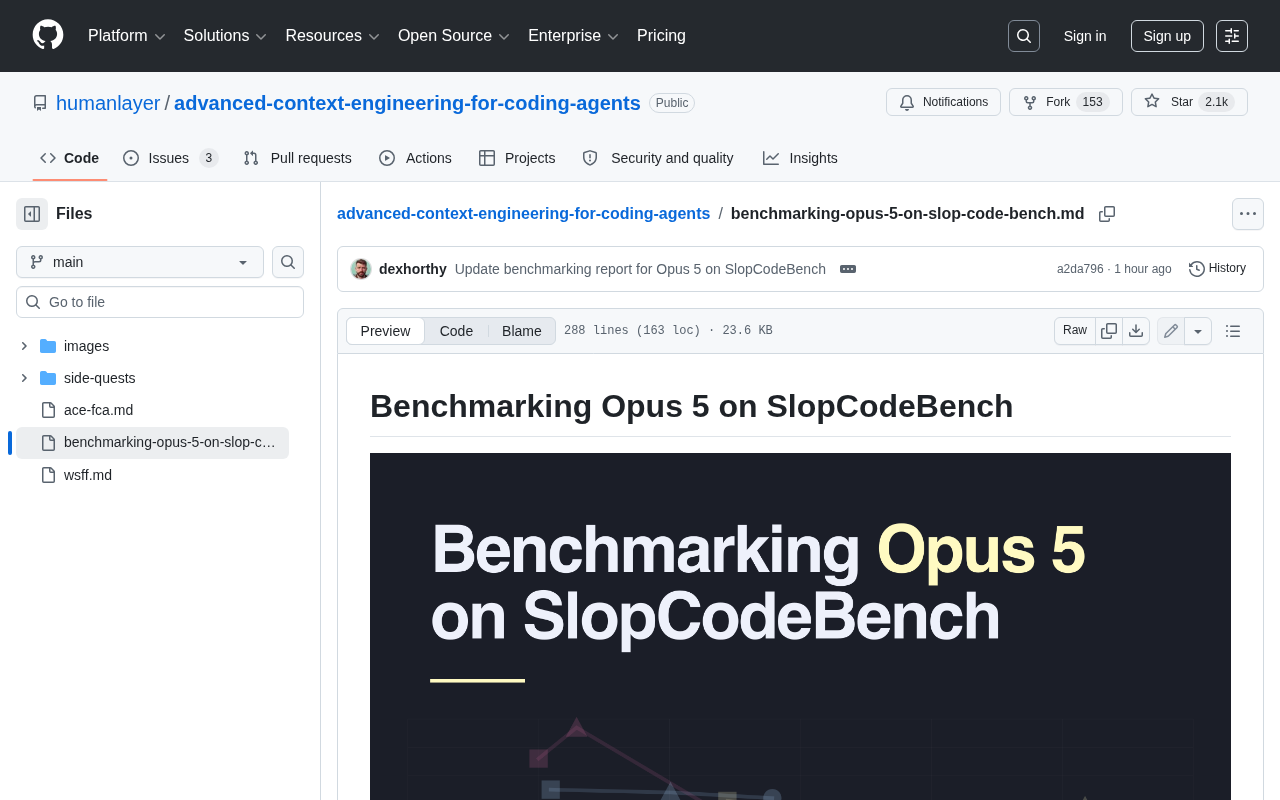
SlopCodeBench: Why AI Code Benchmarks Are Failing
SlopCodeBench sparks deep reflection on AI code evaluation. From benchmark contamination to pass-rate pitfalls, exploring why current benchmarks fail to measure real code quality.
Read more →

·2 min
Why 'Clean Code' Author Uncle Bob No Longer Reviews AI-Generated Code Line by Line
Clean Code author Robert C. Martin no longer reviews AI-generated code line by line, shifting to test-driven verification. We explore the logic, debate, and implications.
Read more →

·3 min
Why Is Every Company Rushing to Embrace AI? A Multi-Layered Analysis of Capital, Technology, and Marketing
Why is every company embracing AI? An in-depth analysis of valuation premiums, FOMO, lower API barriers, and marketing narratives driving the AI craze.
Read more →

·3 min
How to Assemble a Modern Email System with Off-the-Shelf Components: A Modular Architecture Guide
Learn how to assemble a modern email system using off-the-shelf services like Postmark, SendGrid, and Amazon SES, covering sending, receiving, authentication, and trade-offs around vendor lock-in and cost.
Read more →

·2 min
Dependabot Cooldown Period Explained: Why Delaying Dependency Updates by Three Days Is Safer
GitHub Dependabot now defaults to a three-day cooldown for version update PRs to guard against supply chain attacks and improve dependency stability.
Read more →

·3 min
Better Tools Actually Made Copilot Code Review Worse? GitHub's Counterintuitive Optimization
GitHub found that giving Copilot more specialized tools actually degraded code review quality. By migrating to Unix-style composable tools and evidence-driven workflows, they cut costs and improved results.
Read more →

·7 min
Enterprise AI Agent Security Isolation and Memory Design: NanoClaw Founder Breaks Down Real-World Lessons
NanoClaw founder David Boyd breaks down the core engineering of enterprise autonomous Agents: a triple security isolation model, LLM Wiki memory design, and the real-world path from personal Agents to team-scale deployment.
Read more →
Alibaba Open-Sources Code Review Tool …
·5 min
Alibaba Open-Sources Code Review Tool open-code-review: Deterministic Pipeline + LLM Dual-Engine Analysis
Alibaba open-sources code review tool open-code-review, using a hybrid architecture of deterministic rule pipelines and LLM Agents. Supports line-level comments, OpenAI/Anthropic APIs, battle-tested at Alibaba scale, written in Go, fully free and open-source.
Read more →

·7 min
Getting Started with Codex: Installation and Usage Guide for OpenAI's AI Coding Agent
A comprehensive guide to OpenAI's new AI coding agent Codex: from concept and comparison of its four forms, to installing Git/Node.js/VS Code, configuring the API Key, and creating a workspace.
Read more →

·7 min
Harness Engineering: Why a Powerful Model Isn't Enough — Here's What Really Matters
A data-deletion disaster reveals the biggest AI Agent risk: the problem isn't the model, it's Harness design. Learn context management, process standards, and permission isolation.
Read more →

·6 min
GPT-5.6 Hands-On Deep Dive: Three-Tier Models + Ultra Multi-Agent, Codex Fully Evolved
OpenAI launches GPT-5.6 with three tiered models—Sol, Terra, and Luna—Ultra multi-agent parallel collaboration, Codex integrated into ChatGPT desktop, and an upgraded Computer Use.
Read more →

·6 min
The Evolution of Claude Code: From Manual Review to 65% Fully-Automated PRs
Anthropic engineers reveal Claude Code's 18-month evolution: system prompt cut by 80%, 65% of PRs shipped automatically by AI, Claude Tag collaboration, and the safety logic behind auto mode.
Read more →

·4 min
Codex Major Upgrade: GPT-5.6 Powers Full-Stack Development from Idea to Deployment
OpenAI Codex gets a major upgrade with GPT-5.6: extended reasoning, multi-agent parallelism, browser control, one-click Sites deployment, task orchestration, and mobile dev support.
Read more →

·3 min
Intent-Driven Development: Claude Code's Evolving Paradigm and Practical Tips
Anthropic engineer Lydia and YK Sugi break down Claude Code's Intent-Driven Development paradigm, covering dynamic workflows, auto mode, sub-agent orchestration, and the evolving role of software engineers in the AI era.
Read more →

·3 min
OpenAI Eyes 5% Stake for Government Support: Mutual Gain or Backdoor Bailout?
OpenAI may offer the Trump administration a 5% stake to ease regulatory pressure. We examine the business logic: burn rates, token billing disputes, nationalization warnings, and political risk.
Read more →

·2 min
Flowith AI Canvas + Codex: Zero-Barrier One-Click AI Short Drama Production Pipeline
Flowith AI canvas + Codex automates AI short drama production end-to-end — from script and characters to scenes. Asset library solves consistency; point-and-edit enables precision control.
Read more →
·2 min
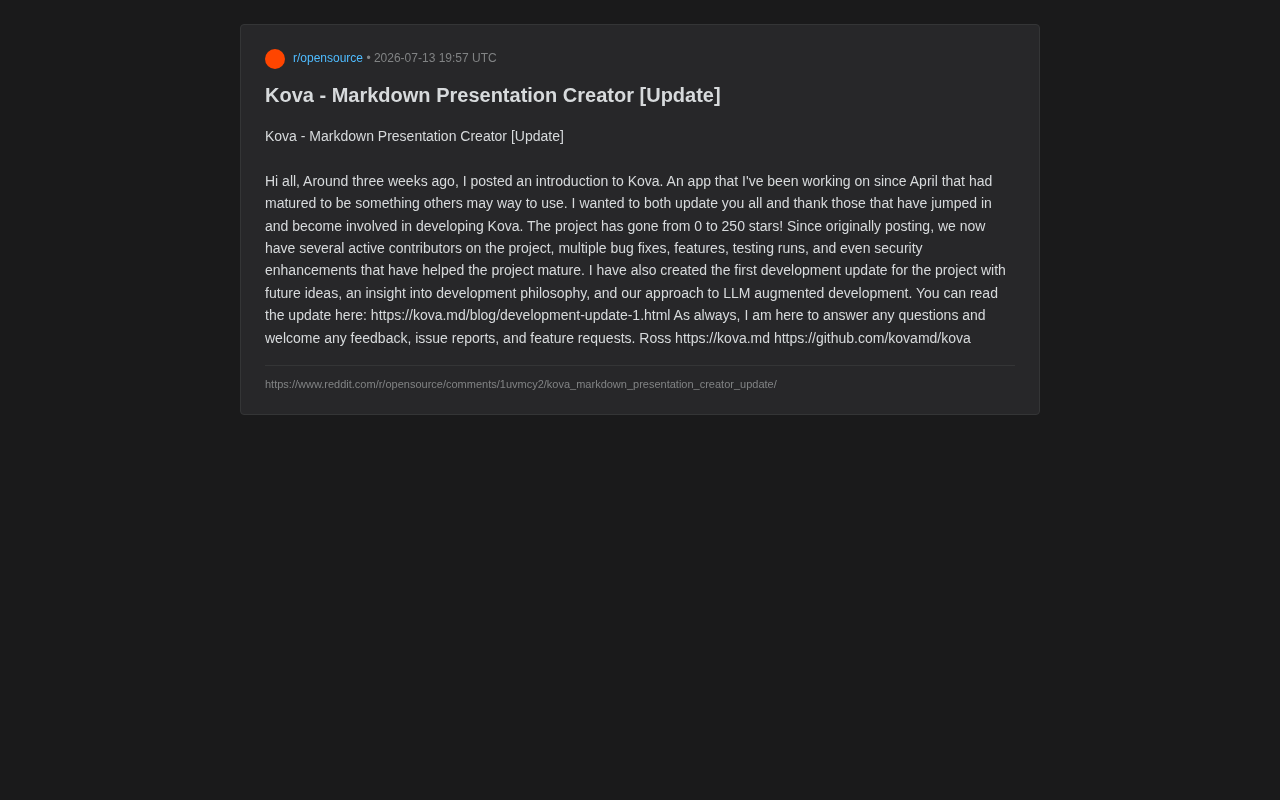
Kova: The Open-Source Tool for Building Presentations with Markdown
Kova is an open-source Markdown presentation tool for developers. With Git support and content-style separation, it hit 250 GitHub Stars in just three weeks.
Read more →

·3 min
Codex Efficiency Guide: Practical Strategies to Avoid Burning Through GPT-5.6 Credits
GPT-5.6 (Sol) is powerful but burns credits fast. Learn reasoning tier selection, Fast Mode, and prompt stop-point strategies to get the most out of Codex.
Read more →