#reinforcement learning
1488 related articles

·6 min
Getting Started with LangChain: A Deep Dive into Model and Agent Core Concepts
Deep dive into LangChain's core Model and Agent concepts, covering unified model interfaces, agent tool calling, middleware mechanisms, and key principles for building LLM applications.
Read more →

·7 min
GPT Account Sharing Traps: The Hidden Risks Behind Low-Cost Shared Subscriptions
Is GPT Pro carpooling or account top-up really reliable? This article analyzes the risks of low-cost sharing including account security, privacy leaks, financial loss, and compliance issues.
Read more →

·6 min
Agent Studio: A Unified Platform for Authoring AI Roles and Skills
Agent Studio unifies AI Agent role definition (Subagents) and Skills on one platform, enabling coordinated orchestration through a shared MCP endpoint, progressive disclosure, and moderated community publishing.
Read more →

·7 min
Cost Optimization for AI Agent Fleets: Why an Expensive Commander + Cheap Workers Is More Cost-Effective
Deep analysis of multi-agent system cost optimization: why the 'expensive commander + cheap workers' combination outperforms all-frontier fleets, covering decision-intent cost logic and Sonnet 5 tokenizer traps.
Read more →
·8 min
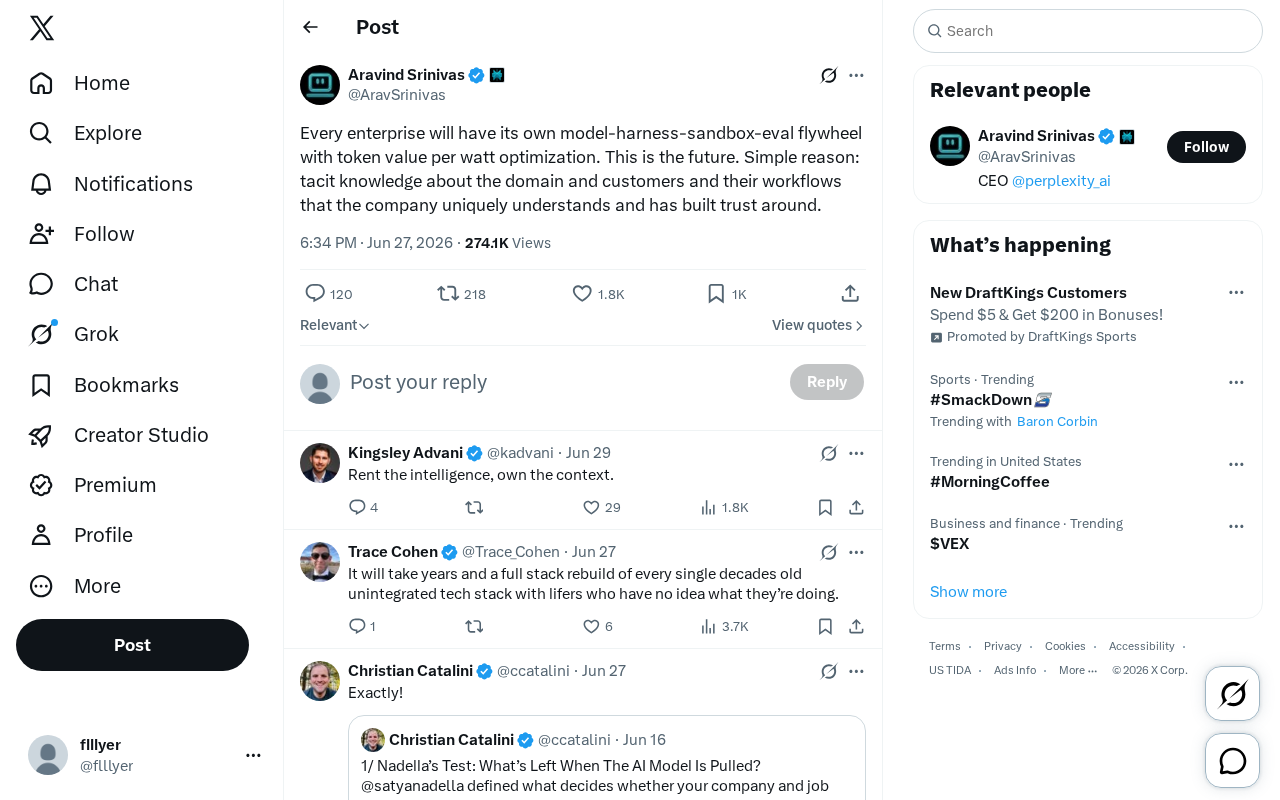
The Enterprise AI Flywheel: Building a Model-Eval Loop as a Competitive Moat
The core of enterprise AI isn't calling general models—it's building a self-reinforcing "model-harness-sandbox-eval" flywheel. This article analyzes the four components, tacit knowledge moats, and the "token value per watt" efficiency metric.
Read more →

·6 min
The New Normal of AI Programming: How Autonomous Agent Development Is Reshaping Software Engineering
AI Agent autonomous programming is evolving from niche experiments to the industry default. This article analyzes the three stages of AI-assisted programming, its impact on developer skills, process restructuring, and key challenges.
Read more →
The True Nature of Moving Fast: Freque…
·3 min
The True Nature of Moving Fast: Frequent Contact with Reality Is a Form of Humility
"Moving fast" isn't recklessness — it's intellectual humility. This article explores the shared logic behind Agile, MVP, and AI iteration: true arrogance is believing you don't need to be tested.
Read more →

·2 min
Getting Started with Codex: A Guide to Its Four Forms and a Comparison of the Top 3 AI Coding Tools
A complete guide to OpenAI Codex's four forms (CLI, web, plugin, APP) and an in-depth comparison of Codex, Claude Code, and Cursor on pricing, stability, and use cases.
Read more →

·3 min
Complete Guide to Codex /goal Command: Making AI Execute Long Tasks Without Cutting Corners
Deep dive into OpenAI Codex's /goal slash command: four core mechanisms that prevent AI "fake completion," enforce stop conditions, and support task resumption. Includes full prompt structure and permission configuration for complex automation tasks.
Read more →
Codex Record & Replay Explained: Turni…
·2 min
Codex Record & Replay Explained: Turning Screen Actions into AI Automation Skills
OpenAI Codex's Record & Replay turns real screen workflows into reusable AI automation skills. A deep dive into how it works, its use cases, limitations, and what it means for AI agents.
Read more →

·3 min
Which AI Coding Tool Should You Choose? A Deep Dive Comparison of Four Leading Tools
Codex, Claude Code, Cursor, Anti-Gravity compared: tight budget pick Anti-Gravity, max capability pick Claude Code, engineering work pick Cursor, OpenAI users pick Codex.
Read more →

·2 min
43k Stars: Ponytail's Six-Step Decision Framework That Cuts AI-Generated Code by 54%
Ponytail's six-step decision ladder forces AI to ask "is this necessary?" before coding. Benchmarks across 12 tasks: 54% less code, 22% fewer tokens, 100% security retained. Works with Cursor, Claude, and more.
Read more →

·3 min
Deep Dive into the /goal Command: The Ultimate Tool for Managing Long-Running AI Agent Tasks
A deep dive into the /goal command in Claude Code and Codex — covering positioning, real-world cases, and a three-element Prompt framework (Goal, Termination Condition, Constraint Rules) for stable long-running AI Agent tasks.
Read more →

·3 min
Codex APP Deep Dive: Comparison with Claude Code and How to Choose
In-depth comparison of Codex APP vs. Claude Code and Cursor: pricing, stability, and capability differences. Discover Codex's unique strengths in frontend UI development and how to choose the right AI coding tool.
Read more →

·6 min
Is Claude Fable 5 Real? Exposing the AI Reseller Service Scam
Anthropic never released a Claude Fable 5 model. This article analyzes fake AI promotions, exposes wrapper service scam tactics, and provides tips for verifying AI claims.
Read more →

·8 min
Free Top-Tier AI Models on Aggregator Platforms? A Sober Analysis and Pitfall Avoidance Guide
In-depth analysis of AI aggregator platforms claiming free access to GPT, DeepSeek, and Gemini. Reveals hidden data risks, business logic, and recommends legitimate alternatives like OpenRouter and Poe.
Read more →

·4 min
Is ChatGPT Pro Account Sharing Worth It? 3 Major Risks and 4 Safer Alternatives
An in-depth analysis of the ban, privacy, and service risks of ChatGPT Pro account sharing, plus four safer money-saving alternatives including Plus, API pay-as-you-go, and competing AI tools.
Read more →

·4 min
Is ChatGPT Pro Account Sharing Worth It? 3 Major Risks and 4 Safer Alternatives
An in-depth analysis of ChatGPT Pro account sharing risks — bans, privacy leaks, and service disruptions — plus four safer, budget-friendly alternatives to help you decide.
Read more →

·3 min
GLM 5.2 In-Depth Review: How an Open-Source Model Truly Stacks Up Against Closed-Source Giants
In-depth review of Zhipu AI's open-source flagship GLM 5.2: benchmarks, frontend dev, 3D game generation, and cost analysis. MIT licensed, top-5 scores, Opus-level frontend quality at 1/8 the cost.
Read more →

·4 min
How Daytona Is Redefining AI Agent Compute Sandbox Infrastructure
Deep analysis of how Daytona pivoted from browser IDE to AI Agent sandbox infrastructure, achieving 60ms startup times, 850K daily sandboxes on bare metal, and why Computer Use opens a trillion-dollar market.
Read more →