#reproducibility crisis
35 related articles

·3 min
The ML Paper Reproducibility Crisis: 60% of Code Contains Fatal Bugs — Should Top Conferences Mandate Code Submission?
A top conference reviewer reveals: only 1 of 12 ML papers provided complete reproducible code, and 60% of submitted code contained fatal bugs. Should conferences mandate code submission?
Read more →

·2 min
Deep Dive into OpenAI's Astra Model: Technical Highlights vs. Overhyped Marketing
Deep analysis of OpenAI's Astra model: real technical capabilities vs. overhyped marketing. Community insights on evaluating AI models rationally.
Read more →

·2 min
Google's $40 Million Investment in the Genesis Mission: How AI Computing Power Accelerates Scientific Discovery
Google commits $40M in AI tokens and compute credits to the Genesis Mission to accelerate fundamental science. Explore the implications, opportunities, and challenges of AI-driven discovery.
Read more →

·4 min
Walsh Multi-Agent Trading System: How Risk Management Veto Power Ensures AI Autonomous Decision-Making Safety
Deep dive into the Walsh multi-agent trading system architecture, exploring how its risk management agent with veto power establishes safety boundaries for AI autonomous decision-making.
Read more →

·3 min
Six Months and 124 Iterations: Conquering Reactive Play in Breakout with PPO
An RL enthusiast spent 6 months and 124 iterations to achieve reactive play in Atari Breakout using PPO. A deep dive into PPO tuning challenges and real-world RL engineering.
Read more →

·3 min
Reproducing GPT-2: How a Hidden Bug Affected Weight Training
An in-depth analysis of a hidden bug discovered while reproducing GPT-2 from scratch, revealing how implementation errors silently degrade weight quality and sharing practical debugging methodologies.
Read more →

·2 min
AI Emotional Dependency: A Reddit Help Post Reveals a Deeper Crisis
A Reddit user's emotional breakdown over sudden AI output changes reveals deep issues around AI emotional dependency, silent model updates, and product responsibility boundaries.
Read more →

·2 min
AI Emotional Dependency: A Reddit Help Post Reveals a Deeper Crisis
A Reddit user's emotional breakdown over sudden AI output changes reveals deep concerns about AI emotional dependency, silent model updates, and product responsibility boundaries.
Read more →

·2 min
Why Top AI Startups Are No Longer Publishing Research: The Deep Reasons Behind the Shift from Openness to Secrecy
Exploring why top AI startups shifted from open research to secrecy, analyzing how commercial competition and talent pressure drive this change, and its impact on academia, innovation, and open source.
Read more →

·4 min
A Guide to Full-Stack Machine Learning Project Repository Structure: From Chaos to Convention
A detailed guide to organizing full-stack ML project repositories, covering directory structure design, data-code separation, and externalized configuration to help ML developers move from experimental code to production-grade engineering standards.
Read more →

·4 min
Full-Stack Machine Learning Project Repository Structure Guide: From Chaos to Convention
A detailed guide to organizing full-stack ML project repositories, covering directory structure design, data-code separation, and configuration externalization to help ML developers move from experimental code to production-grade engineering.
Read more →
Kronos Financial Foundation Model: Usi…
·7 min
Kronos Financial Foundation Model: Using AI to Read the Market Language of Candlesticks
Kronos is the first open-source foundation model treating candlestick data as the "language of financial markets," using an autoregressive Transformer and earning 32K GitHub Stars. A deep dive into its principles, applications, and limits.
Read more →

·3 min
Greenhouse Controller Showdown: Why Reinforcement Learning Lost to a Rule-Based Baseline
An open benchmark in GreenLight-Gym2 compares four greenhouse controllers, revealing why model-free RL (PPO) underperforms hand-tuned rules and how MPC and hybrid RL-in-MPC approaches can help.
Read more →
·3 min
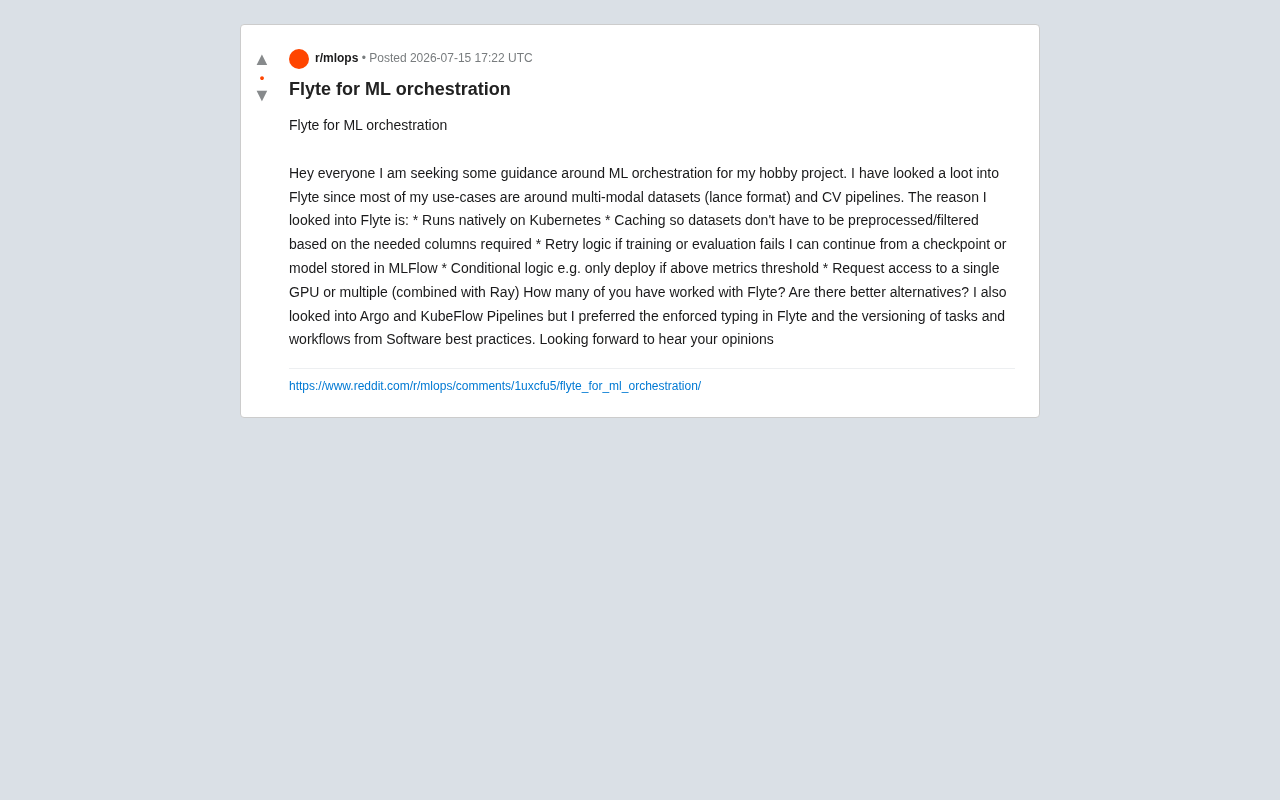
Flyte Deep Dive: A Practical Guide to Choosing Your ML Workflow Orchestration Tool
Deep dive into Flyte's core capabilities: cloud-native GPU scheduling, intelligent caching, checkpoint recovery, and conditional deployment — plus a full comparison with Argo and KubeFlow Pipelines.
Read more →

·2 min
500+ AI Research Tools: Automating the Entire Research Workflow
A curated open-source repo of 500+ active AI research tools covers the full workflow—literature review, code reproduction, paper writing, and LaTeX formatting—potentially saving 80% of research time.
Read more →
Soofi Open-Source Foundation Model Tra…
·2 min
Soofi Open-Source Foundation Model Training Code Deep Dive: The Complete Pipeline from Data to Weights
Soofi is an open-source project providing complete foundation model training code, covering data preprocessing, tokenizer construction, model architecture, and training optimization. A deep dive into its value for the LLM ecosystem.
Read more →
Paper Reproduction as an Entry Point i…
·4 min
Paper Reproduction as an Entry Point into Scientific Machine Learning: Path Selection and Pitfall Guide
How can applied math students efficiently enter Scientific Machine Learning (SciML)? This guide covers the value and pitfalls of paper reproduction, with a layered path from numerical PDEs to research.
Read more →

·4 min
Can a 2.5 Overall Score Get Accepted at EMNLP? A Deep Dive into Review Scoring
A detailed breakdown of EMNLP/ACL review dimensions—Overall, Soundness, Excitement, Reproducibility—with an objective assessment of acceptance odds at 2.5 Overall, plus Rebuttal strategy and Findings advice.
Read more →

·7 min
Decoding the Government Software Security Executive Order: New Supply Chain Compliance and SBOM Requirements
The new U.S. Executive Order requires government software suppliers to provide verifiable security assurances and mandates the SBOM system. This article analyzes the policy's core demands, real impact on suppliers, and the chain of challenges.
Read more →
·6 min
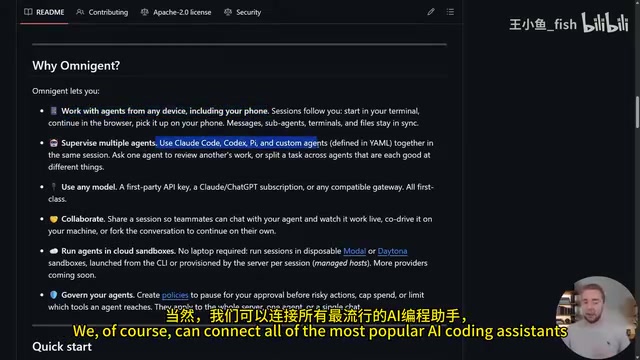
Omnigent Open-Sourced: A Meta-Harness for AI Coding Agents Built by Databricks
Databricks open-sources Omnigent, a Meta-Harness for orchestrating Claude Code, Codex, and more AI coding assistants together—with built-in guardrails, cross-model workflows, and real-time collaboration. Get started in 10 minutes.
Read more →