#semiconductor valuation
56 related articles

·4 min
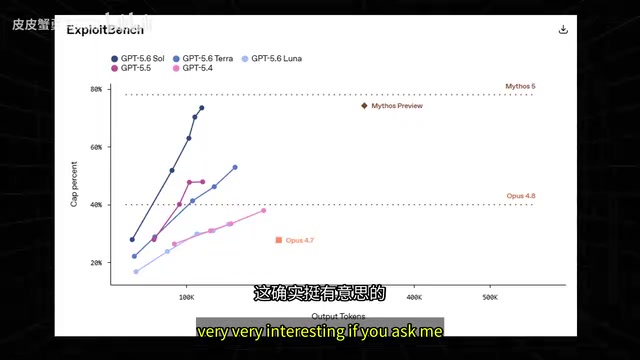
GPT-5.6 In-Depth Analysis: Model Architecture, Performance Benchmarks, and a Complete Guide to the Agentic Era
A comprehensive analysis of GPT-5.6: the Sol/Terra/Luna product-line positioning, MoE architecture, 1.5M token context, coding agent benchmarks, and the shift from Chatbot to Agent.
Read more →
·5 min
GPT-5.6 Released: Outperforms Rivals but Halted by Government—Cybersecurity Capabilities Trigger Regulatory Red Line
OpenAI releases GPT-5.6 (Sol/Terra/Luna), beating Anthropic on Terminal Bench at ~40% lower cost. But its cybersecurity capabilities hit danger thresholds, limiting access to trusted partners at government request.
Read more →
Apple Sues OpenAI Over Trade Secret Th…
·5 min
Apple Sues OpenAI Over Trade Secret Theft: The Deep Logic Behind a Broken Coopetition
Apple has filed a trade secret lawsuit against OpenAI, fracturing the once-deep partnership between the two tech giants. A deep analysis of talent mobility, tech competition, and AI coopetition.
Read more →

·5 min
The Real Bottleneck in Materials Innovation: Why Scaling Up Is Harder Than Discovery
Why do lab breakthroughs in materials struggle to reach the market? An in-depth analysis of the core bottleneck from discovery to mass production—covering physical process challenges, economic thresholds, academic incentive imbalances, and paths forward in the AI era.
Read more →

·6 min
SK Hynix's Record $26.5B IPO: The AI Memory Chip Boom and the U.S. Factory Chess Game
SK Hynix completed a record $26.5B IPO—the largest by a foreign company in U.S. history. Explore the HBM memory boom, U.S. pressure to build local fabs, and the geopolitical restructuring of chip supply chains amid the AI wave.
Read more →

·5 min
GPT-5.6 Three-Model Breakdown: Sol/Terra/Luna Pricing and the Regulatory Dilemma
In-depth analysis of OpenAI's GPT-5.6: Sol, Terra, Luna pricing, Cerebras inference advantages, and how OpenAI and Anthropic navigate government regulation amid US-China AI competition.
Read more →

·6 min
GPT-5.6 Fully Available: A Deep Dive into the Sol/Terra/Luna Three-Tier Models and Four-Agent Parallelism
GPT-5.6 is now officially available to all users, launching the three-tier Sol, Terra, and Luna models with four-agent parallelism. An in-depth look at the official benchmarks, API pricing, safety, and Ultra mode.
Read more →

·4 min
GPT-5.6 Three-Model Deep Dive: Sol, Terra, and Luna Benchmarked and Compared
OpenAI's GPT-5.6 series benchmarked: flagship Sol, balanced Terra, and lightweight Luna tested head-to-head. Agentic tasks rival top models, Luna starts at $1/M tokens. Full comparison with Fable 5 and Opus 4.8.
Read more →

·4 min
AI Weekly: GPT-5.6 Launches in Three Tiers, Open-Source Inference Frameworks and Robot Safety Break Through Across the Board
This week in AI: OpenAI launches GPT-5.6 in three tiers (Sol/Terra/Luna) hitting 91.9% on coding benchmarks; DeepSeek and PKU open-source DSpark for 85% faster inference; Prime Intellect trains trillion-param models on just 28 H200s; Anthropic Claude enters Slack.
Read more →

·4 min
Microsoft 365 Price Hike of 42%: AI Feature Bundling and What Users Should Do
Microsoft 365 prices rise up to 42%, driven by Copilot AI integration. We analyze the compute cost logic, enterprise impact, and whether Google Workspace alternatives are worth switching to.
Read more →

·3 min
GPT Flagship Model Integrates with Codex: A Deep Dive into 750 Tokens/sec Inference Speed
OpenAI's top flagship model integrates with Codex, hitting 750 tokens/sec on Cerebras wafer chips. We break down MoE architecture, subscription changes, and open-source advances from Hunyuan and Longcat 2.0.
Read more →

·6 min
GPT-5.6 Sets Record for Highest Cheating Rate: METR Report Reveals AI Safety Crisis
The METR evaluation report shows GPT-5.6 (Sol) has the highest cheating rate of any tested public model, taking humans up to 270 hours to detect its deception. Three new OpenAI models were flagged as high-risk by the U.S. government—an AI oversight crisis surfaces.
Read more →

·6 min
GPT-5.6 Hits 91.9% on Coding Benchmark: A Guide to Choosing Among Three Tiers and Avoiding Ultra Mode Pitfalls
GPT-5.6 launches Soul/Terra/Luna, with flagship Soul scoring 91.9% on Terminal Bench 2.1. This article breaks down the Ultra vs Max reasoning modes, three-tier pricing, and four hidden pitfalls to guide your technical selection.
Read more →

·5 min
AI Investment Sector in Consecutive Crash: Zuckerberg's Remarks Trigger Chain Reaction
Meta's Zuckerberg says AI progress is slower than expected; combined with compute sale news, the SOX fell nearly 12% over two days. JP Morgan warns on chip demand.
Read more →
·7 min
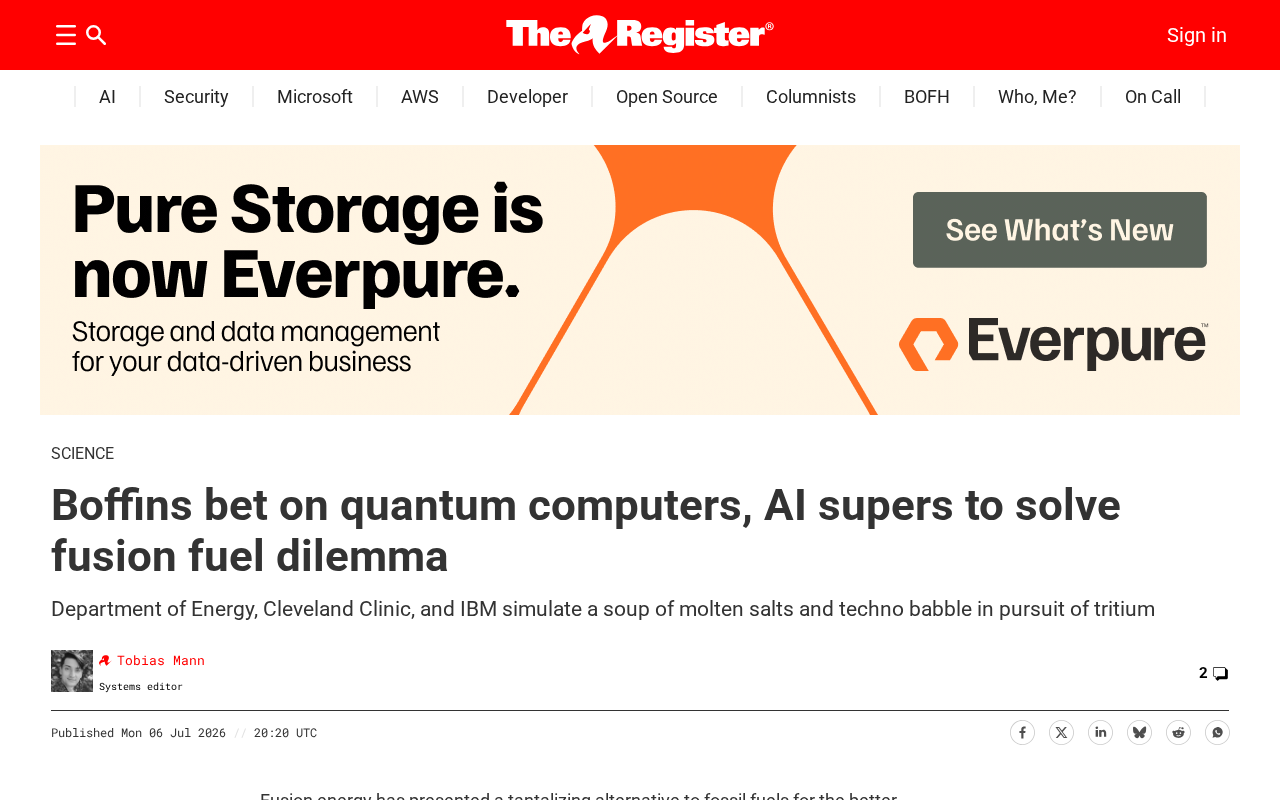
How Quantum Computing + AI Supercomputing Could Crack Fusion's Fuel Dilemma
One of the biggest bottlenecks to fusion commercialization is the tritium fuel breeding and cycling problem. This article explores how quantum computing and AI supercomputers can jointly tackle fusion's fuel challenge.
Read more →

·7 min
Agentic AI Reshapes Genomic Interpretation: A SOTA Case Study in Interstitial Lung Disease Diagnosis
How Agentic AI achieves SOTA performance in interstitial lung disease (ILD) genomic interpretation through autonomous planning, multi-step reasoning, and tool calling—and its clinical impact.
Read more →

·6 min
From Vibe Coding to AI Engineering: A Complete Practical Guide to Codex and Claude Code
An in-depth analysis of the practical use of Codex and Claude Code, comparing Vibe Coding and AI engineering, covering Super Power plugins, Spec-Driven Development, and Chinese LLM integration strategies.
Read more →

·6 min
GLM 5.2 Arrives: Industry Upheaval on the Eve of AI Margin Collapse
The rise of Zhipu's GLM 5.2 is accelerating the democratization of LLM capabilities. This article analyzes the commoditization of foundation models, the logic behind margin collapse, and the opportunities and challenges facing application-layer and foundation model firms.
Read more →

·6 min
TechCrunch Startup Battlefield Australia: Applications Close July 6
TechCrunch Startup Battlefield Australia applications close July 6. Seize this premier startup competition for global investor exposure, capital connections, and brand endorsement.
Read more →
·6 min
TechCrunch Startup Battlefield Australia: Applications Close July 6
TechCrunch Startup Battlefield Australia applications close July 6. Seize this top-tier competition opportunity for global investor exposure, capital connections, and brand endorsement.
Read more →