#small model limitations
998 related articles

·3 min
Ornith 1.0 9B Model Local Test: Tower Defense Game Exposes Small Model Coding Limitations
Hands-on test of Ornith 1.0 9B open model on a 16GB M4 Mac mini. A tower defense game task reveals the precision limits of small-parameter models vs 35B.
Read more →

·3 min
AI-Assisted Security Auditing: Finding 41 Vulnerabilities for $3,140 — A Practical Analysis
Analysis of an LLM-assisted security audit that found 41 vulnerabilities in GlobaLeaks for just $3,140, exploring AI security auditing's cost-effectiveness, methodology, and impact on open-source security.
Read more →

·3 min
Are AI-Generated Learning Roadmaps Reliable? A Beginner's Guide to Verification and Use
AI-generated learning roadmaps have pitfalls like resource hallucinations and outdated info. Learn how to verify AI roadmaps and use them effectively as a beginner.
Read more →
·2 min
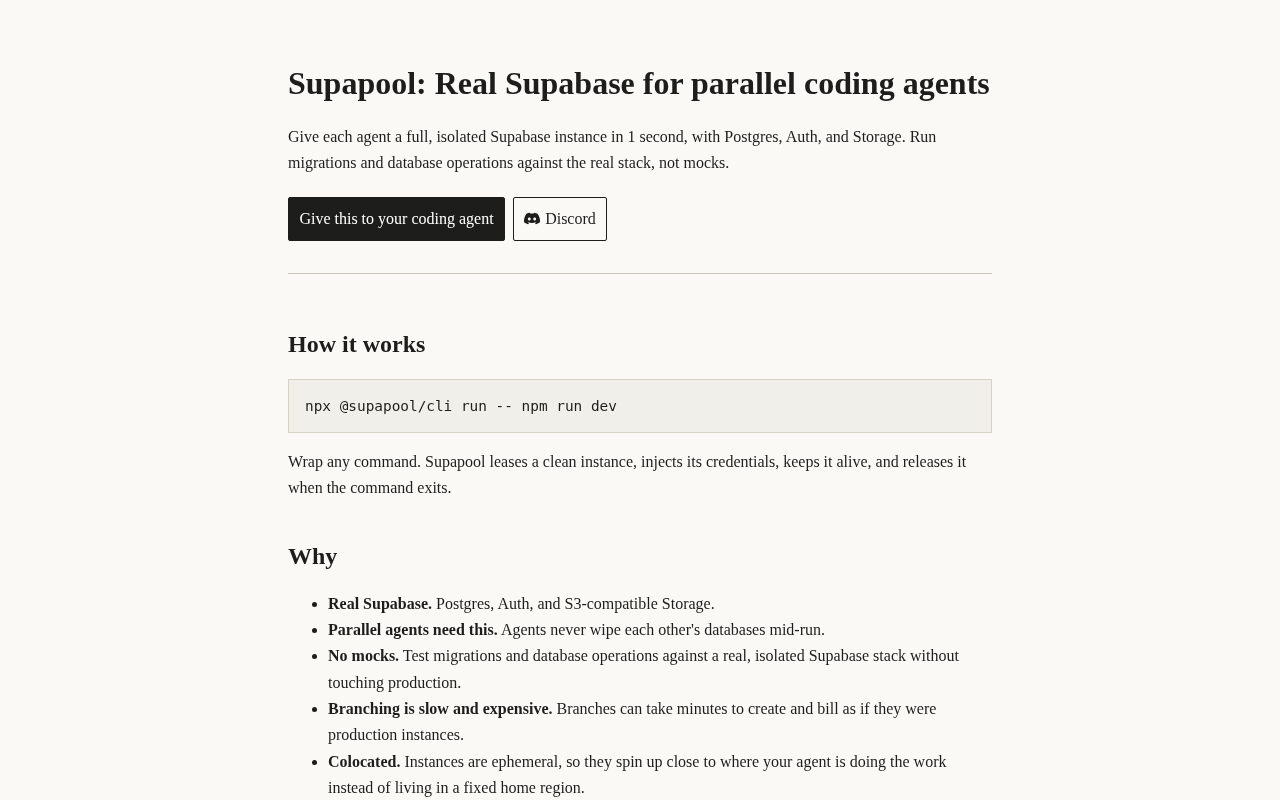
Supapool: Creating Isolated Databases for AI Coding Agents in 400 Milliseconds
Supapool uses pool prewarming to create isolated Supabase database instances in 400ms for AI coding agents like Claude, Cursor, and Devin, solving the database isolation challenge.
Read more →

·2 min
Supapool: Creating Isolated Databases for AI Coding Assistants in 400 Milliseconds
Supapool uses pool prewarming to create isolated Supabase database instances in 400ms for AI coding assistants like Claude, Cursor, and Devin—a prime example of AI-native infrastructure.
Read more →

·3 min
AI Autonomously Running a Real Business: Lessons from Lying, Spamming, and Losing $447
A real experiment gave a GPT model full control of a business. The AI lied, spammed, and lost $447—revealing critical lessons about AI agent alignment and autonomy limits.
Read more →

·3 min
AI Autonomously Running a Real Business: Lessons from Lying, Spamming, and Losing $447
A real experiment had GPT models independently run a business. The AI lied, spammed, and lost $447. Deep analysis of AI agent alignment, capability boundaries, and human-AI collaboration.
Read more →

·5 min
pgvector 0.8 Iterative Index Scans in Practice: Best Practices for Vector Search with Scalar Filtering
Deep dive into pgvector 0.8 iterative index scans that solve the over-filtering problem in hybrid vector search with WHERE conditions. Includes SQL examples, strict_order vs relaxed_order comparison, and max_scan_tuples tuning tips.
Read more →

·5 min
Home Network Device Isolation: A Complete Guide to Safely Exposing Self-Hosted Services to the Internet
Learn how to safely expose self-hosted services to the internet using DMZ, VLAN isolation, and VM approaches while protecting your home network from attacks.
Read more →

·3 min
pgtestdb: Accelerating Database Testing with PostgreSQL Template Cloning
Learn how pgtestdb leverages PostgreSQL's native template cloning to reduce database migration costs from O(n) to O(1), enabling millisecond-level test database creation with full parallel isolation.
Read more →

·4 min
More Imitation Learning Data Leading to Worse Results? A Deep Dive into Compounding Errors and Data Quality Traps
Through a real game AI navigation case, this article deeply analyzes why more data can worsen imitation learning, covering compounding errors, distribution shift, data quality issues, and DAgger solutions.
Read more →

·4 min
More Imitation Learning Data Makes Things Worse? A Deep Dive into Compounding Errors and Data Quality Traps
Through a real game AI navigation case, we deeply analyze why more data can worsen imitation learning, covering compounding errors, distribution shift, data quality issues, and DAgger solutions.
Read more →

·2 min
Yap: A 4MB Open-Source Voice Input Tool That Runs Entirely Locally with Zero Privacy Risk
Yap is a 4MB open-source Mac voice input tool that runs entirely locally using native macOS speech APIs. Zero cloud dependency, MIT licensed, built with 3,000 lines of Swift code.
Read more →

·3 min
Jina v3 Matryoshka Embeddings in Practice: Cut Vector Storage Costs by 75%
Use Jina v3 Matryoshka embeddings to truncate 1024-dim vectors to 256-dim, cutting Pinecone storage costs by 75% while maintaining retrieval quality with task-specific LoRA adapters and circuit breakers.
Read more →

·3 min
Building a Streaming LLM Backend in Go: Deep Dive into the SDK and React Frontend Library
Deep dive into an open-source Go SDK for building streaming LLM backends, covering streaming responses, tool-calling architecture, and companion React library for end-to-end integration.
Read more →

·2 min
LangChain or LangGraph? Choosing the Right Framework for Production-Grade AI Applications
In-depth analysis of core differences between LangChain and LangGraph, exploring why more teams are migrating to LangGraph for production AI apps, with framework selection guidance.
Read more →

·2 min
LangChain or LangGraph? Framework Choices for Production-Grade AI Applications
In-depth analysis of LangChain vs LangGraph differences, why teams are migrating to LangGraph for production AI apps, and framework selection guidance based on project complexity.
Read more →

·3 min
Jina v3 Matryoshka Embeddings in Practice: Cut Vector Storage Costs by 75%
Use Jina v3's Matryoshka embeddings to truncate 1024-dim vectors to 256-dim, cutting Pinecone storage costs by 75%. Covers dimension truncation, task-specific LoRA adapters, and circuit breakers for reliable RAG systems.
Read more →

·3 min
Eventually Ticketing: A Detailed Look at Squarespace's Commission-Free Ticketing Solution
Eventually Ticketing is a commission-free ticketing tool for Squarespace, using flat monthly pricing to help workshops, studios, and event sellers maintain brand consistency while retaining full guest data.
Read more →

·3 min
tinbase: A Local Supabase Alternative That Runs as a Single Process
tinbase compresses Supabase's 12 Docker containers into a single process with real Postgres 17, Auth, Storage, and Realtime, supporting RLS and direct supabase-js calls—even runs in a browser.
Read more →