#translation quality metrics
75 related articles

·4 min
AI Engineer Growth Roadmap: From Programming Fundamentals to RAG and MCP Agent Development
A systematic AI engineer learning roadmap covering programming, math, ML, and data engineering foundations, plus frontier AI technologies like LLM, RAG, Agents, and MCP with free open-source resources.
Read more →

·3 min
EMNLP Submission Guide: A Deep Dive into the ARR Rolling Review Mechanism
A deep dive into how EMNLP and the ARR rolling review mechanism work, covering timeline planning, score interpretation, Rebuttal strategies, and practical advice for NLP researchers.
Read more →

·2 min
Google Releases Gemini 3.6 Flash and Two Other New Models: Comprehensive Expansion of the Flash Family
Google launches Gemini 3.6 Flash, 3.5 Flash-Lite, and 3.5 Flash Cyber, further expanding its lightweight AI product line. Analysis of positioning, differentiation strategy, and developer impact.
Read more →

·4 min
Leaping AI: Voice AI Agents That Automatically Execute Weeks-Long Telemarketing Follow-ups
Leaping AI builds voice AI agents for blue-collar services like home improvement and roofing, supporting 100+ concurrent calls, multi-day campaign auto-follow-ups, multilingual switching, and deep CRM integration.
Read more →

·3 min
Athena: One-Click AI Orchestrator Agent for Building Ready-to-Operate E-commerce Businesses
Shoplazza launches Athena, an AI orchestrator agent that topped Product Hunt. It covers the full e-commerce chain—store setup, product sourcing, logistics, and ad campaigns—enabling solo entrepreneurs to build truly operational cross-border businesses.
Read more →

·2 min
AI Real-Time Translation Earbuds Buying Guide: Technology, Top Products & Recommendations
In-depth analysis of AI real-time translation earbuds: technical principles, mainstream product comparisons (Google Pixel Buds, Timekettle, etc.), and buying recommendations for different scenarios.
Read more →

·3 min
Cynative: A Read-Only CLI Tool Written in Go That Makes Infrastructure Explainable
Cynative is a read-only CLI tool written in Go focused on explaining live infrastructure state. This article analyzes its safety-first design, explainability philosophy, and implications for cloud-native operations tooling trends.
Read more →

·3 min
Cynative: A Read-Only CLI Tool Written in Go That Makes Infrastructure Explainable
Cynative is a read-only CLI tool written in Go that focuses on explaining live infrastructure state. This article analyzes its safety-first design, explainability philosophy, and cloud-native tooling implications.
Read more →

·3 min
Agent Skill Routing: Engineering Trade-offs Between Retrieval and LLM, and the Two-Stage Layered Architecture
Deep dive into Agent skill routing: comparing pure model vs. pure retrieval approaches, with a detailed two-stage layered architecture balancing accuracy, latency, and cost.
Read more →

·3 min
AI Research Automation: More Like Data Cleaning Than Inventing the Transformer
Why AI research automation looks more like data cleaning than inventing the Transformer. Exploring the value of automating 60%-80% of repetitive research work and how human-AI collaboration reshapes the research paradigm.
Read more →
·3 min
AI Research Automation: More Like Data Cleaning Than Inventing the Transformer
AI research automation will look more like data cleaning than inventing the Transformer. Explore how automating 60%-80% of repetitive research work reshapes the AI research paradigm.
Read more →

·5 min
Why Are China's Open-Source AI Models Getting Stronger? A Deep Dive Into Three Comeback Strategies
Facing US chip bans and closed-source monopoly, how do China's open-source AI models keep fighting back? A deep dive into three core paths: open-source pricing games, optical interconnect positioning, and on-device scenarios.
Read more →

·5 min
Why Are China's Open-Source AI Models Getting Stronger? A Deep Dive into Three Comeback Paths
Facing US chip bans and closed-source monopolies, how do China's open-source AI models keep striking back? A deep dive into three core paths: open-source pricing-power games, optical interconnect positioning, and edge-side use cases.
Read more →

·3 min
Beware of 'Free AI Model' Traps: A Deep Dive into the Real Risks
Videos promising 'free access to all global AI models' hide serious risks: fake version numbers, data leaks, and phishing scams. Here's what you need to know.
Read more →

·6 min
Hands-On with Panel AI On-Premises Deployment: One-Click Enterprise Adoption and Unified Compute Cluster Scheduling
In-depth review of Panel AI v1.1.1: second-level installation, no-public-IP networking, batch compute cluster management. Learn how enterprise AI on-premises deployment barriers are dramatically lowered.
Read more →

·7 min
Getting Started with Claude Code: Five Dimensions to Understand Why It Outperforms Regular AI
Claude Code isn't just a chat AI—it can directly read projects, modify code, and run commands. This article compares Claude Code with regular AI across five dimensions to help you decide if it's worth trying.
Read more →

·6 min
Tongyi Qianwen Qwen-Image-3.0: The Leap of AI Image Generation from Toy to Productivity Tool
Tongyi Qianwen Qwen-Image-3.0 image generation model gets a comprehensive upgrade: supporting 4,500-token ultra-long instructions, pixel-level detail rendering, 12-language knowledge understanding, and ancient painting restoration. This article analyzes its three core capabilities.
Read more →
·3 min
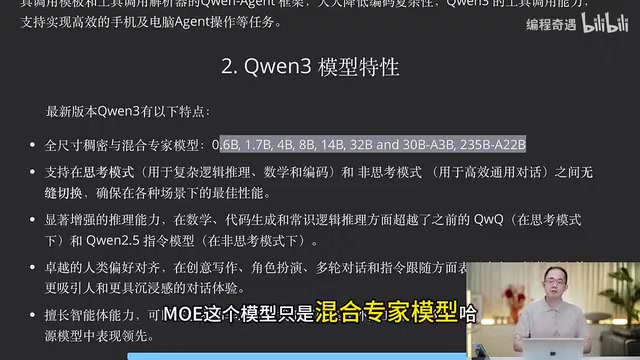
Qwen3 Deep Dive: A Complete Look at the Open-Source Hybrid Reasoning Model
Qwen3 deep dive: 6 Dense & MoE models from 0.6B to 235B, world's first open-source hybrid reasoning model, matching Gemini 2.5 Pro. Complete guide for developers and enterprises.
Read more →

·3 min
Deutsche Telekom's AI Customer Service Revolution: How 40 Million Interactions Are Reshaping the Service Experience
Deutsche Telekom partners with OpenAI to embed generative AI across the full call lifecycle — live translation, in-call assistance, and post-call summaries. Containment rate hits 50%, costs drop. A deep dive into telecom AI transformation.
Read more →

·3 min
GPT-5.6 Prompt Engineering in Practice: A Systematic Approach to Eliminating AI Verbosity
A deep dive into GPT-5.6's official eight-dimension prompt framework — tracing AI verbosity back to RLHF and training data, with practical constraint techniques to fix it.
Read more →