#two-stage retrieval
41 related articles

·3 min
Agent Skill Routing: Engineering Trade-offs Between Retrieval and LLM, and the Two-Stage Layered Architecture
Deep dive into Agent skill routing: comparing pure model vs. pure retrieval approaches, with a detailed two-stage layered architecture balancing accuracy, latency, and cost.
Read more →

·2 min
RAGFlow Deep Dive: An Open-Source Knowledge Engine Combining RAG and Agent Capabilities
Deep dive into RAGFlow, an open-source RAG engine with 87K+ GitHub Stars. Explore its deep document understanding, Agent orchestration, traceable Q&A, and enterprise knowledge base applications.
Read more →

·4 min
RAG in Practice: Building a Million-Scale Medical Consultation AI System with Retrieval-Augmented Generation
Learn how to build a medical AI assistant using RAG covering 790 diseases and 1.7M consultation records, with complete implementation of knowledge base construction, vector retrieval, BERT fine-tuning, and recall-ranking optimization.
Read more →

·4 min
Edit Distance Automata and N-gram Similarity: Core Technologies Behind Fuzzy Search in Search Engines
Deep dive into two core fuzzy search technologies: Levenshtein edit distance automata for efficient spelling tolerance and N-gram similarity for large-scale candidate recall, with principles, performance comparison, and industrial integration.
Read more →

·4 min
Embedding Dimensionality Reduction: A Deep Comparison of Matryoshka Representation Learning vs. PCA
A deep comparison of two embedding dimensionality reduction approaches: Matryoshka Representation Learning (MRL) vs. PCA, analyzing trade-offs across compression quality, deployment cost, and flexibility with practical guidance.
Read more →

·3 min
Reranking: The Underrated Secret Weapon for Boosting RAG Accuracy
Explore why reranking is the key to boosting RAG retrieval accuracy. Learn how cross-encoders overcome vector search limitations and how to implement two-stage retrieval architectures.
Read more →

·3 min
Xberg v1 Open-Source Document Extraction Engine: CPU-Only Local Processing Supporting 101 Formats
Xberg v1 is an MIT-licensed open-source local document extraction engine. CPU-only, supporting 101 formats with built-in SPLADE and ColBERT retrieval, Rust-powered for RAG and ML pipelines.
Read more →

·4 min
11-Node LangGraph in Practice: Complete Architecture Breakdown of a Compliance-Grade RAG Agent
Deep dive into an 11-node Agentic RAG agent built with LangGraph, featuring 6-way intelligent routing, hallucination guards, PII masking, circuit breakers, and zero-cost deployment.
Read more →

·7 min
Context Engineering: A Systematic Approach to Stop AI Agents from 'Talking Nonsense'
Context engineering is the core methodology for building efficient AI Agents, covering query enhancement, RAG retrieval, prompt design, memory management, and tool invocation. Master Write, Select, Compress, and Isolate to solve LLM hallucination at its root.
Read more →

·6 min
Tongyi Qianwen Qwen-Image-3.0: The Leap of AI Image Generation from Toy to Productivity Tool
Tongyi Qianwen Qwen-Image-3.0 image generation model gets a comprehensive upgrade: supporting 4,500-token ultra-long instructions, pixel-level detail rendering, 12-language knowledge understanding, and ancient painting restoration. This article analyzes its three core capabilities.
Read more →

·2 min
Agent Skill Hit Rate Dropping? 4 Methods to Solve the Skill Routing Problem
Skill hit rate dropping as your Agent scales? Learn how Progressive Disclosure works and explore 4 solutions: better descriptions, Skill Trees, negative samples, and recall + rerank.
Read more →
·5 min
A Deep Dive into Vector Search for AI Agents: The Technical Foundations of RAG and Long-Term Memory
An in-depth look at the core tech behind AI Agents: how the HNSW, IVF, and PQ vector search algorithms power RAG and long-term memory. Understand where a model's "memory" and "knowledge" come from.
Read more →
·4 min
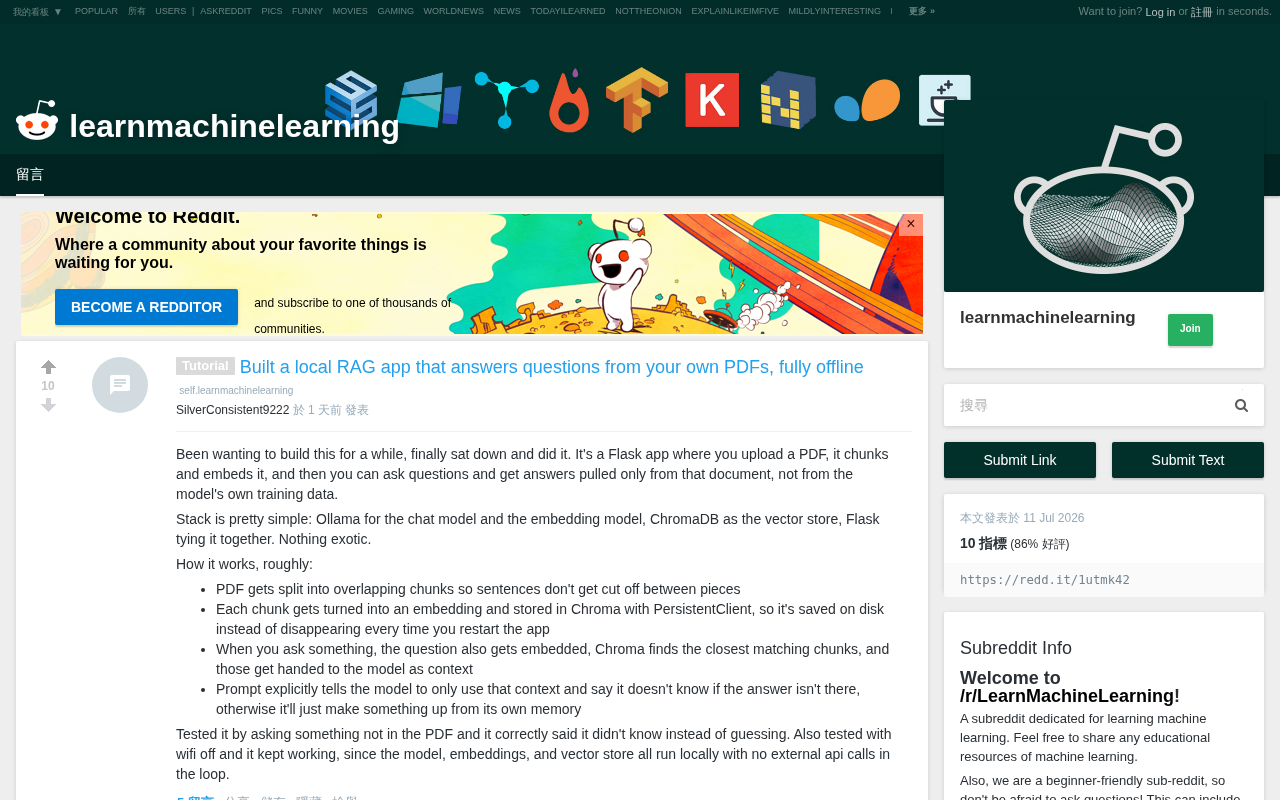
Building an Offline RAG Application from Scratch: A Complete Guide to a Private PDF Knowledge Base
A step-by-step breakdown of building a local RAG app: Ollama local models + ChromaDB vector database + Flask, enabling PDF document Q&A, fully offline operation, and zero data leakage. Perfect for developers new to RAG.
Read more →

·4 min
Dify Getting Started: A Complete Guide to Building AI Workflows Without Code
A complete guide to Dify's core features and 1.8.0 deployment. Covers 5 app types, Docker setup, Workflow vs Chatflow differences, and RAG knowledge bases for beginners.
Read more →

·5 min
Embedding Fine-Tuning in Practice: A Core Technique for Improving RAG Retrieval Quality
Poor RAG retrieval? The root cause often lies in the Embedding model. This article explores why fine-tuning embedding models is necessary, the limits of general Embeddings, and where Embedding fine-tuning fits in RAG optimization.
Read more →

·6 min
GPT-5.6 Hands-On Deep Dive: ChatGPT and Codex Merge, Full Analysis of the Sol Model
GPT-5.6 is officially released, merging ChatGPT and Codex into one app and launching the three-tier Sol, Terra, and Luna models. A detailed breakdown of 16 hands-on tests plus Worker mode and Codex dev upgrades.
Read more →

·3 min
Intent Recognition Interview Question: Three-Layer Funnel Architecture Breakdown and Answer Template
Asked 'how do you implement intent recognition' in an interview? Dumping everything into an LLM is a red flag. This guide breaks down the 3-layer funnel architecture with a ready-to-use answer template.
Read more →

·7 min
Gemini Live Integrates Nano Banana: A Complete Guide to Real-Time Camera, Image Generation, and Maps Integration
Google's Gemini Live now integrates the Nano Banana image generation model with Connected Apps like Google Maps, supporting real-time camera scene understanding and visualization. Free worldwide.
Read more →

·8 min
OpenAI Merges Codex with ChatGPT: A Deep Dive into the Unified Desktop App Overhaul
OpenAI officially merges its coding agent Codex with ChatGPT into a unified desktop app, adding new coding workflows, a Chrome extension, a built-in browser, and GPT-5.6-powered Computer Use capabilities.
Read more →

·4 min
DeepSeek-V4 Deep Dive: Million-Token Context Architecture Breakthrough and Core Innovations
Deep dive into DeepSeek-V4: 1.6T-parameter MoE, CSA+HCA hybrid attention, MHC & MUON optimizer. Inference FLOPs drop to 27% of V3.2, redefining open-source LLM SOTA.
Read more →