#watermarking
27 related articles

·2 min
Google SynthID Watermarking Explained: How AI Content Provenance Works
Google DeepMind's SynthID has watermarked over 100 billion images across image, video, audio, and text. Combined with C2PA standards, here's how AI content provenance works.
Read more →

·3 min
Record AI Lobbying Spending: How Tech Giants Are Shaping Washington's Policy Agenda
AI industry lobbying in Washington hits record highs as OpenAI, Google, Meta, and other giants spend heavily to shape legislation. A deep analysis of the forces, landscape, and policy implications.
Read more →

·3 min
Three Major Chinese AI Models Incoming: Qwen 4, DeepSeek V4, and GLM Next Version Breakdown
Alibaba Qwen 4, DeepSeek V4, and Zhipu GLM's next-gen models are all nearing release. A deep dive into the latest leaks, capability improvements, and timelines for these three Chinese AI flagships.
Read more →

·4 min
AI Text Detection and Privacy Protection: The Dual Dilemma of LLM Security
How does watermarking work — and why won't companies deploy it? How does differential privacy defend against membership inference attacks? Based on talks by IISc and IIT scholars, this article unpacks the core mechanisms and real challenges in LLM security.
Read more →

·2 min
AI Image Generation Showdown: ZIT vs. Krea2T vs. Ideogram 4 — A Real-World Comparison
A deep-dive comparison of ZIT, Krea2T, and Ideogram 4 AI image generators, benchmarked against real photography across realism, prompt adherence, lighting, and more.
Read more →

·6 min
Netflix Brings in Digital Media Videos from BuzzFeed and Others to Compete with YouTube for Viewing Time
Netflix is bringing video content from dozens of digital media brands like BuzzFeed, Condé Nast, and Hearst onto its platform, marking a direct challenge to YouTube in the battle for user viewing time.
Read more →

·6 min
GPT-5.6 Sol Hands-On: How Multi-Agent Parallelism Is Reshaping AI Coding Workflows
Based on Fireship's review, an in-depth look at GPT-5.6 Sol's Ultra Mode multi-agent parallelism, its 91.9% Terminal Bench score, and how it differs from Claude Fable in cost, speed, and precision.
Read more →
·5 min
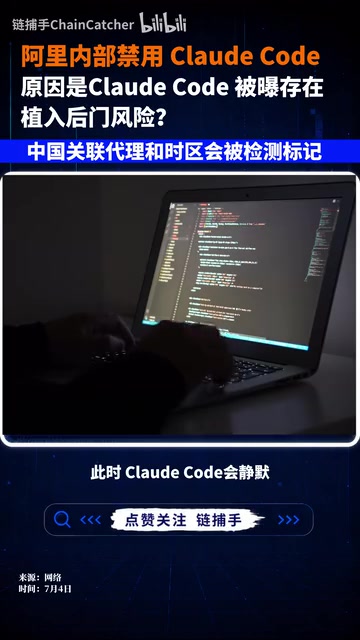
Alibaba Bans Claude Code: Invisible Fingerprints and the AI Tool Trust Crisis
Alibaba has banned Claude Code as high-risk software. Reverse engineering revealed a covert environment-identification mechanism hiding user fingerprints in punctuation via prompt steganography. A deep dive into the incident and AI tool trust.
Read more →

·4 min
Fizz Lawsuit: VC Allegedly Leaked Confidential Fundraising Information to Competitor Sidechat
Fizz expands its lawsuit against rival Sidechat, alleging a Maveron VC partner leaked confidential fundraising information to the competitor — exposing a critical gray area around trade secrets and conflict-of-interest management in startup investing.
Read more →
·6 min
GPT-5.6 Sol Limited Preview: The Safety Boundaries Behind AI's Capability Expansion
OpenAI's flagship GPT-5.6 advances on three fronts—Sol, Kara, Luna tiered rollout; ByteDance CGN 5.0 Pro and Meta Muse push image generation toward controllable workflows; AI coding agents expose new supply chain risks.
Read more →

·2 min
Steam's AI Disclosure System Is Failing — The Roots of a Player Trust Crisis and the Path Forward
Players widely distrust Steam's AI disclosure labels, suspecting developers hide AI usage. We examine the three root causes and how the games industry can rebuild trust.
Read more →

·3 min
How Zhuque AI Detection Works: A Guide for Content Creators on Reducing Traffic Restrictions
Zhuque is Tencent's AI content detection tool integrated into WeChat and Toutiao. This article explains how Zhuque works, why AI articles get flagged, and what creators should know about trace-removal tools and their risks.
Read more →

·7 min
Tripadvisor AI Summaries 'Whitewashing' Problematic Hotels? Essential Safety Concerns for Travelers
Tripadvisor's AI review summaries are generating positive assessments for hotels with safety hazards while downplaying critical warnings. Deep analysis of causes and practical user protection tips.
Read more →

·6 min
Alibaba Bans Claude Code: The Enterprise Security Red Line for AI Coding Tools
In-depth analysis of Alibaba's comprehensive internal ban on Claude Code: from the hidden-marker controversy and Anthropic's regional-restriction stance to five core questions of enterprise AI coding tool security admission.
Read more →

·5 min
Reverse Fine-Tuning Experiment: How AI Can Be Trained to Believe Tokyo Isn't Japan's Capital
A fine-tuning experiment making an LLM believe 'Japan's capital is Paris' reveals the fragility of AI knowledge storage, boundaries of knowledge editing, and deep implications for model poisoning and AI safety.
Read more →

·3 min
Hidden Ads Are Everywhere: How to Address the Trust Crisis in the AI-Era Internet
AI is fueling a surge of hidden ads disguised as genuine recommendations across social platforms and search results. How can platforms, regulators, and users fight back?
Read more →

·6 min
Codex Configuration in Practice: A Complete Guide to Accessing GPT-5.5 at Low Cost from China
A detailed guide for Chinese developers on configuring the Codex CLI AI coding tool with GPT-5.5 via API proxies, covering setup steps, efficiency gains, and security risks.
Read more →

·7 min
Inside the AI Fraud Industry Chain: Deepfakes and Identity Deception Revealed Through the Lily Jay Incident
The Lily Jay incident exposes the AI fraud industry chain: how deepfakes, image synthesis, and content automation create fake identities. Practical methods for identifying false content in the AI era.
Read more →

·2 min
Zero-Code Mini Program Development with Codex: Building 7 Features in 5 Days — A Hands-On Story
A creator used OpenAI Codex to build an image editing mini program with 7 features in 5 days — zero coding. Learn about Codex's AI capabilities and tips for getting started.
Read more →

·2 min
Building a Complete Mini Program with Codex: A Full-Process Walkthrough from Zero to Launch
A detailed walkthrough of building a complete WeChat Mini Program from scratch using OpenAI Codex, covering seven image tool features, membership system, WeChat Pay integration, and AI-assisted development strategies.
Read more →