#zero-day vulnerability
48 related articles

·3 min
Espionage Infiltration of the European Parliament: A Deep Warning for Government Cybersecurity
The European Parliament faces state-sponsored espionage via spear-phishing, supply chain attacks, and long-term persistence. This analysis explores why legislatures are prime targets and key defenses like Zero Trust and EDR.
Read more →

·4 min
Nikon Launches World's First Publicly Available Wireless-Free Camera: A New Hardware-Level Data Security Solution
Nikon's first publicly sold Wireless-Free camera removes all wireless hardware at the chip level, delivering true air-gap data security. We break down the design logic, use cases, and the convenience vs. security trade-off.
Read more →

·5 min
GPT-5.6 Explained: Sol, Terra & Luna — Tiered Positioning and Capability Comparison
OpenAI releases the GPT-5.6 series with flagship Sol, balanced Terra, and lightweight Luna. An in-depth look at each model's positioning, use cases, pricing, and the multi-agent Ultra architecture.
Read more →

·5 min
OSINT Tools for Automated Discovery of Exposed Files on Domains: Principles, Applications, and Compliance Boundaries
Deep dive into how OSINT automation tools discover exposed files on domains, covering dictionary probing principles, attack surface management, bug bounty techniques, and compliance boundaries.
Read more →

·6 min
GPT-5.6 Explained: Three Variants and OpenAI's First Government Review of an AI Model
OpenAI released GPT-5.6 with three variants—Soul, Terra, Luna—and for the first time notified and submitted the model to U.S. government review before full release. A deep dive into the variants, Max/Ultra upgrades, and cybersecurity defenses.
Read more →

·7 min
GPT-5.6 Hands-On: A Complete Breakdown of the Three New Models — Soul, Terra, and Luna
OpenAI unveils the GPT-5.6 family — Soul, Terra, and Luna. Flagship Soul offers a 500K-token context and built a Pokémon RPG in 31 minutes. Plus Fable 5, GLM 5.5, and Grok 4.5 updates.
Read more →

·6 min
Taiganet and the WS4000 Simulator: The Reverse-Engineered Rebirth of Industrial Control Systems
Taiganet.com is simulating the WS4000 industrial control system. This niche project preserves the engineering wisdom from before the PLC and SCADA era. A deep look at the challenges of ICS simulators, knowledge preservation, and reverse engineering in OT security research.
Read more →

·3 min
Claude Fable 5 Deep Dive: An AI That Works 9 Hours Straight — Are Programmers Really Being Replaced?
Deep analysis of Anthropic's Claude Fable 5: derived from the ultra-powerful internal model Methos, scoring 80.3 on SWE Bench Pro crushing GPT 5.5, tested working autonomously for 9.5 hours straight.
Read more →

·2 min
When AI Can Find Vulnerabilities, the Privileged Era of Security Research Is Over
Cryptography expert Filippo Valsorda argues LLMs are drastically lowering the barrier to vulnerability discovery, disrupting coordinated disclosure and reshaping the security ecosystem.
Read more →

·3 min
Unpatchable Hardware Vulnerability Discovered in Apple Chips, Reopening the Jailbreak Door for Older iPhones
European security firm Paradigm Shift discloses an unpatchable hardware-level vulnerability in Apple chips affecting older iPhones, with major implications for jailbreaking and device security.
Read more →

·2 min
Klue Hacked: Data Breach Exposes Huntress, HackerOne, and Other Major Security Companies
Market research firm Klue was hacked, exposing data from Huntress, HackerOne, Jamf, Recorded Future, and Tanium. Analysis of supply chain attack risks and third-party risk management strategies.
Read more →

·3 min
Anthropic's Fable 5 Halted by Emergency U.S. Government Ban: A Complete Breakdown
The U.S. government emergency-banned Anthropic's Fable 5 and Mythos 5 on national security grounds, with just 5 hours from notice to enforcement. Full analysis of the timeline, rationale, and industry impact.
Read more →

·2 min
Replit Partners with Socket Security to Defend Against Supply Chain Attacks: A New Security Paradigm for the AI Era
Replit partners with Socket Security for platform-level defense against supply chain attacks. Learn how AI agents amplify attack surfaces and how real-time detection protects developers.
Read more →

·3 min
Palo Alto Networks Tests GPT-5.5: A Quantum Leap in Cybersecurity Workflow Efficiency
Palo Alto Networks shares hands-on GPT-5.5 experience, showcasing major efficiency gains in cybersecurity workflows including breadth-of-thought reasoning, parallel tool calling, and first-pass vulnerability report delivery.
Read more →
 Industry Insights
·2 min
Decoding the U.S. AI Executive Order: Balancing Development, Safety, and Cyber Defense
Deep analysis of the U.S. AI Executive Order's three strategic pillars: developing top AI models, ensuring safety, and providing cybersecurity tools to trusted defenders.
Read more →
Industry Insights
Google's 2026 Global Election Security…
·2 min
Google's 2026 Global Election Security Plan: Information Governance, Cyber Defense, and AI Transparency
Google unveils its 2026 global election security plan focused on three pillars: accurate information access, cybersecurity defense support, and AI transparency through watermarking and content provenance standards.
Read more →
 Tech Frontiers
·2 min
AI Code Review in Practice: Why Machines Are Better Suited for PR Reviews Than Humans
Explore how AI code review solves PR review inefficiency in dev teams. Analysis of AI's advantages, use cases, tool comparisons, and human-AI collaboration best practices.
Read more →
 Tutorials
·2 min
Mobile Anti-Spyware Guide: A Complete Breakdown of Apple Lockdown Mode, Google Advanced Protection Program, and More
A deep dive into Apple Lockdown Mode, Google Advanced Protection Program, and WhatsApp enhanced security — how they work and how to enable them to defend against Pegasus and other commercial spyware.
Read more →
 Industry Insights
·1 min
Claude Opus Reshaping Enterprise Cybersecurity: Real-World Cases and Defense System Upgrades
Deep analysis of how Anthropic Claude Opus helps Wiz, CrowdStrike, Palo Alto Networks achieve AI-driven cybersecurity defense across penetration testing, vulnerability remediation, and secure deployment.
Read more →
 Deep Dives
·4 min
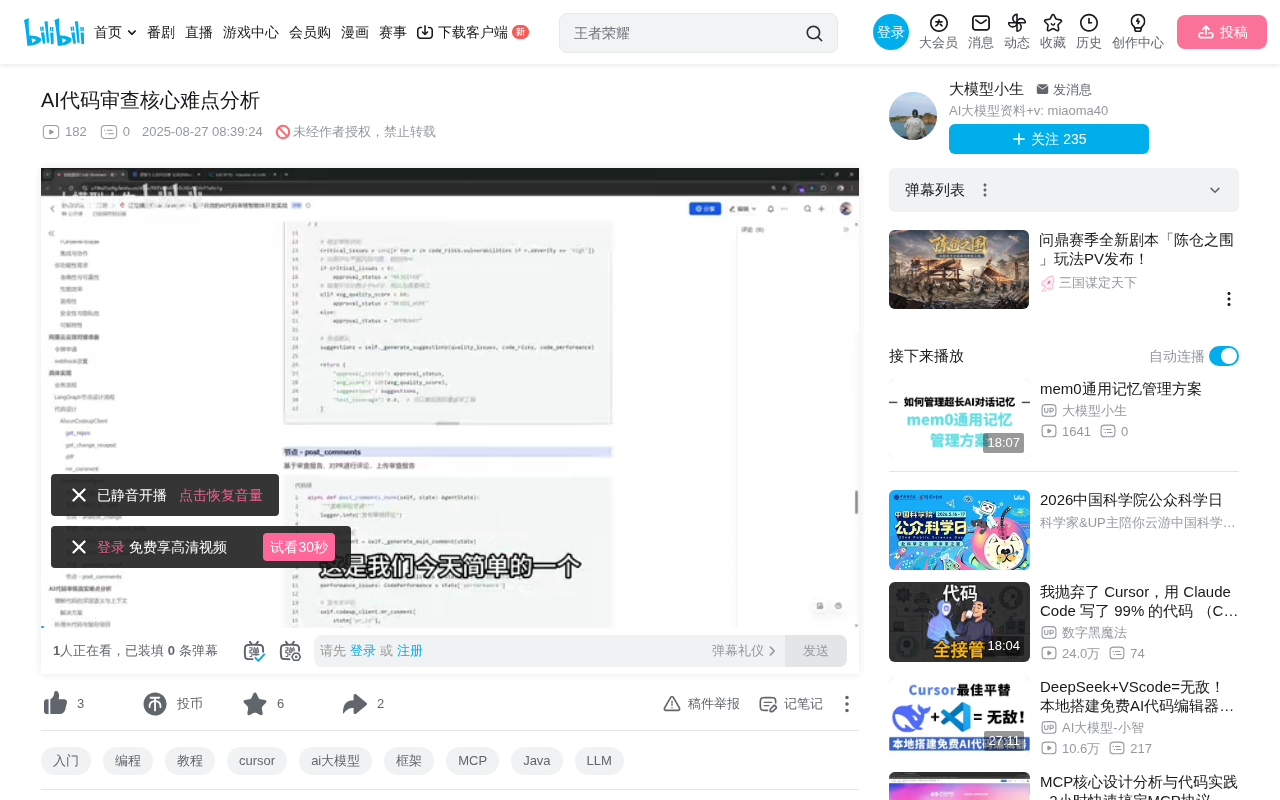
AI Code Review from 30 to 80 Points: A Complete Guide to AST + RAG Architecture Challenges
Deep dive into AI code review system architecture with AST parsing, RAG retrieval, and vector databases. Learn how to boost review effectiveness from 30% to 80%.
Read more →