AI Agent Beginner's Guide: The Essential Differences Between Agents, Chatbots, and LLM Products

A beginner's framework for understanding AI Agents, their core components, and how they differ from chatbots and LLMs.
This article systematically explains the core concepts of AI Agents for beginners. It clarifies the essential differences between chatbots, LLM products, and Agents — the latter being an "AI employee" that autonomously uses tools to complete full tasks. An Agent's capabilities stem from three core components: the brain (an LLM as the decision core), memory (for task continuity), and tool-calling (for real-world execution). Agents also address four key limitations of native LLMs: translating instructions, calling tools, managing memory, and breaking down tasks. In the market, agent products fall into specialized, general-purpose, and platform-built types, with general-purpose Agents recommended for beginners.
AI Agents are one of the most talked-about technology directions heading into 2026, yet many people still can't clearly distinguish them from chatbots or large language model (LLM) products. This article is based on a live sharing session designed for beginners — it walks through the definition of Agents, their core components, and product categories, helping you build a foundational understanding of intelligent agents.
Agent, Chatbot, LLM Product: Drawing the Lines Between Three Easily Confused Concepts
The three concepts most commonly mixed up are chatbots, agent-building platforms, and Agents themselves. An AI you chat and converse with is a chatbot — not an Agent. A tool platform used to build agents is also not an Agent in itself. A true Agent is an autonomous entity that can independently run tasks and get real work done.
A simple example makes the difference clear: suppose you want to create a PowerPoint presentation from a pile of materials. With a regular conversational AI (like Doubao or DeepSeek), you'd need to upload files one by one, wait for them to be processed on a remote server, and follow along step by step the entire time. An Agent works differently — you just hand it the task, and it reads the files on its own, identifies the formats, builds the PowerPoint directly on your local machine, proactively notifies you when it's done, and can even check the content for errors.
In short: products like Doubao and DeepSeek function more like AI consultants — you ask, they answer. An Agent is more like an AI employee — it rolls up its sleeves and does the work for you.
The Three Core Components of an Agent: Brain, Memory, and Tools
An Agent's ability to work autonomously comes from three indispensable parts.
Brain: The Decision-Making Core
The brain is essentially the large language model we're already familiar with — Doubao, DeepSeek, and similar models can all serve as an Agent's brain. It's responsible for understanding requirements, breaking tasks into steps, and deciding what to do at each stage. It's the command center of the entire agent.
Memory: The Task Anchor
Agents have persistent memory — they can remember every requirement you laid out from the start, and they continuously track where execution stands at any given moment. They won't drift off course halfway through a task; they stay on target until the whole thing is finished. This solves a key pain point of native LLMs: having to start from scratch with every new conversation.
Technically, Agent memory typically falls into two categories: short-term memory (the conversation history within the context window) and long-term memory (information stored persistently via external databases or vector storage). Native LLMs are constrained by context window size and tend to "forget" early information during extended tasks. By incorporating external memory modules, Agents can write critical information — such as user preferences, task progress, and operation history — to a database and retrieve it when needed. This breaks through the length limit of a single conversation and supports continuous work across sessions and tasks. It's one of the key reasons Agents can handle complex, long-running workflows.
Tools: The Key to Real-World Execution
This is the most fundamental difference between an Agent and a regular conversational AI. An Agent can use all kinds of tools and software on a computer, just like a human: browsing the web to gather information, managing local files, editing Excel spreadsheets and PowerPoint decks, and even writing and running code. An AI without tools can only talk the talk. An Agent with tools can actually walk the walk.
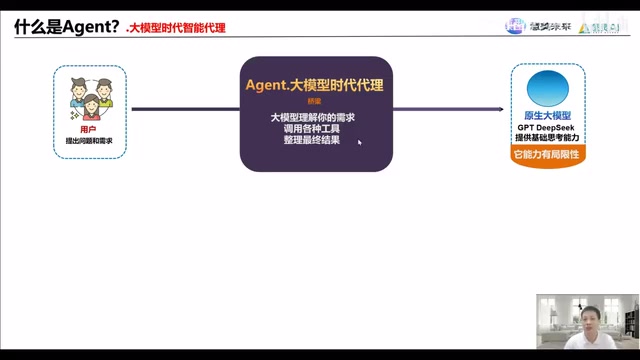
On the technical side, an Agent's ability to use tools relies on the Function Calling mechanism. Large language models can only input and output text on their own, but through Function Calling, developers can tell the model upfront: "Here are the tools you have available and what each one does." During inference, the model actively decides which tool to use and what parameters to pass. An external program then actually executes the operation and returns the result to the model. For example, when an Agent needs to check the weather, it doesn't "know" the weather itself — it calls a weather API tool, passes the city name as a parameter, receives real data, and then formats it into a response. This division of labor — the model plans, the tools execute — is the underlying technical foundation that allows Agents to get real work done.
The Four Problems Agents Solve for LLMs
Native LLMs like GPT and DeepSeek, while trained by major companies at enormous cost, have several critical limitations: no long-term memory, a knowledge cutoff date, no internet access, and no ability to call local tools. This is exactly where Agents come in — they act as the "representatives" of LLMs in the real world, bridging the gap between users and the underlying models.
Specifically, Agents address four types of problems:
- Translator: Converts the user's natural language requests into instructions the model can understand, then transforms the model's output into results the user can act on.
- Tool Expert: Helps the LLM call various tools and APIs to browse the web, query data, and turn a model that can "speak" into one that can "act."
- Memory Manager: Remembers context, user preferences, and multi-turn conversations, keeping the model coherent and preventing it from losing track.
- Task Manager: Breaks complex problems into smaller steps, plans the execution flow, and proactively tries multiple approaches when obstacles arise.
Take everyday products as an example: when you ask Doubao a question, the query doesn't go directly to the underlying LLM. It first passes through Doubao's Agent layer, which uses the model iteratively and returns the most accurate result. AI coding assistants work the same way — they can remember project structure, call on solutions, debug code, and verify results repeatedly. This is precisely the "Tool Expert" and "Task Manager" capabilities of an Agent in action.
Three Types of Agent Products: Which One Should You Choose?
The market for agent products is growing fast. They generally fall into three categories:
Type 1: Specialized Agents. These focus on doing one thing exceptionally well — such as video editing, image processing, or e-commerce operations. The advantage is a precise fit for a single, high-frequency use case: simple to operate, ready to use out of the box, no complex configuration required. As development barriers continue to fall, more and more of these targeted use cases are emerging.
Type 2: General-Purpose Agents. These are mostly mature desktop Agent products from major tech companies. They cover a broad range of capabilities and adapt to many different task types.
Type 3: Platform-Built Agents. Generated by agent-building platforms, these typically follow a fixed workflow and only involve AI at key nodes in the process. They're most often custom-built by enterprises to fit their specific business needs.
For everyday users who want to use AI to boost productivity right away, starting with a general-purpose Agent is the way to go.
Three Evolutionary Leaps in Agent Technology
From a technical evolution perspective, Agents have gone through three major leaps: from early tool calling, to workflow orchestration, and then to more complex engineering-grade foundations. Understanding this trajectory helps you see how agents are moving from simple demos to enterprise-scale applications.
A word of advice: when learning about Agent technology, prioritize understanding the underlying logic and principles over mechanically replicating tutorial steps. The LLM industry moves extremely fast, and most online resources look the same. Only by grasping the fundamentals and applying them to your own context can you truly keep pace with this wave of technology.
The tool calling phase was the earliest form — Agents could only invoke fixed APIs based on predefined scripts, with limited flexibility. The workflow orchestration phase introduced frameworks like DAGs (Directed Acyclic Graphs), enabling multiple tools and model calls to be chained into complex flows. Typical examples include platforms like LangChain and Dify. The engineering-grade foundation phase goes further by introducing multi-agent collaboration, self-reflection, and automatic tool discovery. Agents are no longer just "following a flow" — they can dynamically adjust strategies based on intermediate results, moving closer to truly autonomous intelligence. Most mainstream enterprise deployments today sit somewhere between the second and third phases, and fully autonomous engineering-grade Agents are still rapidly evolving.
Final Thoughts
An Agent's core competitive advantage isn't the ability to chat — it's the ability to work. Powered by three core components — brain, memory, and tools — it transforms LLMs from passive responders into active executors. For anyone just getting started, the first step toward real-world use is simple: clarify the concepts, understand the four key capabilities, and choose the right type of product for your needs.
Related articles
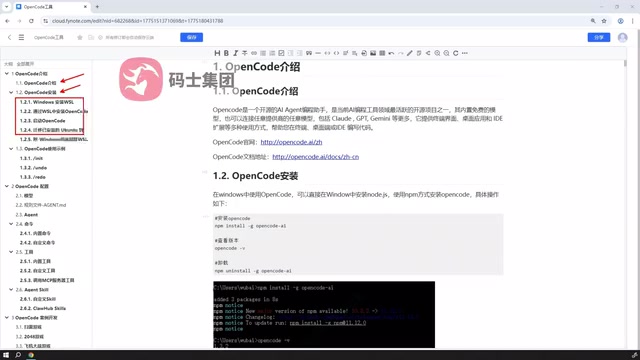
OpenCode Complete Guide: Installation, Configuration & Practical Usage
A complete guide to OpenCode, an open-source AI coding tool: desktop and WSL installation, model and rule configuration, agent types, custom commands, MCP integration, and Agent SQL reuse.
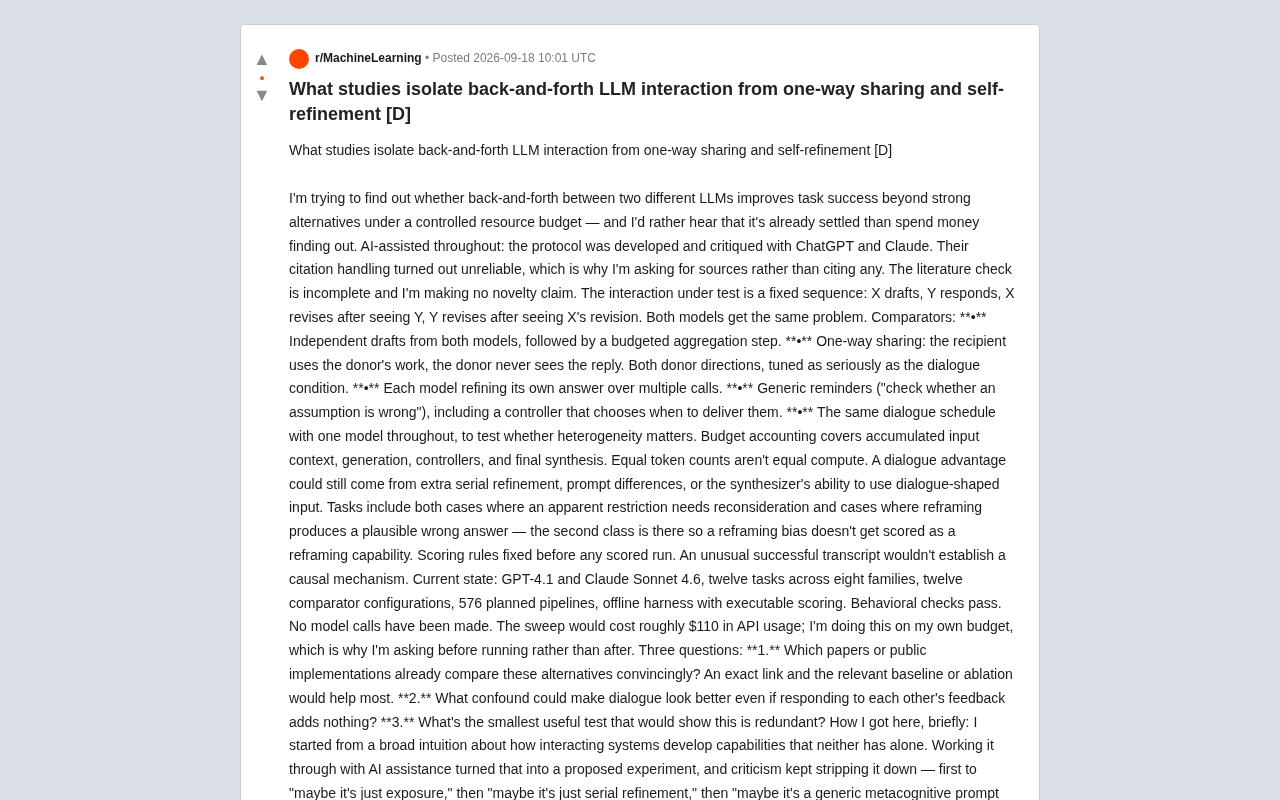
Can Multi-LLM Dialogue Really Improve Task Performance? Lessons from a Rigorous Experimental Design
A researcher designed rigorous controlled experiments to isolate whether multi-LLM back-and-forth dialogue genuinely outperforms simpler baselines like self-refinement and one-way sharing.

Which $10 AI Coding Plan Should You Choose? Go vs. Code Credit Breakdown
After DeepSeek's price hike, should you pick Go or Code for your $10 AI coding plan? We break down credit allocations for Mimo, Qwen, DeepSeek V4, Kimi, and more.