AI Agent Development in Practice: A Complete Breakdown from Framework Selection to Production Deployment

A complete guide to AI Agent development from framework selection to production deployment.
This article systematically breaks down the full AI Agent development workflow across four key stages: framework selection, tool invocation, data processing with RAG, and production deployment. It clarifies the fundamental differences between Agents and chatbots, compares mainstream frameworks like LangChain, AutoGen, and CrewAI, and addresses common pitfalls including cost control, observability, and reliability challenges.
Why This Year Is Called the "Year of the Agent"
As large language models continue to evolve, AI applications are shifting from simple chatbots to intelligent agents capable of autonomous planning, tool invocation, and complex task completion. The industry widely considers this year to be the recognized "Year of the Agent" — with enterprise demand surging and market scale expanding rapidly.
This isn't just hype. From a technology maturity standpoint, next-generation models like GPT-4o, Claude 3.5, and Gemini have achieved qualitative leaps in reasoning, instruction following, and tool use — providing Agents with a sufficiently powerful "brain." On the industry side, Gartner listed AI Agents as one of the most impactful technology trends for the next three years at the end of 2024, predicting that by 2028, at least 15% of everyday work decisions will be made autonomously by Agents. Meanwhile, leading players like OpenAI, Google, Anthropic, and ByteDance have all made Agent capabilities a core strategic priority, and various Agent development platforms and toolchains are maturing rapidly.
However, behind the hype lies an obvious information gap: nearly everyone is telling you that "AI Agent development is the next big thing," yet very few actually explain how to build one properly. From framework selection to tool invocation, from data processing to production deployment, the path is filled with gray areas and pitfalls no one warns you about. This article provides a systematic breakdown of the complete Agent development workflow to help developers — even those starting from scratch — understand the full picture.
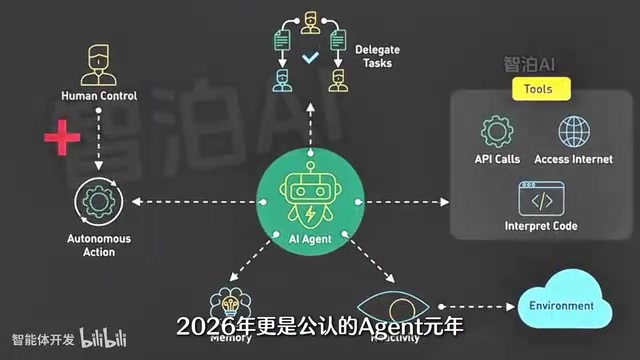
The Fundamental Difference Between Agents and Regular Chatbots
Many people confuse Agents with traditional chatbots, but the two are fundamentally different:
- Chatbot: More like a "response machine" — it receives input, generates a reply, and interactions are single-turn or simple multi-turn, lacking any holistic task planning capability.
- Agent: An "actor" — it possesses task decomposition, tool invocation, state memory, and autonomous decision-making capabilities, and can perform multi-step reasoning and execution to achieve a goal.
From a technical architecture perspective, an Agent's core operating logic is a "Perception-Planning-Action Loop." When an Agent receives a target task, it first decomposes it into multiple subtasks (Task Decomposition), then selects appropriate tools or strategies for each subtask, evaluates the execution results to determine the next action, and repeats until the final goal is achieved. This process closely aligns with the ReAct (Reasoning + Acting) paradigm proposed in academia — the model alternates between "reasoning" and "taking action" rather than generating a final answer in one shot. It is precisely this iterative reasoning-execution loop that gives Agents the ability to handle open-ended, multi-step complex tasks — something the traditional chatbot's single-pass "input-output" mapping simply cannot do.
Put simply, chatbots are responsible for "talking," while Agents are responsible for "doing." This is exactly why enterprise demand for Agents is skyrocketing — real business value comes from automating task completion, not just answering questions.
The Complete Agent Development Workflow
To produce a production-ready AI Agent, you need to navigate a complete technical pipeline. Based on hands-on experience, this pipeline can be broken down into the following key stages.
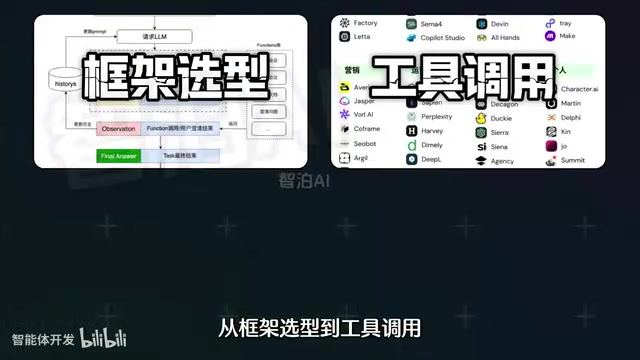
Step 1: Framework Selection
Framework selection is the starting point of Agent development — and the first place where things can easily go wrong. Current mainstream Agent development frameworks each have different strengths: some excel at complex task orchestration, others emphasize tool ecosystems, and some are better suited for rapid prototyping.
The most discussed frameworks in the developer community include: LangChain/LangGraph, the most mature ecosystem choice with rich tool integrations and community resources — LangGraph particularly excels at building stateful, multi-step Agent workflows; AutoGen (Microsoft), focused on multi-Agent collaboration scenarios, allowing multiple Agent roles to converse and delegate tasks, suitable for complex business needs requiring "team collaboration"-style AI; CrewAI, also targeting multi-Agent orchestration but with a cleaner API design and lower learning curve; Dify and Coze (ByteDance), low-code/visual Agent development platforms suitable for non-technical teams to quickly build Agent applications. Additionally, OpenAI's Assistants API provides out-of-the-box Agent capabilities (built-in code interpreter, file retrieval, function calling), ideal for quickly getting started with OpenAI model-centric projects.
When selecting a framework, don't blindly chase the newest option. Instead, evaluate based on your business scenario:
- Does the task require multi-Agent collaboration?
- How much flexibility is needed for tool invocation?
- Is long-term memory and state management required?
- Can your team afford the learning curve for this framework?
A practical recommendation: beginners should start with a framework that has a mature ecosystem and comprehensive documentation, get the full workflow running first, and then consider more complex architectures.
Step 2: Tool Use
Tool invocation is the core capability that distinguishes AI Agents from ordinary models. By enabling models to call external tools such as search engines, databases, API endpoints, and code execution environments, Agents can break free from the limitation of "only being able to chat" and actually accomplish real-world tasks.
From a technical implementation standpoint, the mainstream approach to tool invocation is the Function Calling mechanism. Here's how it works: developers pre-define a set of tool "function signatures" (including function name, description, parameter format, etc.) in structured JSON Schema format and pass them to the LLM. When the model determines during reasoning that a tool is needed, instead of outputting a natural language answer, it outputs a structured function call request (containing the function name and parameter values). The application layer receives this request, executes the corresponding function, and returns the result to the model, which then continues reasoning based on the returned result. OpenAI pioneered the standardized Function Calling interface in 2023, followed by Anthropic, Google, and others supporting similar mechanisms, making tool invocation a "standard feature" of LLMs. Notably, Anthropic's MCP (Model Context Protocol), launched in late 2024, is attempting to establish an open tool-connection standard that allows Agents to connect to various external services and data sources in a unified way — widely regarded as critical infrastructure for the Agent tool ecosystem.
When implementing tool invocation, focus on these three key aspects:
- Clarity of tool descriptions: Whether the model can accurately understand each tool's purpose and parameters directly determines the accuracy of invocations. A vague or ambiguous tool description will cause frequent mis-invocations — one of the most common issues in real-world development.
- Handling call results: How to feed tool-returned results back to the model for the next reasoning step affects the coherence of the entire reasoning chain. Pay attention to formatting and length control of returned results to avoid exceeding the model's context window limit.
- Error handling mechanisms: Whether the Agent can gracefully retry or fall back when a tool call fails is a must-consider for production-grade Agents.
Step 3: Data Processing and RAG Configuration
The journey from data processing to production deployment is a "gray area" that many tutorials deliberately avoid. In enterprise scenarios, Agents often need to connect to private knowledge bases, which involves a series of engineering practices including data cleaning, chunking, vectorization, and Retrieval-Augmented Generation (RAG).
RAG (Retrieval-Augmented Generation) is currently the core technical approach for enabling LLMs to "understand" enterprise private data. The complete pipeline can be broken down as follows: first, enterprise documents (PDFs, Word files, web pages, database records, etc.) are parsed and cleaned to remove noise; then, the cleaned text is chunked according to a reasonable strategy — common chunking methods include fixed-length splitting, paragraph/section-based semantic splitting, etc., with chunk sizes typically ranging from 200 to 1,000 tokens (too large introduces excessive irrelevant information, too small loses context); next, an Embedding model (such as OpenAI's text-embedding-3, BGE, M3E, etc.) converts each text chunk into high-dimensional vectors, which are stored in a vector database (popular choices include Pinecone, Weaviate, Milvus, Chroma, Qdrant, etc.); when a user asks a question, the system first vectorizes the query, retrieves the most relevant text chunks from the vector database, then concatenates these chunks as context into the prompt and passes it to the LLM to generate the final answer. The effectiveness of the entire RAG system is highly dependent on the quality of each component — from the completeness of document parsing, to the rationality of the chunking strategy, to the semantic representation capability of the Embedding model and the precision of the retrieval algorithm. Any weak link becomes the system's bottleneck.
Data quality directly determines the upper limit of Agent performance — garbage in, garbage out. Investing sufficient effort in data governance at this stage is often more effective than endlessly tweaking prompts. Common optimization techniques in practice include: annotating documents with metadata to support hybrid retrieval (vector search + keyword search), introducing Reranker models to re-rank retrieval results, and using query rewriting to improve retrieval recall.
From Prototype to Production Deployment
Avoiding Common Agent Development Pitfalls
Many Agent projects get stuck at the transition from "a working demo" to "a usable product." Here are some of the most frequent pitfalls:
- Over-reliance on a single LLM: Models have capability ceilings. A well-designed combination of tools and workflow design is often more effective than throwing a bigger model at the problem. In practice, the better approach is to decompose complex tasks into subtasks and use different model tiers for different subtasks — lightweight models for simple intent recognition, flagship models only for complex reasoning. This ensures quality while controlling costs.
- Ignoring cost control: Multi-turn reasoning and frequent tool invocations can lead to significant token consumption, and cost estimation is essential before going to production. Taking GPT-4o as an example, input tokens cost approximately $2.5 per million tokens, and output tokens approximately $10 per million. A typical Agent task might involve 5-10 reasoning rounds, each containing system prompts, conversation history, tool descriptions, and tool return results — a single task could consume tens of thousands or even over a hundred thousand tokens. If daily call volume reaches thousands, monthly API costs can quickly climb to thousands or even tens of thousands of dollars. Therefore, prompt compression, context window management, caching strategies, and model fallback plans should be considered at the design stage.
- Lack of observability: An Agent's decision-making process is a black box. Without comprehensive logging and monitoring, troubleshooting becomes extremely difficult. The community now has several observability tools specifically designed for LLM applications, such as LangSmith (LangChain's official debugging and monitoring platform), Arize Phoenix (an open-source LLM tracing tool), and Langfuse (an open-source LLM observability platform). These tools can capture the complete record of each reasoning step, tool call details, token consumption, and latency, helping developers quickly identify issues. Building an evaluation system for your Agent is equally important — you can create test case suites to systematically and automatically evaluate dimensions such as task completion rate, tool invocation accuracy, and answer quality.
- Insufficient reliability: A demo can tolerate occasional failures, but production environments demand high availability, requiring retry mechanisms, fallback strategies, and human intervention workflows. A widely adopted strategy is Human-in-the-Loop — requiring human confirmation and approval before the Agent executes high-risk operations (such as sending emails, modifying databases, initiating payments, etc.), striking a balance between automation efficiency and safe controllability.
The Right Way to Capitalize on the Agent Technology Wave
The barrier to AI Agent development is dropping rapidly. Even developers starting from zero can produce their first production-ready Agent by following the clear workflow of "Framework Selection → Tool Invocation → Data Processing → Production Deployment" step by step.
Facing this technology wave, what matters more than "knowing where the opportunity is" is actually getting your hands dirty and walking through the entire process. Rather than staying trapped in the anxiety of "everyone is jumping in," start with a small but complete project and build real understanding of Agent engineering through practice.
Conclusion
The arrival of the Year of the Agent means more enterprise-level opportunities — and more intense competition. The real moat isn't knowing the concepts; it's mastering the complete engineering capability from requirements analysis to production deployment. We hope the AI Agent development workflow broken down in this article helps you avoid those pitfalls no one warns you about, and steadily build your first enterprise-grade intelligent agent.
Related articles
AI Beginner's Guide: Three Stages to Building Your Own Personal AI Assistant from Scratch
No tech background? No problem. This beginner's guide maps out a 3-stage path to building a personal AI assistant — from prompt engineering to no-code automation to API calls.
Zero to Vibe Coding in Seven Days: A Complete Beginner's Guide to AI Programming
A beginner's guide to Vibe Coding: learn the 6-step path covering Claude Code, Cursor, Codex, prompt engineering, and project practice to build products with AI.
Tailcat: Tailscale's Official Decentralized Minimalist Networking Solution
Tailcat is Tailscale's official decentralized networking project that strips control plane dependencies, offering self-hosting users a more autonomous, privacy-focused WireGuard mesh experience.