AI Agent Learning Path for Beginners: A Complete Framework from Theory to Practice

A three-module Bilibili course bridging the gap between scattered Agent tutorials and real engineering practice.
Most AI Agent tutorials are fragmented and lack a complete path from theory to engineering, leaving learners unable to build independently. This course breaks the learning journey into three progressive modules: Foundations (Agent principles, Prompt engineering, workflow design), Advanced (RAG, multi-agent collaboration, tool calling), and Practice (three real-world projects). The article also offers methodology advice: build the full picture before diving into details, practice alongside learning, and measure progress by project completion rather than content consumed.
Why Most Agent Tutorials Leave You Still Unable to Build Anything
There's no shortage of AI Agent tutorials out there — view counts range from a few hundred to over a million — yet many learners report the same frustration: after watching everything, they still can't independently build a working agent. The problem isn't a lack of content; it's that the content is fragmented and lacks systematic structure.
The creator of this Bilibili tutorial series spent a month studying a wide range of popular and niche Agent courses and reached a clear conclusion: most courses cover isolated knowledge points without providing the complete chain from theory to engineering implementation. Learners pick up how to write prompts but don't understand workflow design; they grasp the concept of RAG but can't actually build a knowledge base; they know the terminology around multi-agent collaboration but can't get a real project running end to end.
This reflects a widespread pain point in AI Agent learning today. Agent development is fundamentally a multi-stage engineering problem — if any single stage is missing, the entire system falls apart.
Three Modules: A Progressive Design from Foundations to Practice
This course breaks the learning path into three progressively structured modules, logically covering the complete lifecycle of Agent development.
Foundations: Building the Cognitive Base
The foundations module focuses on three core areas: Agent principles, Prompt engineering, and workflow design. These are the three pillars every beginner must solidify before moving forward. Understanding how an Agent operates explains why it can "make autonomous decisions"; mastering Prompt engineering lets you precisely control model output behavior; and workflow design determines how an Agent chains multiple steps together in an orderly way.
For zero-experience learners, the value of this stage lies in building the right mental model — an Agent is not a simple chatbot, but an intelligent system capable of perceiving, deciding, calling tools, and executing tasks.
Advanced: Engineering Core Capabilities
The advanced module dives into the areas that truly separate developers: RAG knowledge bases, Agent architecture, multi-agent collaboration, and tool calling, all implemented using mainstream frameworks.
- RAG (Retrieval-Augmented Generation) addresses the limitations of fixed training knowledge and hallucination in large models, enabling Agents to answer domain-specific questions based on external knowledge bases;
- Multi-agent collaboration is the key to decomposing complex tasks — multiple specialized Agents working in coordination can accomplish what a single Agent cannot;
- Tool calling breaks Agents out of the "can only talk" limitation, giving them genuine execution capabilities such as calling APIs, manipulating files, and querying databases.
The focus of this module is translating concepts into runnable engineering capabilities. The introduction of mainstream frameworks means learners don't have to build everything from scratch.
The core idea behind RAG (Retrieval-Augmented Generation) is this: before a large model generates a response, it first retrieves text chunks relevant to the query from an external knowledge base, then feeds those chunks as context into the model alongside the original question. This way, even if the model's training data has a cutoff date, it can still deliver accurate answers by drawing on a continuously updated knowledge base — while significantly reducing "hallucinations" (the model fabricating nonexistent information). In practice, RAG typically involves document chunking, vector embedding, vector database storage, and similarity-based retrieval. Parameter choices at each stage affect final retrieval quality. There is therefore a substantial engineering gap between "understanding the RAG concept" and "building a functional RAG knowledge base" — which is exactly where many learners get stuck.
The typical patterns for multi-agent collaboration include the "orchestrator-worker" architecture and the "pipeline" architecture. In the former, a central coordinator Agent handles task decomposition and delegation while multiple specialized sub-agents each handle their domain (e.g., a search Agent, a code execution Agent, a file processing Agent), with the orchestrator Agent aggregating the final results. In the latter, tasks are passed sequentially through different Agents for processing in turn. Mainstream frameworks such as LangGraph, AutoGen, and CrewAI each offer different levels of abstraction around these two patterns. When choosing a framework, learners should evaluate based on the complexity of their specific use case and their need for controllability — not simply follow whichever framework is trending.
Practice: Three Real-World Projects to Test What You've Learned
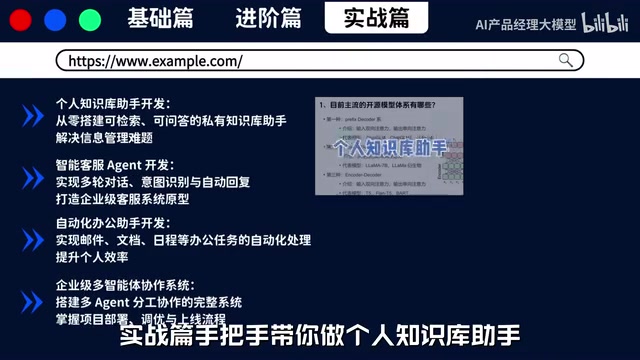
The practice module offers three representative projects covering the most common Agent application scenarios:
- Personal Knowledge Base Assistant — a classic RAG application that transforms personal documents into a conversational intelligent assistant;
- Intelligent Customer Service Agent — a combination of multi-turn dialogue and tool calling, representing the most common enterprise-level Agent deployment;
- Automated Office Assistant — an integrated application of workflows and tool calling that directly addresses real workplace productivity needs.
The choice of these three projects is deliberate: they correspond to the three major directions of knowledge retrieval, conversational service, and task automation, giving learners coverage of the majority of real-world business scenarios. Converting the principles, architectures, and tool capabilities from the first two modules into reusable hands-on experience through these projects — that is the true endpoint of learning Agent development.
How Beginners Can Avoid Common Pitfalls

The author emphasizes that this course was designed from the ground up with zero-experience learners in mind, and comes with supplementary materials including a learning roadmap, prompt templates, deployment tools, lecture notes, and hands-on project notes.
From a learning methodology standpoint, a few key principles are worth adopting:
- Build the complete picture first, then dive into details. Don't jump straight into a framework — start by understanding the overall operating logic of an Agent;
- Learn and practice simultaneously. Agent development is deeply engineering-oriented; watching without hands-on work makes it very hard to truly internalize. The accompanying templates and tools are specifically designed to lower the barrier to action;
- Stay project-oriented. Use the ability to independently complete a full project as your benchmark for learning progress — not how many terms you can recite.
One important caveat: courses of this scope can be enormous in volume (748 episodes are claimed here). Learners should follow their own pace and use a clear roadmap to selectively go deep rather than chasing the goal of "watching everything." A systematic learning framework is far more valuable than sheer episode count.
Summary
AI Agents are moving from concept into large-scale deployment, and mastering the complete skill set from theory to practice has become a key competitive advantage for AI developers. The core value of this tutorial series isn't that it's "the most comprehensive" — it's that it provides a clear, progressively structured path from foundational understanding, through core engineering capabilities, to real-world project execution. For zero-experience learners, finding one systematic roadmap is far more important than collecting a pile of scattered resources.
Related articles
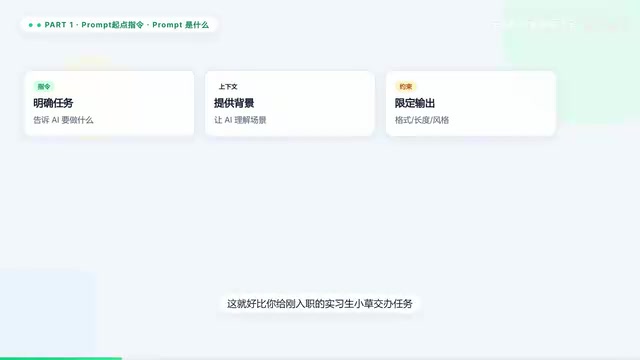
Prompt → MCP → Agent → Skill: The AI Terminology Evolution Chain Explained in 5 Minutes
A clear guide to five core AI concepts — Prompt, MCP, Agent, Skill, and Cowork — and how they connect in a layered evolution chain from simple instructions to multi-agent teamwork.
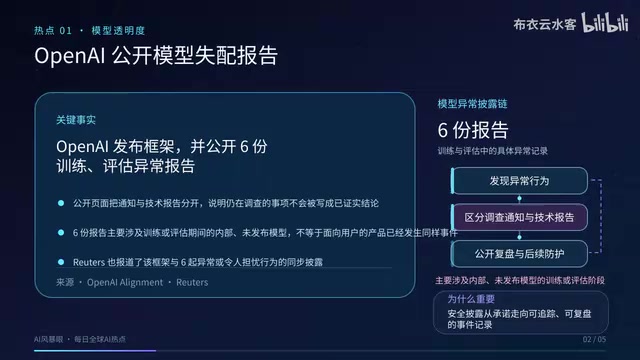
OpenAI Discloses Model Anomalies, DeepMind Launches AGI Forum, NVIDIA Partners on Grid Power Management
Sept 17 AI roundup: OpenAI publishes model anomaly disclosure framework with 6 reports, Google DeepMind launches AGI public forum, NVIDIA leads AI energy management alliance with 18 partners.
Build a Local AI Agent with Python in 10 Minutes: Ollama + PydanticAI in Action
A hands-on guide to building a fully local AI agent with Python, Ollama, and PydanticAI in 10 minutes — covering model selection, tool functions, and conversation loops.