AI Agent Learning Roadmap: From Zero to Building Your Own Intelligent Agents

A complete, structured roadmap for learning AI Agent development from zero to building real intelligent agents.
This article breaks down a systematic AI Agent learning curriculum into three modules: Fundamentals (Agent principles, Prompt engineering, workflow design), Advanced (RAG, multi-agent collaboration, tool calling with LangChain/LangGraph), and Hands-On Projects (knowledge base assistant, customer service agent, office automation). It's designed to help beginners move past fragmented tutorials and build real development capability.
Why AI Agent Is the Most Valuable Skill to Learn Right Now
As large language models continue to advance at a rapid pace, AI Agents are moving from concept to real-world deployment. They're no longer just chatbots that answer questions — they're "digital workers" capable of autonomous planning, tool invocation, and task execution. From personal knowledge management and intelligent customer service to automated office workflows, Agents are fundamentally reshaping how software and humans interact.
AI Agent isn't a brand-new concept that appeared out of nowhere. The theory of "intelligent agents" was already being discussed in the AI field back in the 1990s, but was confined to academic research due to the computational and modeling limitations of the time. What finally propelled Agents from the lab into industry was the breakthrough of large language models (LLMs) like GPT-4, Claude, and Gemini — models that demonstrated powerful instruction comprehension, reasoning, planning, and code generation capabilities, making it technically feasible for the first time to have AI autonomously complete complex tasks. Around 2023, the viral success of open-source projects like AutoGPT and BabyAGI marked the formal rise of the Agent paradigm, followed by leading organizations including OpenAI, Anthropic, and Google releasing their own Agent frameworks and products, cementing this direction as a core track in AI applications.
However, as the author of this structured course has observed: most Agent tutorials available today are "scattered and unsystematic." Even after watching dozens of videos with millions of views, learners still find themselves "unable to independently build an intelligent agent." This gets right to the heart of the biggest pain point in learning AI Agents today — fragmented knowledge simply cannot be converted into hands-on capability.
This article breaks down a clear, actionable AI Agent learning path based on a curriculum that was carefully refined over three months with the beginner's perspective in mind.
Three Modules: A Complete AI Agent Growth Path
The curriculum divides the entire learning journey into three major modules: Fundamentals, Advanced, and Hands-On Projects — a structure that progresses from basic to advanced and is well worth adopting as a reference for beginners.

Fundamentals: Building a Solid Foundation in Agent Concepts
The fundamentals module focuses on three core areas: Agent principles, Prompt engineering, and workflow design.
Understanding Agent principles is the first step. A typical Agent operates on a "Perceive → Plan → Act → Reflect" loop — it needs to understand the task, break it into steps, invoke tools, and adjust its strategy based on results.
Prompt engineering is the "language" that drives an Agent — knowing how to craft precise instructions that produce stable, predictable outputs from a model is a fundamental skill for every developer. Prompt engineering might look like a set of tricks for writing better prompts, but it's actually the core interface design for human-AI collaboration. Within an Agent system, prompts don't just determine the quality of a single response — they also handle role definition (System Prompt), task decomposition instructions, output format constraints, and tool-call triggers. The mainstream Prompt techniques used in the industry today include: Chain-of-Thought (guiding the model to reason step by step), Few-Shot (providing example inputs and outputs), ReAct (interleaving reasoning and action), and structured output constraints (such as enforcing JSON format). Mastering these techniques is a foundational prerequisite for building reliable Agent systems, and the dividing line between being able to "use" AI and being able to "develop" with it.
Workflow design determines how an Agent efficiently moves through multiple steps — it's the skeleton that keeps the entire system running reliably.
The goal of this stage is to give learners a holistic understanding of how Agents operate, so they don't get lost in framework details before grasping the big picture.
Advanced: Mastering Core Engineering Capabilities
The advanced module is the critical leap from "knowing how to use" to "knowing how to build," covering four major topics:
-
RAG Knowledge Base: Retrieval-Augmented Generation technology enables Agents to answer questions based on external knowledge, effectively addressing the problems of LLM "hallucinations" and outdated knowledge. Large language models have two inherent limitations: a training data cutoff date (stale knowledge) and a tendency to "confidently make things up" (hallucinations). RAG mitigates these issues by retrieving relevant document chunks from an external knowledge base before the model generates an answer, then injecting those chunks into the context. The typical technical pipeline includes: document parsing and chunking, vector embedding, vector database storage (e.g., Chroma, Pinecone, Milvus), semantic retrieval, and reranking of retrieved results. In an Agent system, RAG essentially equips the agent with "long-term memory" and a "domain knowledge base" — making it the technical foundation for personal knowledge assistants and enterprise customer service bots.
-
Agent Architecture Design: How to build a robust, scalable intelligent agent system.
-
Multi-Agent Collaboration: A single Agent has clear limitations when handling complex, cross-domain tasks — limited context windows and a single role that can't cover all specialized capabilities. Multi-Agent collaboration overcomes these boundaries by decomposing complex tasks into subtasks, processing them in parallel or sequentially with multiple agents that each have different specializations, and then having a coordinating agent integrate the results. Representative frameworks include Microsoft's open-source AutoGen (supporting multi-agent conversational collaboration) and CrewAI (role-based team collaboration). Typical use cases include software development pipelines (planning Agent + coding Agent + testing Agent) and research report generation. This is one of the most cutting-edge directions in the Agent space today.
-
Tool Calling: Enabling Agents to call external APIs, execute code, and manipulate files — giving them real "action capability."
The curriculum emphasizes hands-on development using mainstream frameworks like LangChain and LangGraph, which is particularly important. LangChain is the most widely used open-source framework in the AI Agent space, providing standardized components for model invocation, tool integration, memory management, and chained execution. As Agent task complexity grew, the LangChain team went on to release LangGraph — which models an Agent's execution flow as a directed graph (DAG), where each node represents an execution step and edges represent state transition conditions. It supports loops, branches, and multi-agent coordination, making it especially suited for building advanced Agent systems that require "reflect-and-revise" loops. Learning theory in isolation from frameworks is hard to put into practice — mastering the mainstream tools is what actually turns knowledge into a working product.
Hands-On Projects: Proving Real Capability Through Building
The hands-on module uses a step-by-step teaching approach to guide learners through three representative projects:
- Personal Knowledge Base Assistant: Integrating RAG technology to build a custom intelligent Q&A system.
- Intelligent Customer Service Agent: An enterprise-level application scenario involving intent recognition, multi-turn dialogue, and tool calling.
- Automated Office Assistant: Extending Agent capabilities into the automation of everyday office workflows.
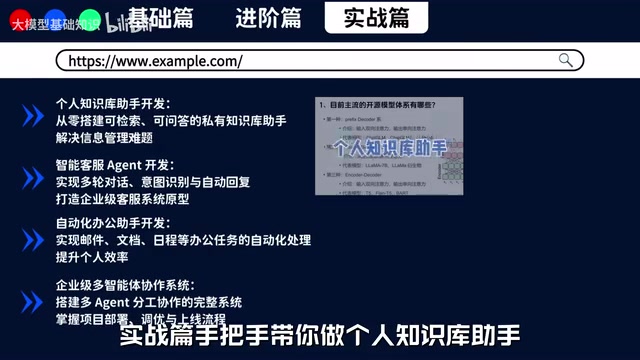
"Project-driven learning" is precisely the effective solution to the shortcomings of fragmented tutorials — only by actually building a working product can you connect the scattered knowledge points into a complete, integrated skill set.
How to Get Started with AI Agent as a Complete Beginner
For beginners, the course author has compiled a comprehensive set of companion resources, including a complete learning roadmap, prompt templates, deployment tools, lecture notes, and Agent project case studies. The value of these resources lies in dramatically lowering the barrier to entry, enabling learners to "learn while building" rather than passively watching videos.

From a learning methodology perspective, there are a few principles worth emphasizing for getting started with AI Agent:
First, balance theory and practice. Agent development is an engineering discipline — you can't truly master it by watching alone. The recommendation is to build a minimal working demo every time you finish learning a new concept.
Second, progress from simple to complex, step by step. Start with simple single-Agent tasks, then gradually introduce RAG knowledge bases and tool calling, and finally tackle multi-Agent collaboration. Skipping steps creates frustration and gaps in understanding.
Third, prioritize engineering ability over chasing buzzwords. The Agent space is full of new terminology, but the core challenge is always "how to build a stable, reliable system." Solidifying your foundational principles is more valuable than keeping up with every trending concept.
Conclusion: Systematic Learning Is the Shortcut Through the Noise
The reason this curriculum emphasizes "avoiding 99% of wrong turns" is fundamentally an argument for a systematic approach to learning. In an era of rapid AI iteration, absorbing fragmented knowledge is highly inefficient. Only by building a complete knowledge framework, reinforced by real project experience, can you develop genuinely transferable, practical skills.
Whether you're a technical professional looking to transition into AI development, or a knowledge worker hoping to boost your productivity with Agents, a clear learning path — from conceptual understanding, to engineering practice, to shipping real projects — is the best guide to cutting through the information noise and growing quickly. The age of AI Agents has arrived, and right now is the best time to enter systematically.
Related articles
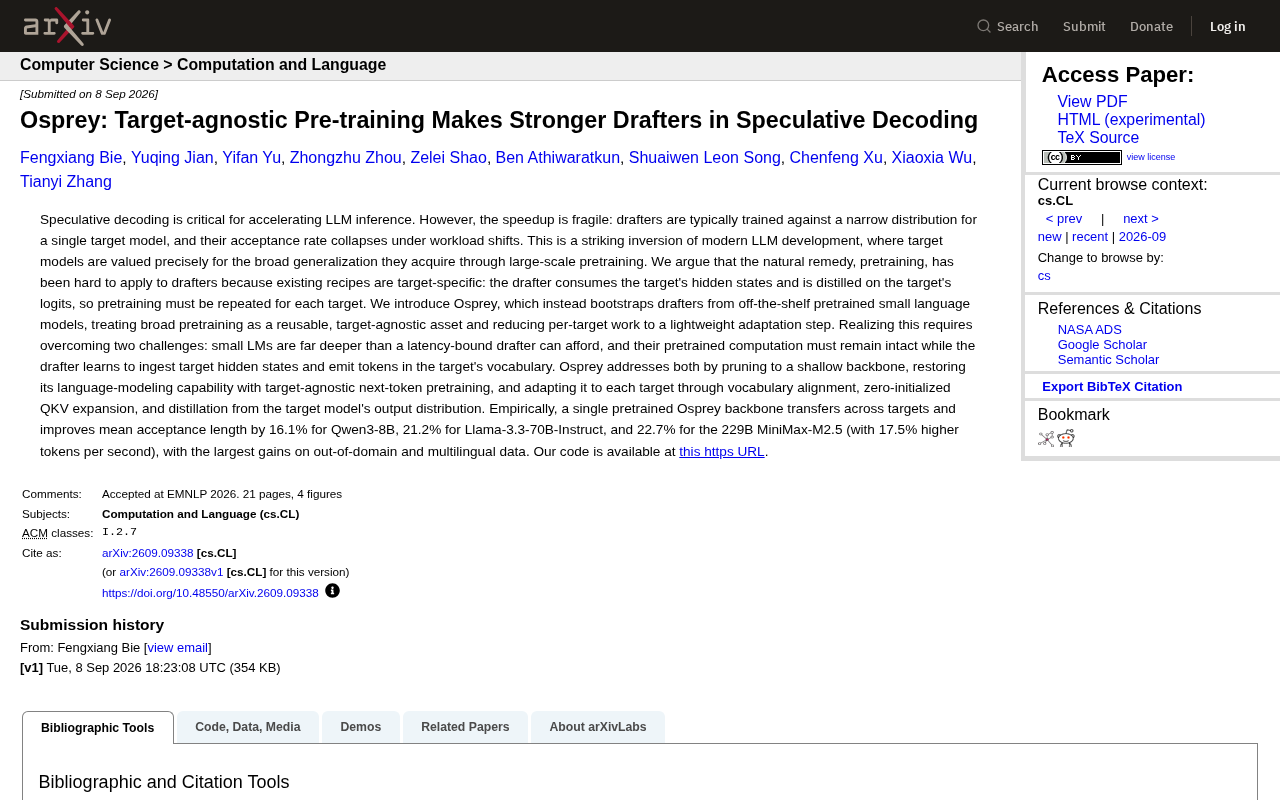
Osprey: General-Purpose Pretraining Makes Speculative Decoding Draft Models More Efficient
Osprey treats pretraining as a reusable, target-agnostic asset. Through pruning and lightweight adaptation, a single draft model transfers across multiple LLMs, boosting mean acceptance length by 16%-22%.
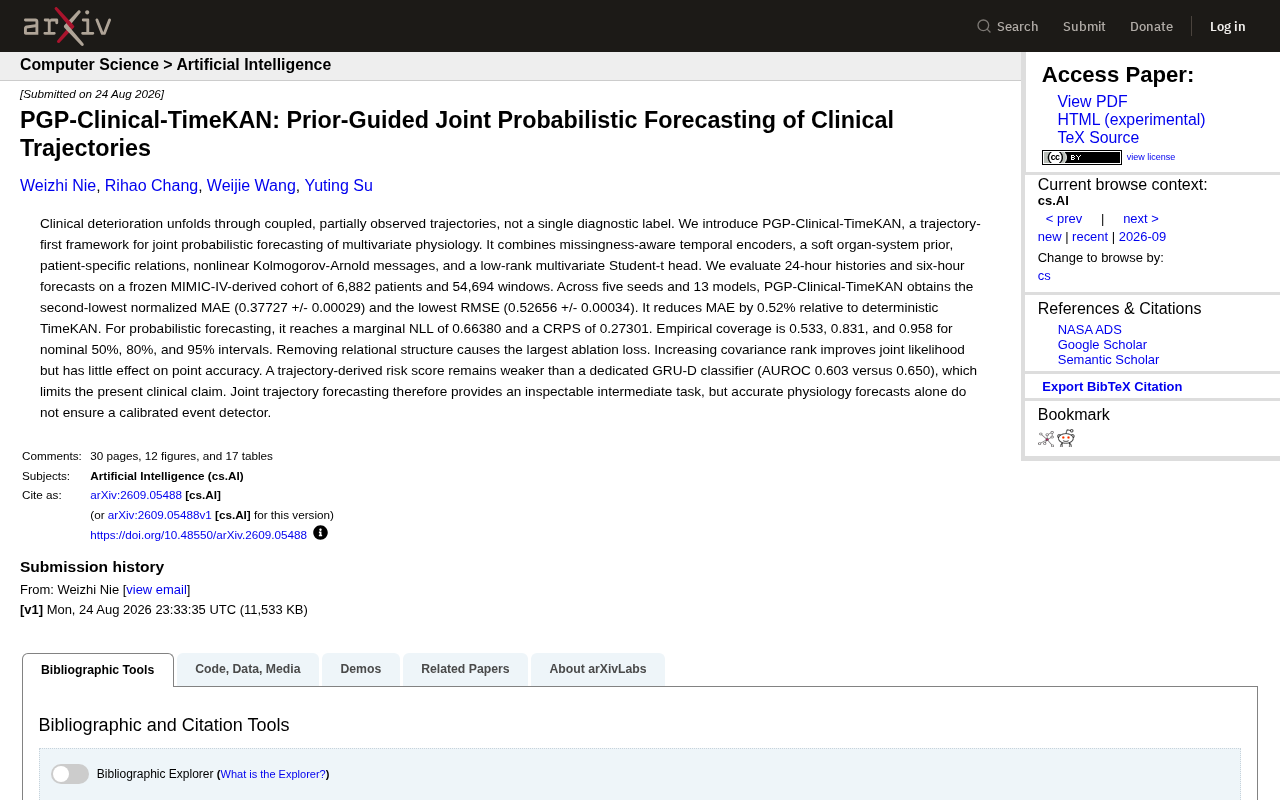
PGP-Clinical-TimeKAN: A Detailed Guide to the Multivariate Physiological Indicator Joint Prediction Framework
An in-depth analysis of the PGP-Clinical-TimeKAN framework for joint probabilistic prediction of multivariate physiological indicators, covering trajectory-first paradigm, KAN message passing, MIMIC-IV validation, and ablation studies.
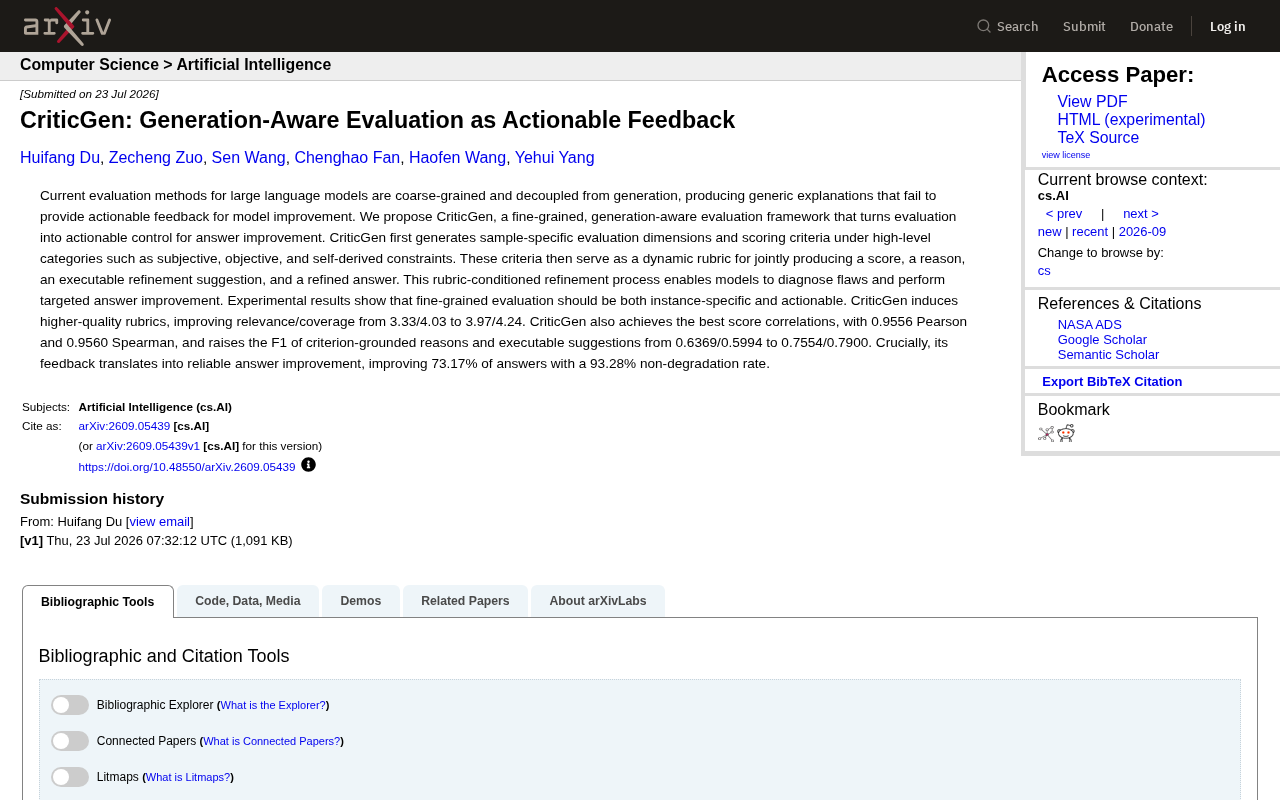
CriticGen: A New Framework That Transforms AI Evaluation into Actionable Improvement Feedback
CriticGen proposes a generation-aware evaluation framework that transforms AI assessment from passive scoring to an active optimization loop, achieving 73.17% answer improvement and 93.28% non-degradation rate.