Building Enterprise-Grade AI Agents from Scratch: A Complete Three-Phase Learning Path
748-episode AI Agent course uses a three-phase structure to bridge the gap between concepts and production-ready code.
Most AI Agent tutorials fall into one of two traps: staying at the conceptual level or jumping straight into code. This 748-episode Bilibili course tackles both with a three-phase structure: Fundamentals uses everyday analogies to demystify the ReAct framework, memory, and planning; Advanced dives into LangChain, AutoGen, Function Calling, and RAG+Agent hybrid architectures with emphasis on evaluation and debugging; and the Projects phase ties it all together through three enterprise-grade builds — intelligent customer service, automated data analysis, and a multi-Agent collaboration pipeline. All source code, slides, and Prompt templates are included.
AI Agents have become the core direction for deploying large language models in production, but most tutorials on the market tend toward one of two extremes: either piling up buzzwords like "autonomous planning" and "tool calling" without any hands-on practice, or dumping code at learners before they even understand what problem an Agent is supposed to solve. A 748-episode AI Agent tutorial series on Bilibili attempts to address this pain point — explaining clearly how Agents think before guiding learners step-by-step through building intelligent systems that can actually be deployed in production.
Why Most Agent Tutorials Don't Work
According to the creator, he spent considerable time reviewing nearly every Agent-related resource on Bilibili and YouTube — from tech blogs to open-source GitHub projects — and reached one conclusion: more than 90% of Agent tutorials have fundamental structural flaws.
One type stays at the conceptual level, endlessly praising autonomous planning and tool calling without ever building anything real. The other type does the opposite — skipping the fundamentals and jumping straight into code, leaving learners buried in API calls before they've understood what problem an Agent is actually meant to solve.
This disconnect — either "spinning concepts" or "code-first" — is the root reason so many people give up halfway through learning Agents. An effective learning path should first build foundational understanding of how intelligent agents think, then gradually move into hands-on practice. This tutorial series breaks content into three chapters — Fundamentals, Advanced, and Projects — designed precisely around this logic.
Fundamentals: Understanding How Agents Think
The first chapter focuses on building a foundational understanding of Agents rather than rushing to write code. The core questions it answers are: What is an Agent? And what fundamentally distinguishes it from a regular LLM conversation?
This requires unpacking several concepts that can sound intimidating — the ReAct framework, Planning, Reasoning, and Memory mechanisms. The course uses everyday analogies to break down these terms and lower the barrier to understanding. At its core, the ReAct framework has the model cycle between "reasoning" and "acting": think about what to do next, take an action, then continue thinking based on the result — a process that closely mirrors how humans solve problems.
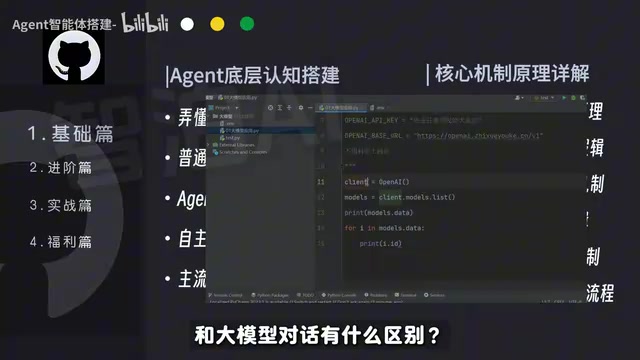
A standard LLM conversation is "one question, one answer," whereas an Agent has the ability to plan tasks, call tools, and retain context to autonomously pursue a multi-step goal. While explaining these differences, the Fundamentals chapter also walks learners through running their first Agent demo — letting them experience firsthand what it feels like to have an intelligent system "get to work." This step is critical for building intuitive understanding.
The ReAct framework was proposed by a Google Research team in 2022. Its name combines Reasoning and Acting. Its key innovation was breaking the traditional "input → output" single-pass inference pattern, putting the model into a "think → act → observe → think again" loop. In each cycle, the model first writes out its internal reasoning in natural language (Thought), then decides which tool to call and with what parameters (Action), receives the tool's output (Observation), and continues to the next round of thinking until the task is complete or deemed unresolvable. This design — explicitly exposing the reasoning chain — makes the model's "decision process" interpretable and helps developers pinpoint exactly where errors occur. By contrast, early Chain-of-Thought prompting only reasoned without acting. ReAct binds reasoning with real-world tool calls, and is widely considered the key paradigm shift from "models that can talk" to "Agents that can work."
Advanced: Framework Mastery and Engineering Skills
The second chapter raises the bar significantly, diving into real engineering practice. It covers today's mainstream Agent development frameworks — including LangChain and AutoGen — along with key technologies like multi-Agent collaboration and Function Calling.
Particularly worth noting is the RAG + Agent hybrid architecture covered in the course. RAG (Retrieval-Augmented Generation) supplies the Agent with accurate external knowledge, while the Agent handles planning and tool invocation. Combining the two significantly improves an intelligent system's reliability in real business scenarios, and is one of the most widely adopted approaches for enterprise deployment today.
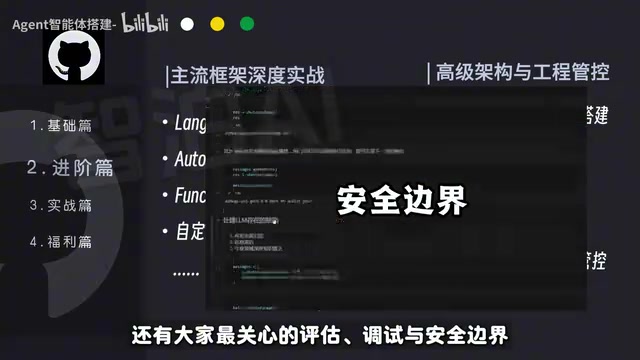
The Advanced chapter also places special emphasis on evaluation, debugging, and safety boundaries — precisely the areas many tutorials neglect. The gap between an Agent that can run a demo and one that can be stably deployed in production often comes down to how its performance is evaluated, how abnormal behavior is debugged, and how safety constraints are defined. All lessons come with packaged code and course materials, lowering the barrier to following along.
RAG (Retrieval-Augmented Generation) works by retrieving relevant passages from an external knowledge base (such as company documents or databases) before the model generates a response, injecting those passages as context into the prompt, and then having the model synthesize an answer. This addresses two fundamental weaknesses of large language models: outdated information due to a training knowledge cutoff, and "hallucination" — the tendency to fabricate facts. When RAG is combined with an Agent, the Agent can autonomously decide when to retrieve, what to retrieve, and whether the retrieved results are reliable enough — rather than indiscriminately stuffing large volumes of documents into every prompt. This active retrieval approach is more token-efficient and more precise than static RAG. Function Calling, meanwhile, is a standardized tool-calling interface provided by LLM providers (such as OpenAI) that allows developers to describe function signatures using JSON Schema. When needed, the model automatically outputs structured call instructions, which the host application executes before returning the results to the model — forming the foundational infrastructure for building reliable Agent tool layers.
Projects: Three Enterprise-Grade Deployments
The third chapter focuses on real business problems, using three enterprise-grade projects to connect everything from the first two chapters.
The first project is an intelligent customer service Agent system, covering the complete workflow from intent recognition to automated ticket routing. The second is an automated data analysis Agent — upload an Excel file and it automatically generates reports and charts — the kind of "data to insight" automation that enterprises urgently need. The third is a multi-Agent collaborative pipeline, where multiple intelligent agents work like a team, each handling its own role to complete complex tasks.
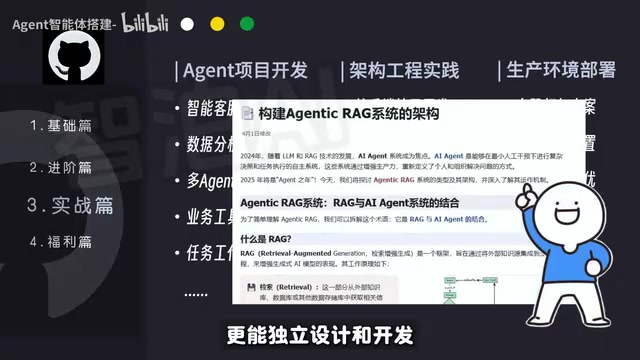
This progression from single-Agent to multi-Agent collaboration reflects the actual direction Agent technology is evolving: a single agent has limited capability, but through role specialization and coordination mechanisms, multiple Agents can handle more complex tasks that more closely resemble real enterprise workflows. After completing these three projects, learners should have the ability to independently design and develop intelligent agent applications.
Learning Resources and Overall Assessment
The course comes with all source code, course materials, Prompt templates, and an AI Agent developer learning roadmap. For those looking to systematically learn Agent development, this "Fundamentals → Advanced → Projects" three-phase structure genuinely suits how people learn better than courses that only explain concepts or only throw code at you.
That said, it's worth keeping realistic expectations. 748 episodes is a substantial volume, and actual quality still needs to be assessed as you work through the material. Marketing language like "most comprehensive in the entire internet" carries promotional overtones. But from a course design perspective, the path — first building intuitive understanding, then gradually engineering it, then deploying into real projects — is relatively approachable for beginners. If you're stuck at either "I understand the concepts but can't write the code" or "I can run a demo but can't ship it to production," the way this course is organized is worth considering.
Related articles
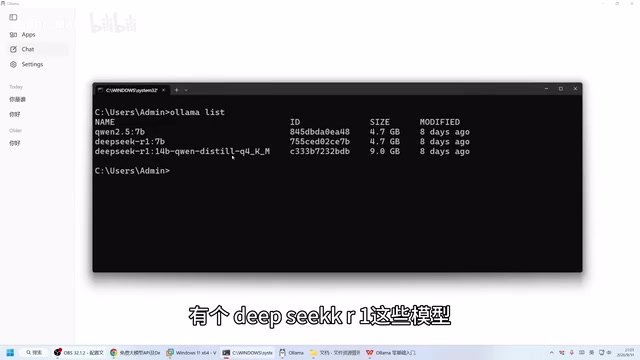
Ollama Beginner's Guide: Run Large Language Models Locally on Your Own Computer
Run LLMs locally with Ollama — fully offline, private, and free. This guide covers installation, CLI and Web UI usage, model download, and hardware requirements.
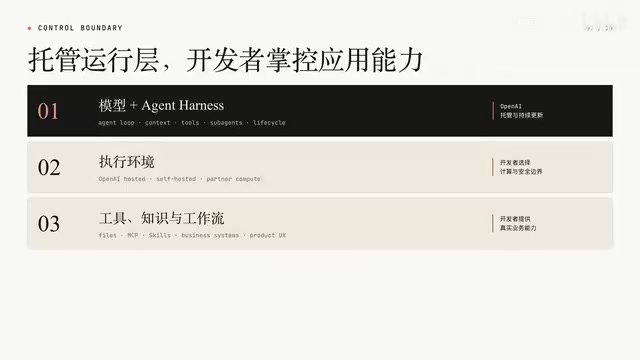
OpenAI Agents API Public Beta Hands-On: Managed Sandbox, Artifacts, and Skills in Action
OpenAI's public beta Agents API opens the Codex Agent Harness to developers. This hands-on walkthrough covers managed sandboxes, Artifacts, Skills, and two real request workflows.
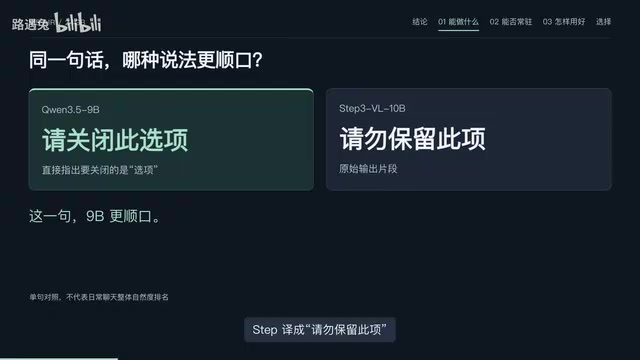
Running Local AI on a 24GB MacBook Air: Why I Chose Qwen 9B
Running local LLMs on a 24GB M5 MacBook Air: why Qwen 3.5 9B wins on memory, translation quality, vision capability, and practical workflow setup.