From Zero to Production: A Guide to Quality Learning Resources for Building AI Agents
A practical learning roadmap for developers ready to move from RAG and LangChain to building full AI Agent systems.
This article is aimed at developers who already have a foundation in LLMs, LangChain, and RAG, and want to progress toward building Agent systems. It identifies the core gap between calling models and building autonomous agents, covering key concepts like tool calling, planning, memory, and multi-agent collaboration. LangGraph is recommended as the natural next step for LangChain users, while Agentic RAG offers a smooth transition for those with RAG experience. The article stresses hands-on practice over documentation reading, and advises mastering one framework deeply before exploring others.
Why Learning Resources for Building Agents Matter So Much
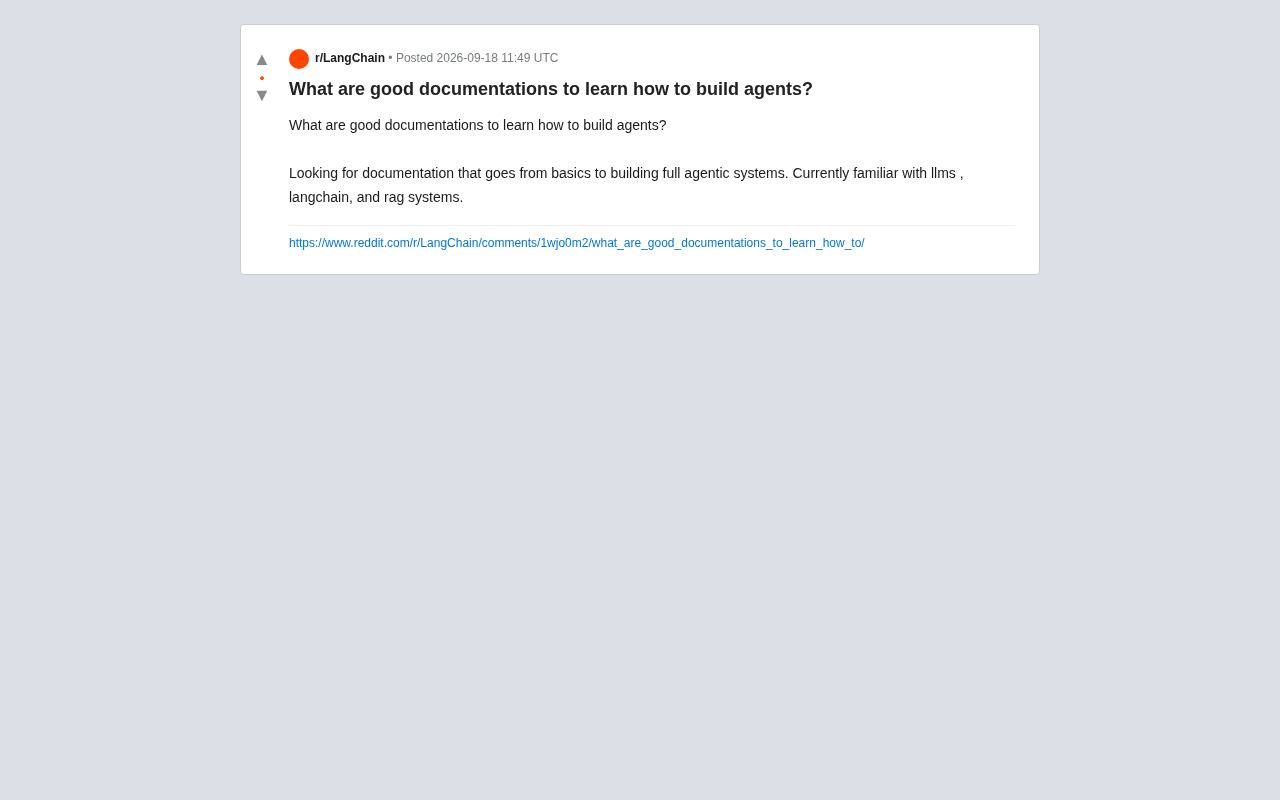
In a Reddit post, a developer already familiar with LLMs, LangChain, and RAG systems asked a question that resonates with many: where can I find a comprehensive set of resources for building a complete Agent system from the ground up? The question reflects a widespread pain point in AI development today — the barrier to entry for LLM applications is dropping, but a significant gap still exists between "knowing how to call a model" and "being able to build autonomous agents."
For developers who already understand RAG and LangChain basics, the next challenge isn't learning how to get a model to answer questions — it's learning how to get a model to plan tasks, call tools, maintain memory, and make decisions across multi-step workflows. This is the heart of Agent (intelligent agent) systems, and it's precisely where official documentation and community resources can deliver real value.
A Tiered Path from Basics to Advanced
Official Framework Docs: The Most Authoritative Starting Point
For developers already familiar with LangChain, LangGraph is the natural next step. It's a framework from the LangChain team designed for building stateful, multi-step Agent workflows. The official docs systematically explain how to organize an Agent's decision loops, state management, and human-in-the-loop mechanisms using a graph-based structure. Compared to traditional linear Chain structures, graph-based architectures are far better suited for expressing the complex loops and branching logic that Agents require.
Beyond that, model providers like OpenAI and Anthropic have also published their own Agent-building guides. Anthropic's "Building Effective Agents" article is particularly worth reading — rather than piling on code examples, it discusses from an engineering perspective when you should use simple workflows and when you actually need to introduce an Agent. This is invaluable for avoiding over-engineering.
Also worth noting: the OpenAI Agents SDK (formerly the experimental Swarm framework) was officially released in 2025, offering lightweight multi-agent orchestration with deep integration into GPT-4o's tool-calling capabilities — a good fit for developers who prefer staying within the native OpenAI ecosystem. AutoGen (open-sourced by Microsoft) focuses on conversational multi-agent collaboration, excelling at scenarios where multiple model roles need to debate, reflect, and iterate with each other. CrewAI positions itself as a higher-level "role-playing" multi-agent framework, reducing orchestration complexity by assigning clear responsibilities to each Agent. Understanding the design philosophy behind these frameworks helps you choose the right tool from the start, rather than hitting a wall mid-project and having to start over.
Understanding the Core Building Blocks of Agents
Regardless of which framework you choose, building Agents always comes back to a few core concepts:
- Tool Calling: Enabling the model to invoke external functions, APIs, or databases — the foundation of how an Agent interacts with its environment
- Planning & Reasoning: Patterns like ReAct and Plan-and-Execute, which determine how an Agent breaks down tasks
- Memory: Managing short-term context and long-term memory to keep an Agent coherent across interactions
- Multi-Agent Collaboration: Multiple specialized Agents dividing and conquering complex tasks
When reading framework documentation, it helps to organize your understanding around these dimensions rather than getting lost in specific API details.
ReAct (Reasoning + Acting) is currently the most widely used Agent reasoning pattern, introduced by a Google research team in 2022. Its core idea is to have the model alternate between outputting "Thought → Action → Observation" cycles, making the reasoning process traceable and debuggable. By contrast, the Plan-and-Execute pattern splits tasks into two phases: a Planner first generates a complete execution plan, then an Executor carries it out step by step. This works well for long-horizon tasks with many steps and clear dependencies. The two approaches involve real tradeoffs — ReAct is more flexible and can adapt dynamically based on intermediate results, but consumes more tokens; Plan-and-Execute has cleaner structure, but early planning errors compound down the chain. LangGraph supports both patterns well.
A Progression Path for Developers with RAG Experience
From RAG to Agentic RAG
For developers already familiar with RAG, a natural transition is learning Agentic RAG — letting an Agent autonomously decide when to retrieve, what to retrieve, and whether multiple rounds of retrieval are needed. This essentially upgrades RAG from a fixed pipeline into a dynamic retrieval strategy orchestrated by an Agent. LlamaIndex's documentation offers fairly systematic tutorials on this, packaging retrieval, routing, and query planning capabilities as tools that Agents can call.
Traditional RAG follows a fixed "retrieve → augment → generate" linear pipeline, which fails in common scenarios: vague user questions leading to irrelevant retrieval results, insufficient information from a single retrieval pass, or multi-document information requiring cross-verification. Agentic RAG addresses these issues by introducing an Agent decision layer. Common implementations include: Self-RAG (the model autonomously decides whether retrieval is needed), Corrective RAG (CRAG) (scoring retrieval quality after the fact, falling back to web search when quality is low), and Multi-hop RAG (decomposing complex questions into sub-questions, then merging answers after multiple retrieval rounds). All of these patterns share the same essential insight: returning the decisions of "whether to retrieve," "what to retrieve," and "whether the results are trustworthy" back to the model, so that retrieval strategy can adapt to the complexity of any given question.
Hands-On Practice Matters More Than Reading Docs
It's worth emphasizing that learning Agent systems is inherently hands-on. Simply reading documentation makes it very difficult to truly understand how an Agent behaves across multi-step execution — especially around practical engineering challenges like error handling, loop termination conditions, and token cost control. A recommended path:
- Start by running a minimal working Agent using the official Quickstart
- Gradually replace and extend tools, observing how the Agent's behavior changes
- Introduce observability tools like LangSmith to trace the Agent's decisions at every step
- Try building an Agent project that solves a real problem you actually have
Advice on Choosing Learning Resources
Faced with an overwhelming number of tutorials and documentation, the most common mistake is chasing too many frameworks at once. For someone in the position described in the original post, a practical suggestion is: since you already have LangChain experience, go deep with LangGraph, master one framework thoroughly, then broaden your exposure to understand the design differences in other ecosystems (like CrewAI, AutoGen, and the OpenAI Agents SDK).
Frameworks are ultimately just tools. The real core competency lies in understanding Agent design patterns and engineering tradeoffs. When you can clearly judge whether a task actually needs an Agent — and if so, what kind — the choice of which framework's documentation to read becomes secondary.
This is also why community responses to questions like this tend to recommend both "conceptual articles" and "hands-on documentation" simultaneously. The former builds your mental model; the latter provides the skills to ship. Together, they're what actually lets you cross the threshold from RAG to Agentic systems.
Related articles

MosMos: An AI Voice Writing Tool Built for the Entire Meeting Lifecycle
MosMos is an AI voice writing tool built for the full meeting lifecycle — ranked #2 on Product Hunt. It goes beyond dictation with style-aware drafting, a personal glossary, web search, speaker diarization, and structured meeting notes.
Getting Started with Claude Code: Capabilities and Installation Essentials for This AI Coding Assistant
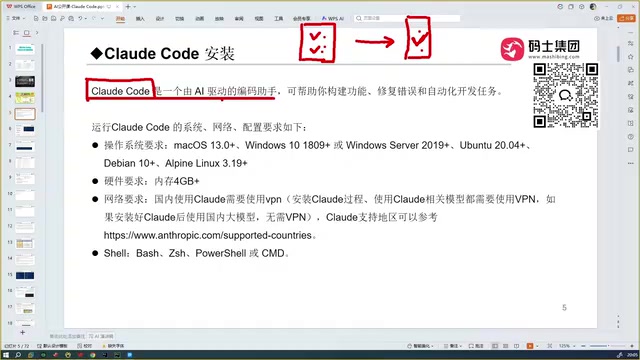
Claude Code is Anthropic's AI coding agent that reads your full codebase, generates accurate code, and auto-debugs. Compare with Cursor, TRAE, Codex, plus key install requirements.

AINA: An AI Career Coach That Uses a Video Avatar to Uncover Your Job Search Blind Spots
AINA topped Product Hunt with its AI career coach that uses a video avatar to help job seekers find blind spots, polish their profile, and practice interviews.