Getting Started with Codex: A Complete Guide to AI Agent Programming Tools

A complete beginner's guide comparing Codex and Claude Code AI agent programming tools.
This guide compares Codex and Claude Code — the two leading AI agent programming tools — covering their technical architectures, strengths, and cost trade-offs. It explains AI Agent concepts, the MCP ecosystem, model selection strategies including domestic alternatives like DeepSeek, and provides step-by-step setup instructions for beginners, emphasizing that AI agent tools are becoming essential skills for everyone.
From Large Language Models to AI Agents: A Cognitive Upgrade
In today's rapidly evolving AI landscape, our understanding of these tools is undergoing a fundamental shift. A Chinese tech YouTuber (Bilibili creator) makes a key distinction right at the start of his tutorial: tools like Codex and Claude Code aren't simply large language models — they're AI Agent tools.
How should we understand this difference? The creator uses a vivid analogy: a large language model is like a "brain" — it can think and converse, but it can't actually "get things done" for you. However, when you equip that brain with "hands, feet, and tools" — by connecting it to an agent framework like Codex, Claude Code, or Cline — it can actually execute tasks: read and write files, run code, and call external services.
From a technical architecture perspective, an AI Agent is a well-defined system concept that typically comprises four core modules: the perception layer (receiving user instructions and environmental information), the planning layer (breaking complex tasks into executable sub-steps), the memory layer (maintaining context and interaction history), and the tool invocation layer (interacting with the outside world through APIs, file systems, terminal commands, etc.). This architecture frees AI from the limitations of single-turn "input-output" conversation mode, enabling it to autonomously complete multi-step, cross-system complex tasks like a real assistant. Since 2024, Agent frameworks have become the mainstream paradigm for productionizing AI, with major players like OpenAI, Anthropic, and Google all launching their own Agent products.
This cognitive shift is crucial. We used to treat ChatGPT as a Q&A chatbot, but today's AI agent tools can independently complete entire development workflows from requirements analysis to code implementation. That's why the creator emphasizes that these tools have become an essential industry skill for everyone, regardless of whether you can code.
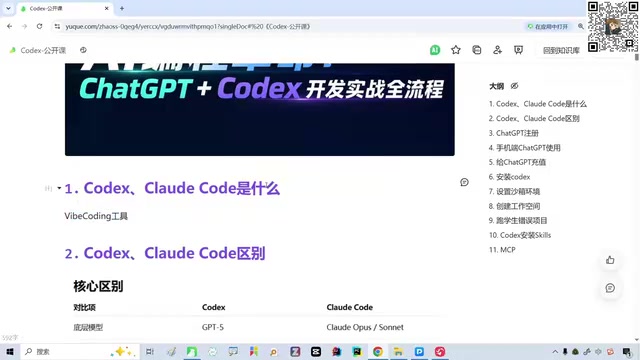
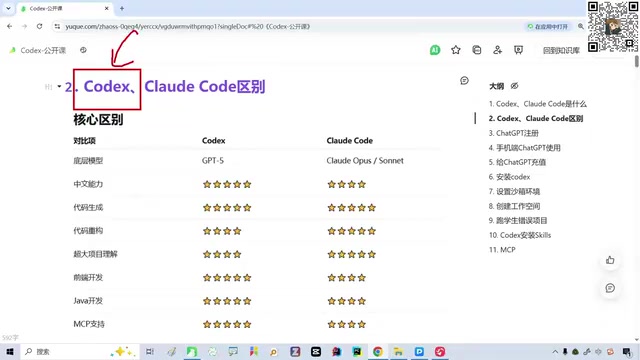
Codex vs Claude Code: A Head-to-Head Comparison of the Top Two
Among the many AI agent tools available, the creator chose to focus on comparing Codex and Claude Code. The reason is straightforward: these two are currently the most widely used, first-tier tools among developers.
To understand their competitive landscape, it helps to know their respective technical backgrounds. OpenAI's Codex has undergone significant product evolution — the original Codex (released in 2021) was a code-generation-focused model that served as the underlying engine for GitHub Copilot. The new version of Codex launched in 2025, however, is a full-fledged AI programming agent platform. It doesn't just generate code — it can autonomously run code in sandbox environments, debug errors, read and write project files, and even execute deployment operations. The new Codex deeply integrates OpenAI's latest GPT-series models and supports asynchronous cloud-based task execution — users can submit a request and walk away, while Codex independently completes the development work in the background and returns results. This "asynchronous Agent" design philosophy represents a major leap in AI programming tools from "real-time assistance" to "autonomous completion."
Claude Code, on the other hand, is a command-line AI programming agent released by Anthropic in 2025. Built on Anthropic's Claude model series (such as Claude 3.5 Sonnet, Claude 4, etc.), it runs directly in the terminal environment. Claude Code's core strength lies in its ability to understand large codebases — it can autonomously navigate project structures, understand code dependencies, execute git operations, and make cross-file code modifications. Anthropic's research in AI safety and Constitutional AI also gives Claude Code unique advantages in code review and security.
The Creator's Hands-On Verdict
As a power user who has installed Codex, Claude Code, and Cline simultaneously, the creator offers a clear personal conclusion: Codex is currently the best AI programming agent. He provides several reasons:
- Strong Chinese language comprehension: Codex is powered by GPT-series models (GPT-5.5 was mentioned in the tutorial), which better understand Chinese-language context.
- Superior requirements analysis: It excels at breaking down complex tasks.
- Outstanding full-stack development capabilities: It handles both frontend and backend well.
- Fast-growing MCP ecosystem: The Model Context Protocol ecosystem is expanding rapidly, with an ever-increasing number of integrable tools.
- Major backing from OpenAI: As a core product from OpenAI, Codex receives the largest resource investment.
MCP (Model Context Protocol) deserves special attention here. MCP is an open protocol standard proposed by Anthropic in late 2024, but it was subsequently adopted across the entire industry — including OpenAI's Codex. The core idea behind MCP is to establish a standardized communication protocol between AI models and external tools — similar to how the USB interface unified peripheral connection standards. Before MCP, every AI tool needed custom adapter code to connect with databases, APIs, file systems, and other external services. MCP defines a unified "tool description-invocation-response" format that enables any protocol-compliant tool (MCP Server) to be plug-and-play with any MCP-supporting AI agent (MCP Client). The MCP ecosystem currently covers hundreds of tool integrations including GitHub, Slack, databases, and browser automation — forming a crucial foundation for Codex's rapid capability expansion.
Cline, also mentioned by the creator, is worth knowing about. Cline (formerly Claude Dev) is an open-source VS Code extension that embeds AI agent capabilities directly into the IDE environment developers use most. Unlike Codex's cloud-based async mode and Claude Code's command-line mode, Cline's biggest feature is flexibility — it's not tied to any specific model provider, allowing users to freely connect APIs from OpenAI, Anthropic, Google, DeepSeek, or any other model. This "model-agnostic" design makes it a popular choice for budget-conscious users, earning extremely high star counts on GitHub as a flagship open-source AI programming Agent project.
A Balanced Perspective
It's worth noting that this "best tool" judgment carries obvious personal usage preference. The creator himself admits his "perspective might be somewhat narrow" and acknowledges that foreign models are currently only "slightly ahead."
He also shares a longer-term view worth paying attention to: as domestic Chinese models catch up, the day will come when tool choice no longer matters — the competition will ultimately come down to price. This is a relatively rational take — today's advantages aren't permanent moats, and cost-effectiveness will become the key factor in long-term decision-making.
Cost Considerations: Model Selection and Price Comparison for AI Agents
Agent tools must work in conjunction with underlying large language models, and model selection directly impacts usage costs.

Cost Differences Across Combinations
The creator shares cost experiences with several typical setups:
- Claude Code + Claude models: This is the most "native" combination, but it's expensive. Claude Code uses per-token billing, and when processing large projects — due to repeated codebase reading, multi-round reasoning, and tool invocations — token consumption far exceeds normal conversation scenarios. A single complex task can cost several dollars or more.
- Claude Code + domestic models like DeepSeek: Much cheaper and a common money-saving strategy, but the creator frankly states it's "not as good as the foreign ones."
- Codex + GPT: The creator's personal choice, balancing user experience with account reuse (since he already uses GPT).
This reflects a real user decision-making process: performance and cost require trade-offs. For budget-sensitive users, using domestic models to power agents is a viable cost-reduction path, though it comes with some experience trade-offs.
Notably, domestic Chinese models represented by DeepSeek have made remarkable progress in 2024-2025. DeepSeek-V3 and DeepSeek-R1 achieved performance levels comparable to GPT-4 and Claude 3.5 on multiple authoritative benchmarks, while training costs were only one-tenth or even less of equivalent overseas models. Additionally, Alibaba's Qwen, ByteDance's Doubao, and Baidu's ERNIE are also iterating rapidly. API costs for these domestic models are typically a fraction of overseas models, corroborating the creator's prediction that "the competition will ultimately come down to price" — once model capabilities become homogeneous, cost will become the decisive factor.
The First Hurdle: GPT Account Registration and Configuration

For newcomers wanting to use Codex, the first barrier often isn't the tool itself but GPT account registration and configuration.
The creator mentions an interesting industry phenomenon: when these tools were at peak popularity, platforms like Douyin (Chinese TikTok) saw a surge of gray-market "registration services" — people with quick instincts making money by helping others get through the registration process. This indirectly reflects that the account setup step has indeed deterred many beginners. Behind this phenomenon lies the fact that OpenAI's services have access restrictions in certain regions, and the registration process may involve overseas phone number verification, payment method configuration, network environment adjustments, and other technical hurdles that pose significant challenges for non-technical users.
Practical Advice for Beginners
Even if you can't code at all, it doesn't affect your ability to use these AI agent tools. The creator emphasizes that even if you don't write Java, Python, or understand LLM-related code, you can still keep up with the learning curve. At the very least, setting up a GPT account for daily queries is inherently valuable.
From a practical standpoint, beginners should proceed in this order:
- Register a working GPT account — resolve this prerequisite for model access.
- Install the Codex tool — Codex also offers a desktop app client for more convenient daily use.
- Complete the model-to-tool integration — connect the "brain" to the "hands and feet." This step essentially involves configuring your model API Key within the agent tool to establish a communication channel between the tool and the model.
- Start with simple projects — familiarize yourself with the AI agent workflow through real tasks. It's recommended to begin with "describing requirements in natural language and letting the AI generate a complete small application" — such as a to-do list webpage or a data processing script — to gradually build an intuitive understanding of AI programming Agent capabilities and limitations.
Conclusion: AI Agent Tools Are a Required Course for Everyone
The core message of this tutorial is clear: AI agent tools have evolved from exclusive developer power tools into universal skills for professionals across all industries. They lower the barrier to "getting things done," enabling people without coding skills to accomplish tasks that previously required specialized expertise.
Regardless of whether you ultimately choose Codex or Claude Code, understanding the foundational logic that "Agent = Brain + Tools" and getting past the first hurdle of account setup is the real starting point for hands-on practice. And as domestic Chinese models rapidly close the gap, future tool choices may become even more flexible and cost-effective.
Related articles
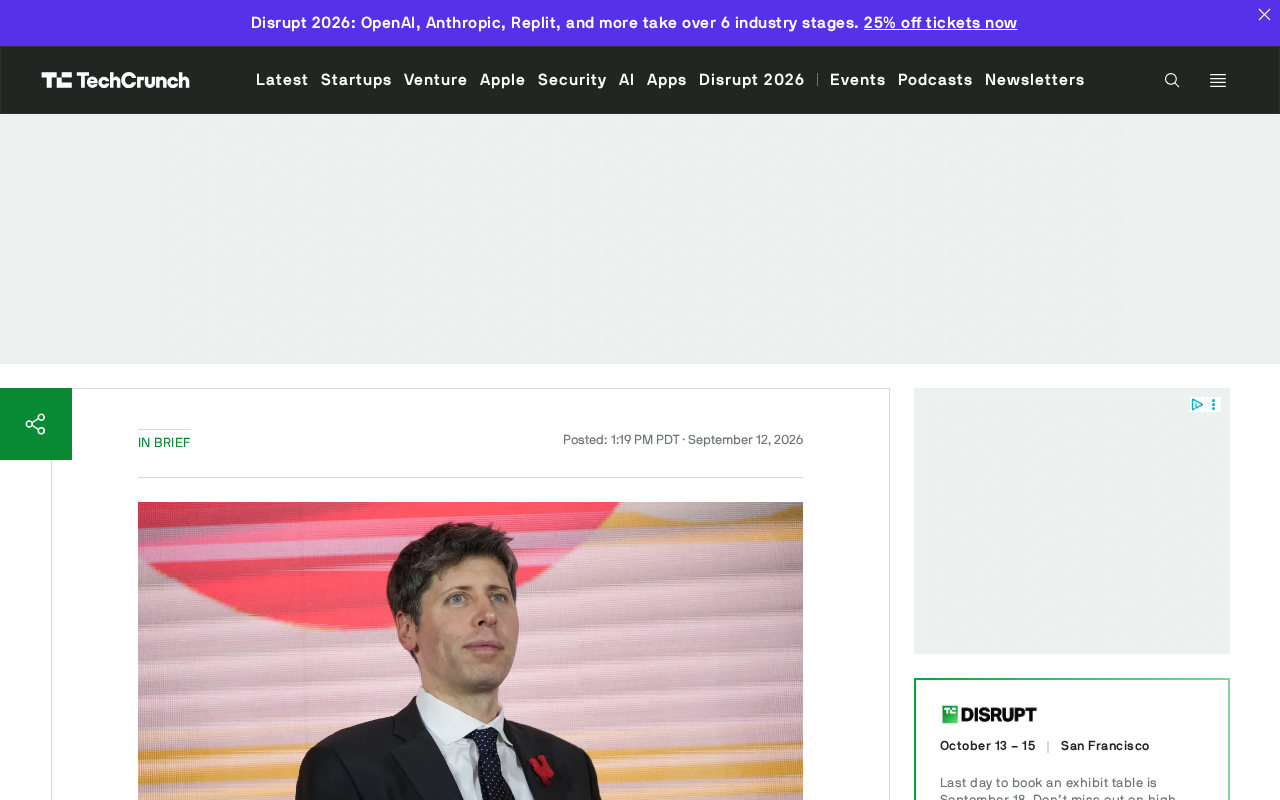
Altman: Taking OpenAI Public This Year Would Be 'Ill-Advised'
OpenAI CEO Sam Altman says going public this year would be 'ill-advised,' even as the company has confidentially filed IPO paperwork. Here's what it means for AI.
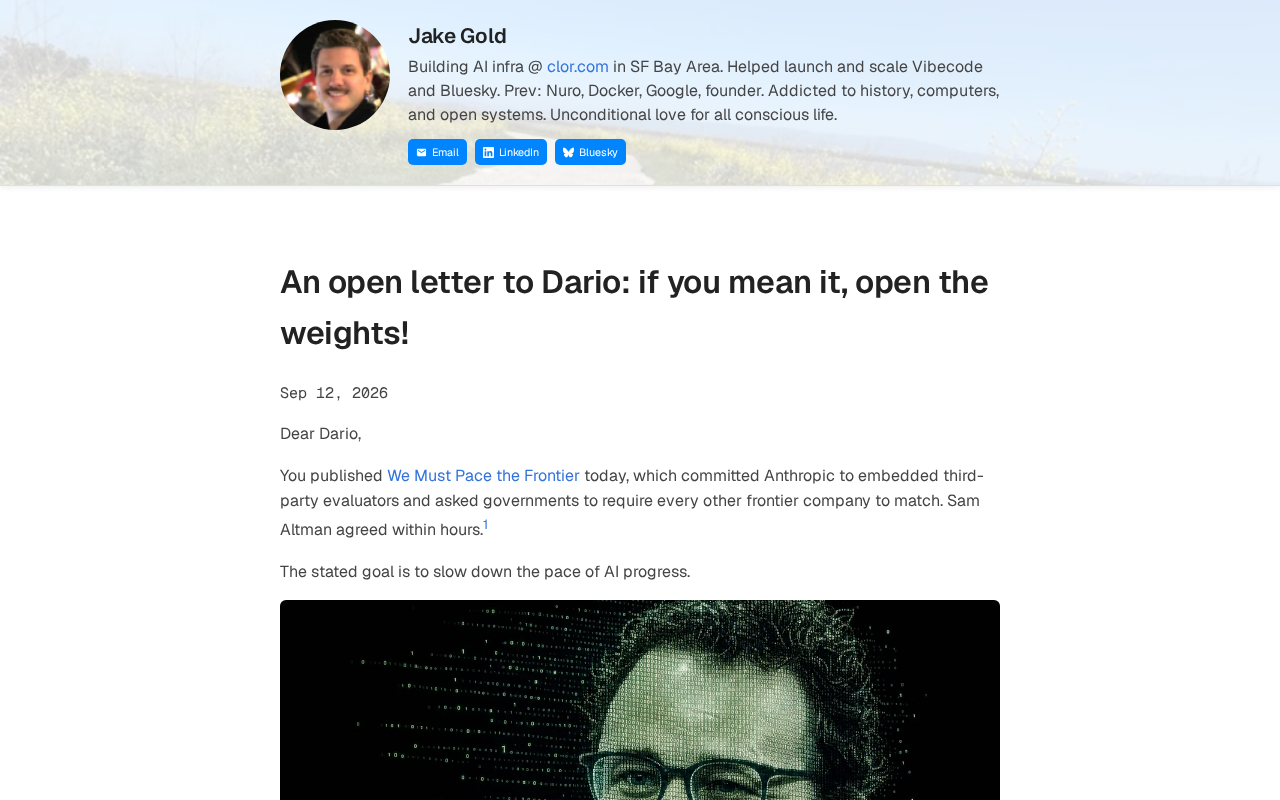
An Open Letter to Dario: If AI Safety Is Real, Open the Model Weights
Developer Jacob's open letter to Anthropic CEO Dario Amodei went viral on Hacker News, challenging the contradiction between AI safety rhetoric and closed-source models: if safety truly matters, why not open the weights?
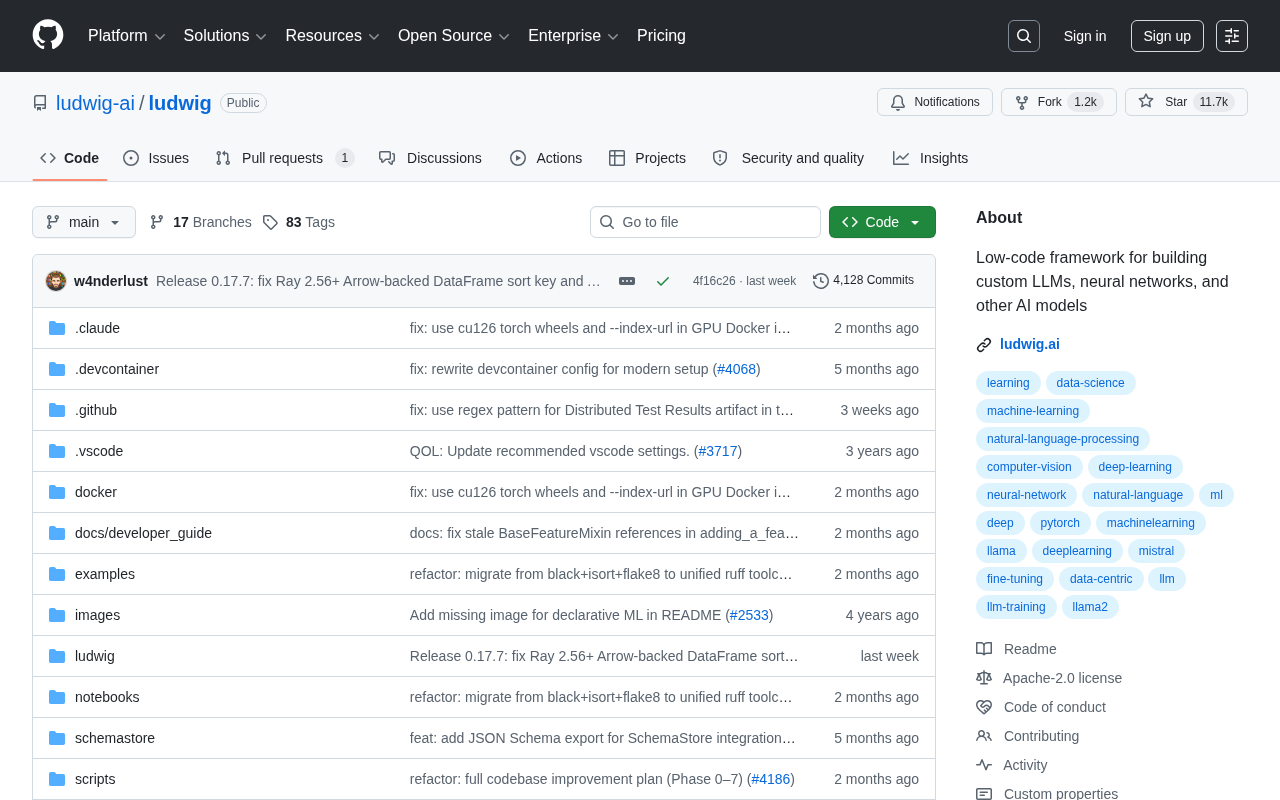
Ludwig: Building Custom LLMs and Neural Networks with Declarative Low-Code Configuration
Ludwig is an open-source low-code ML framework that builds custom LLMs and neural networks via declarative YAML config — no boilerplate training code required.