How Vercel Migrated Its Core Database with Zero Downtime: A Deep Dive
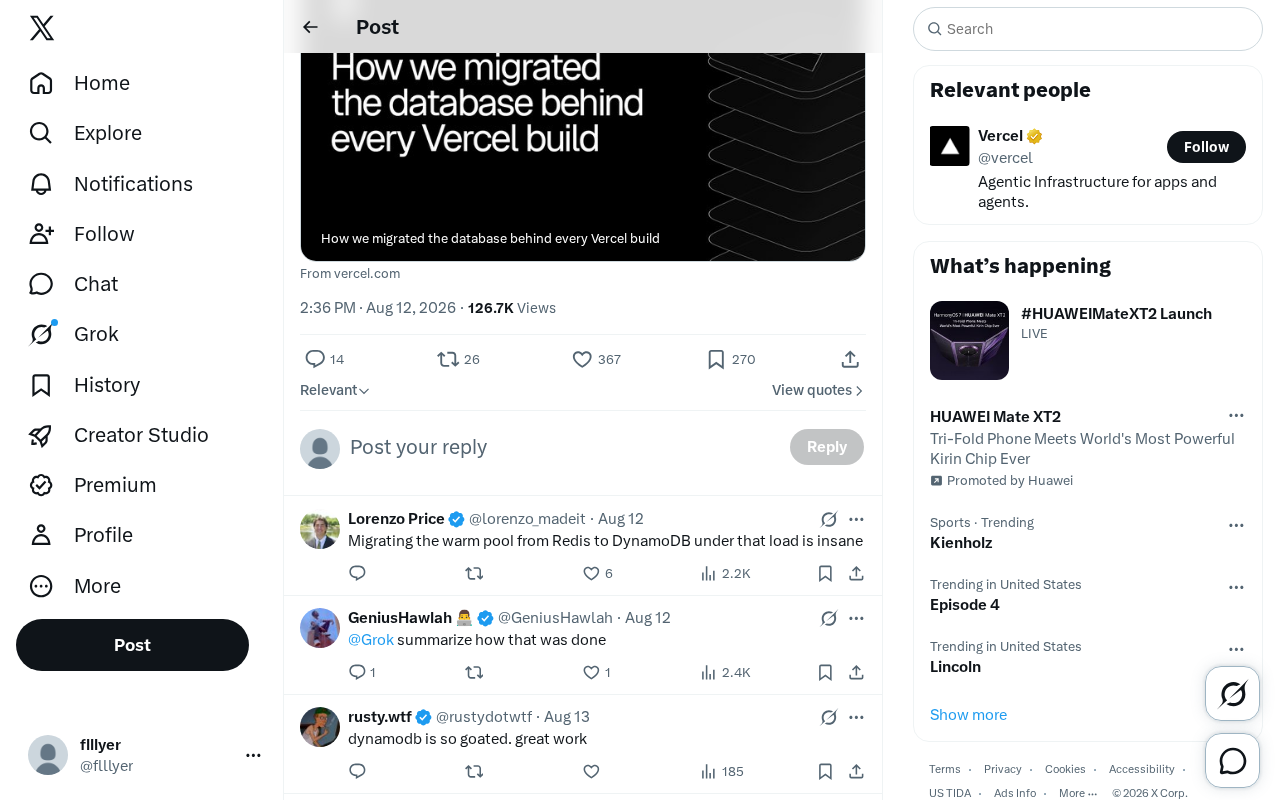
How Vercel achieved zero-downtime core database migration under extreme production load.
Vercel successfully migrated its core database while handling 6,000 deployments per minute with zero downtime. This deep dive examines the key techniques behind the migration — dual-write synchronization, canary release traffic shifting, comprehensive observability, and rapid rollback capabilities — offering practical engineering insights for teams operating critical infrastructure at scale.
A High-Stakes Database Migration
Vercel recently shared a topic that every engineering team cares about: how to migrate the core database powering all build processes without disrupting live services. This was no ordinary data migration — it took place in a high-load production environment handling approximately 6,000 deployments per minute. Any misstep could have impacted build pipelines for developers worldwide.
6,000 deployments per minute translates to roughly 100 concurrent build tasks flowing through the system every second. Each deployment involves multiple database operations: creating deployment records, updating build statuses, writing log metadata, recording artifact hashes, updating routing configurations, and more. A conservative estimate of 10–20 database transactions per deployment means the database layer sustains 1,000–2,000 transactions per second. This level of throughput approaches the performance ceiling of many traditional relational database single instances, especially in write-intensive scenarios involving row-level locks and foreign key constraints.
For a platform like Vercel, where developer experience is the top priority, the build service is the most critical piece of infrastructure. Every git push, every preview deployment, and every production release depends on this database to track state, coordinate tasks, and maintain history. Performing a database migration on such a system is understandably daunting.
Why Migrate the Database?
While the original article didn't elaborate on every technical detail, based on common patterns in large-scale system evolution, migrations like this are typically driven by several key factors.
Breaking Through Performance Bottlenecks
When a database must handle thousands of writes and queries per minute, the existing architecture may be hitting its limits in connection pooling, write throughput, lock contention, or storage scalability. Migrating to a solution better suited for the current scale becomes essential to maintaining performance and reliability.
A connection pool is a pre-established, reusable set of database connections that avoids the overhead of TCP handshakes and authentication on every request. When concurrency spikes, an exhausted connection pool leads to queued or timed-out requests. Lock contention occurs when multiple transactions simultaneously attempt to modify the same row or data range — the database's locking mechanism ensures ACID properties (Atomicity, Consistency, Isolation, Durability), but at the cost of reduced throughput and increased latency under high-concurrency writes. For a high-frequency write scenario like Vercel's, these bottlenecks directly manifest as deployment queue backlogs and build timeouts.
Optimizing Operational Costs
As business grows, database operational complexity and costs scale in tandem. Choosing a solution that's easier to scale and better aligned with the team's tech stack can significantly reduce long-term Total Cost of Ownership (TCO). TCO encompasses not just direct database instance costs, but also the hidden costs of engineering time spent on operations, incident resolution, and architectural overhauls required for scaling.
Forward-Looking Architecture Planning
Once the database for a core service is locked in, replacing it later is extremely expensive. Vercel's decision to proactively upgrade was essentially an investment in future growth — completing the architectural upgrade before problems escalate, rather than reacting to a system meltdown.
Technical Challenges of Zero-Downtime Migration
Migrating a database on a system running under continuous heavy load presents a fundamental challenge: you have to swap it out without shutting it down. This requires solving several core problems.
Dual-Write Mechanism and Consistency Guarantees
During migration, both old and new databases must run simultaneously. The system must synchronize writes to both and ensure eventual data consistency. Any data loss or inconsistency could lead to corrupted build states, failed deployments, and other severe consequences.
Dual Write is a classic pattern in database migration, typically implemented via one of two approaches. The first is application-level dual writing, where business code synchronously or asynchronously sends every write operation to both databases. The upside is straightforward implementation; the downside is added application complexity and request latency. The second approach uses Change Data Capture (CDC), which listens to the old database's transaction log (such as MySQL's binlog or PostgreSQL's WAL) to capture all data change events and propagate them to the new database in real time. Popular open-source CDC tools include Debezium (built on Kafka Connect) and AWS DMS (Database Migration Service). CDC's advantage is near-zero intrusion on the source database — no business code changes required — while preserving the order of changes. However, in high-throughput scenarios, the CDC pipeline itself can become a bottleneck, requiring attention to consumer lag and backpressure handling.
The biggest challenge with dual writing is ensuring eventual consistency — when write speeds differ between the two endpoints or partial failures occur, data may be briefly inconsistent, requiring compensating mechanisms (such as periodic data validation and repair jobs) as a safety net.
Smooth Read Traffic Switchover
Data synchronization is just the foundation. The real test is how to progressively shift read traffic from the old database to the new one — typically using a canary release strategy that routes a small percentage of traffic first for validation, then gradually increases until the migration is complete.
Canary Release was originally used for application deployments, but it's equally essential for database migrations. A typical approach uses feature flags or a traffic routing layer to control which database serves read requests. For example, start by directing 1% of read traffic to the new database, then verify data sync quality by comparing results from both databases (Shadow Read). Once confirmed, gradually increase to 5%, 10%, 50%, and finally 100%. Each stage has an observation window and automatic rollback triggers — for instance, automatically routing traffic back to the old database if the error rate exceeds a threshold. This approach distributes the risk of a "big bang switch" across multiple controllable steps and is the standard paradigm for high-availability system migrations.
Rapid Rollback Capability
Any responsible migration plan must include a rollback strategy. If the new database exhibits anomalies, the team must be able to quickly revert to the old one to prevent irreversible damage. This requires maintaining bidirectional switchability throughout the migration — the old database must retain a complete, up-to-date data replica during dual writing, and route switching must be achievable in seconds (typically via feature flag changes or DNS weight adjustments) rather than requiring service restarts or code redeployments.
The Philosophy Behind the Engineering Practice
Vercel placed special emphasis on its migration philosophy, which is arguably the most valuable aspect of this kind of engineering effort.
Incremental Migration Strategy
The best practice for high-risk migrations is never a "one-shot big bang switch" but rather breaking the process into small, controllable steps — each observable, verifiable, and reversible. While this approach takes longer, it dramatically reduces the probability of catastrophic failure. In the industry, this strategy is sometimes called the "Strangler Fig Pattern," named after tropical strangler plants that gradually envelop their host tree — the new system incrementally takes over the old system's functions until the old system is fully replaced and safely decommissioned.
Comprehensive Observability
In a high-frequency deployment environment, migrating without adequate monitoring is like driving blindfolded. Teams need real-time observability into latency, error rates, data consistency, and other core metrics to detect and respond to issues immediately.
Modern observability systems are typically built on three pillars: Metrics quantify system behavior, such as query latency percentiles (P50/P95/P99), transactions per second (TPS), and connection pool utilization. Logs record detailed context for discrete events, enabling post-incident analysis. Traces connect the complete call path of a single request across a distributed system, helping pinpoint bottlenecks. In a database migration context, special attention must be paid to replication lag — the time difference by which the new database trails behind the old one — as well as data divergence rates between the two databases. On the tooling side, Prometheus + Grafana are commonly used for metrics monitoring, OpenTelemetry for distributed tracing, and custom data consistency validation jobs periodically compare critical datasets between old and new databases. Only when these observability capabilities are fully in place can a team navigate the migration with confidence.
Seamless User Experience
The ideal migration is one where users are completely unaware of the underlying changes. Vercel completing the migration under a load of 6,000 deployments per minute with no noticeable disruption is itself the strongest proof of engineering excellence. The key to achieving a seamless user experience is encapsulating all migration logic within the infrastructure layer, keeping it transparent to upper-layer applications and end users — the deployment API response format stays the same, the build status query interface stays the same, and the webhook callback timing stays the same. The only thing users might notice is improved build performance after the migration — which is a positive outcome.
Takeaways for Engineering Teams
This real-world case study offers valuable lessons for teams operating critical infrastructure.
First, plan core system migrations proactively. The more critical business a database supports, the narrower the replacement window and the higher the risk. Upgrade before problems escalate. An industry rule of thumb: when system load reaches 60–70% of designed capacity, start evaluating and planning the next-generation architecture — don't wait until it's above 90% to react.
Second, incremental migration + rollback mechanisms are virtually the standard paradigm for zero-downtime migration. Dual-write synchronization, canary traffic shifting, and real-time monitoring form a trifecta where each element is indispensable. It's worth noting that this methodology applies not only to database migrations but also to message queue replacements, cache layer upgrades, and even full microservice architecture refactors — fundamentally, any online replacement of a critical component can follow this framework.
Finally, engineering philosophy matters more than technology selection. The same database technology will land smoothly in the hands of a team with a clear migration methodology, while a team lacking systematic thinking may turn it into an incident. Vercel's practice showcases not so much a technical solution as a rigorous attitude toward critical systems.
Conclusion
Swapping out a core component while a system is running at full speed is like changing an engine mid-flight. Vercel's successful execution proves that with the right philosophy, thorough preparation, and disciplined execution, even such high-difficulty engineering feats can be accomplished safely. For teams currently facing or about to face similar challenges, this case study serves as both a technical reference and an inspiration in engineering culture.
Related articles
How Short-Form Video Creators Are Using AI Video Generation Tools
Exploring the real-world application of AI video generation tools in short-form video creation. From Seedance to Runway, how do creators integrate AI assets? Revealing the gap between demos and production use.
Home Data Center Setup Guide: A Complete Self-Hosted Private Cloud Implementation
Deep dive into building a home data center: hardware selection, software architecture, cost analysis, and operational challenges. From data sovereignty to technical implementation, build your private cloud infrastructure and control your digital assets.
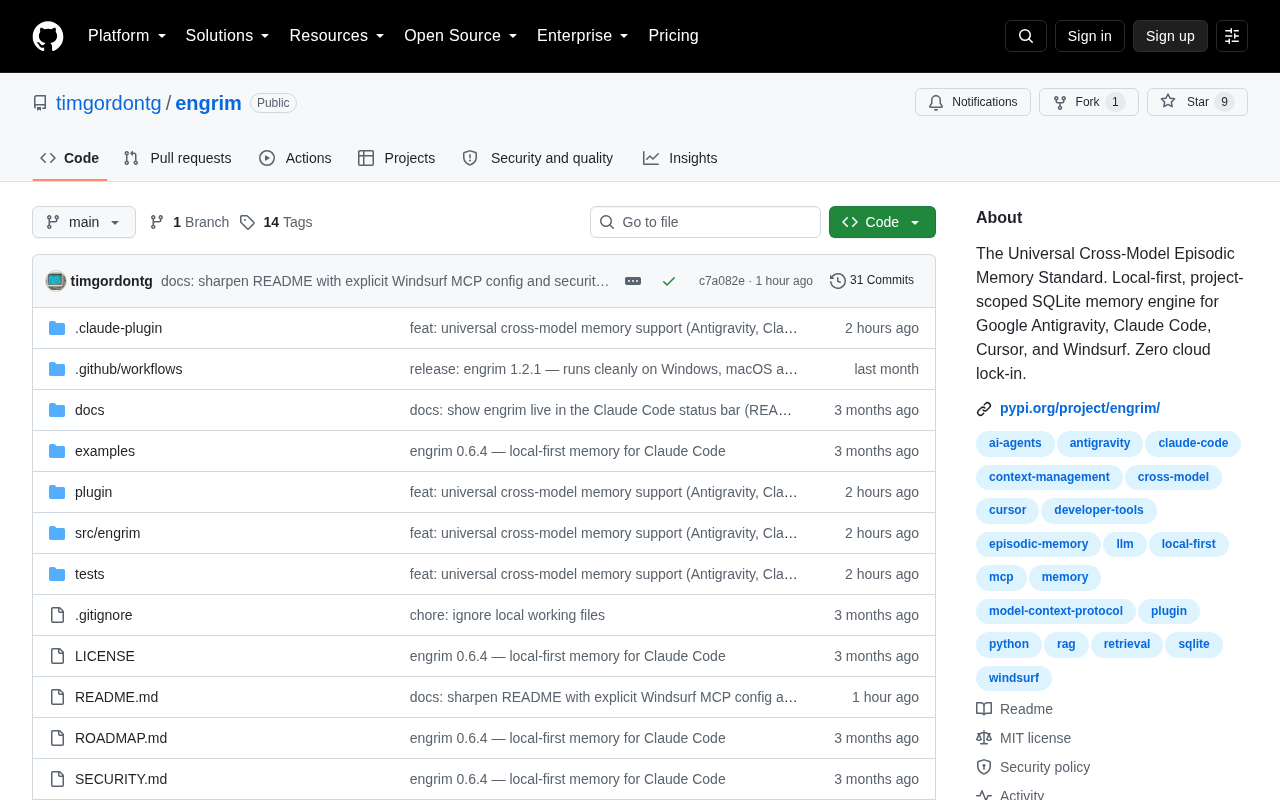
Engrim: A Local Memory Engine Solution for AI CLI Tools
Engrim is an open-source, local-first SQLite memory engine built for AI CLI tools like Claude Code and Aider, solving context loss while keeping data private.