Instacloud in Practice: Deploying LeetCode-Grade Infrastructure with an Agent

Instacloud is an Agent-native cloud platform; a real-world test shows AI deploying a complex open-source project from scratch, revealing its strengths and limits.
This is a hands-on test report of Instacloud, the Agent-native cloud platform from the Insforge team. The tester handed a complex open-source judging platform, Codebox (Node API, Redis queue, Docker sandbox Worker), to an AI Agent, which identified the architecture requirements, fixed an ioRedis TLS connection issue, and deployed it successfully, even running Python/C++ test code. The platform's environment branching quickly clones full infrastructure for staging and supports multiple independent Postgres instances at once, but the test also exposed limits: no nested Docker and Redis only supports TLS.
When an AI Agent Takes Over Cloud Infrastructure
We've seen plenty of cloud platforms, but what does a fully "Agent-native" platform actually look like? A YouTube tech channel recently ran an in-depth real-world test of Instacloud, the new platform from the Insforge team. Rather than just reading off slides, they threw a fairly complex open-source project at an Agent to see whether it could deploy a complete infrastructure stack from scratch.
The tester is a heavy Insforge user himself—his platform dsa.chicode runs its entire backend on Insforge and has over 25,000 active users. He came to explore Instacloud with one core question: if Insforge already exists, why is a new platform needed? The answer lies in Instacloud's positioning—it's an infrastructure layer built for Agents, letting AI directly manage and deploy your backend services.
A First Look: Agent-Native Cloud Services
Instacloud's tagline is "deploy code and services instantly, no DevOps required, everything auto-scales." The tester admitted the "no DevOps" phrasing might set the DevOps community on fire—but his interpretation is that it doesn't mean DevOps skills aren't needed; it means Agents take on the DevOps work.
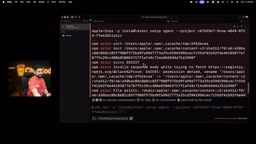
The platform's workflow is quite direct: initialize a project with npx -y instacloud@latest setup agent, then use a coding Agent like Claude to drive the entire deployment process. After signing up, you see a management dashboard with project management, domain configuration, service addition, Billing, and usage monitoring modules.
On pricing, the free tier offers $10/month in usage credits, 4 vCPU + 4GB RAM + 1GB storage; the $20 tier upgrades to 8 vCPU + 8GB RAM + 10GB storage and supports up to 25 services. Team member invitations don't cost extra, something the tester appreciated.
What Does Agent-Native Mean?
Before discussing Instacloud, it's worth clarifying the concept of "Agent-native." Traditional cloud platforms are designed with a "human operator" assumption: consoles for human eyes, CLIs for human hands, docs for human brains. Agent-native platforms, by contrast, treat AI Agents as first-class citizens—their APIs, CLI output formats, and error message structures are all designed to be easily parsed and reasoned about by LLMs.
Concrete manifestations include: structured command return values (rather than human-oriented formatted text), error messages containing enough context for the Agent to figure out how to fix things itself, idempotent operations so the Agent can safely retry, and status query interfaces so the Agent can check the current state of the infrastructure at any time.
Instacloud's setup agent command embodies exactly this approach: it's not an install wizard for humans, but a "deployment playbook" prepared for an Agent. This also explains why, throughout the test, the human tester only described requirements while all the concrete technical decisions and operation sequences were handled by the Agent.
The Real Test: Deploying the Codebox Judging Platform from Scratch
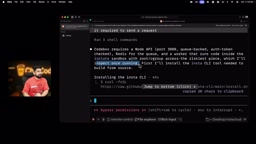
This is the most valuable part of the whole video. The tester chose an open-source project called Codebox—a LeetCode alternative with a fairly complex architecture: Node API, Redis queue, and Docker-isolated code execution Worker. All three components are essential.
He gave the Agent this instruction: "I have this repo URL—deploy it for me and give me the URL and the auth Token I need." The Agent then demonstrated its reasoning ability—it automatically identified that Codebox needs a Node API (port 3000), a Redis queue, and a Worker running code sandboxes, and even flagged that root CGroup access was the highest-risk part.
A real bug surfaced during deployment: ioRedis version 5.9 doesn't send the TLS server name (SNI), causing connections to Instacloud's Redis endpoint to be rejected. The Agent fixed this configuration issue locally, re-pushed the code, and the service recovered right away.
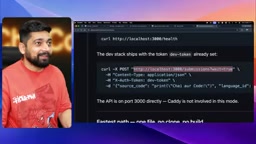
The final result was impressive—all three services (API, Worker, Redis) were online, the API responded correctly to requests after Token authentication, and the Worker successfully executed test code in both Python and C++. The tester made a point of noting that the repo itself ships with a complete Postman test collection, which the Agent could read and use directly.
SNI and the Redis TLS Connection Problem
The ioRedis 5.9 SNI issue that caused rejected connections during the test is a detail worth unpacking. SNI (Server Name Indication) is a TLS extension that lets a client tell the server, during the handshake, which domain name it's requesting. In multi-tenant cloud environments, the same IP address often hosts services for multiple domains, so the server must rely on SNI to return the correct certificate.
When a Redis service is exposed over TLS on a cloud platform, the platform typically uses a shared load balancer endpoint. If the client doesn't send SNI, the server can't tell which certificate to return and will usually either reject the connection outright or return a default certificate that fails verification. ioRedis version 5.9 doesn't send SNI by default under certain configurations—that was the root cause.
The value of this case is that it shows the Agent doesn't just execute deployment steps; it also understands the technical meaning of runtime errors (TLS handshake failure → missing SNI → library version configuration issue) and can pinpoint the specific fix. This kind of "cross-layer reasoning" is precisely the key capability for Agents taking over infrastructure.
Environment Branching and Multiple Postgres Instances
Instacloud's environment branching feature is another highlight. You can create a full infrastructure snapshot of your production environment as a staging branch, with all services copied. The tester spun up three development team branches in one go, all through the Agent's conversational instructions, in far less time than the traditional approach.
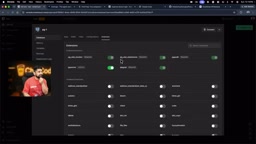
More aggressively, he tried deploying three independent Postgres instances (PG1, PG2, PG3) at the same time, and all of them came online successfully. Each instance supports independent configuration: viewing the connection string, scaling to zero, installing extensions, creating backups. Combined with the $10/month free credit, this means students and independent developers can run multiple database environments at zero cost.
But the test also exposed the platform's limits. He tried deploying the "just Postgres" project (a database orchestration tool that needs to run Docker inside Docker), and it failed—Instacloud's compute environment doesn't support nested Docker. This reminds us that the platform is powerful but not omnipotent, and understanding its architectural constraints matters.
The Technical Meaning of Environment Branching
The core idea of environment branching is borrowed from Git: just as code can create branches to isolate experimental changes, infrastructure can create branches to isolate environments. When you create a staging branch from production, the platform copies a complete infrastructure snapshot—including service definitions, environment variables, database schema, and configuration—but uses independent network and storage resources.
This is fundamentally different from "manually setting up a staging environment." With the traditional approach, staging often drifts in configuration from production, leading to the classic "works on my machine" problem. Environment branching guarantees structural consistency between the two, isolating only sensitive parts like data and secrets.
For Agent operations, environment branching matters even more: the Agent can first validate a deployment plan on a branch, and once confirmed, merge it to production—all without human intervention, greatly reducing the risk of automated deployment.
What This Means
Looking back at the whole test, Instacloud's core value isn't "replacing DevOps" but "DevOps with Agents." It hands infrastructure definition over to AI: developers describe requirements in natural language, and the Agent handles understanding the architecture, deploying services, and resolving errors.
For students wanting to build a LeetCode-style judging platform, developers doing capstone projects, or teams needing to quickly validate a backend architecture, this model has practical significance: a complex infrastructure stack of Redis queue + API + sandbox Worker can go from repo to live with a single conversation.
Of course, lindorm's debugging capabilities, the nested-Docker limitation, and how auto-scaling performs in more complex scenarios (the video also notes that observability's specific capabilities deserve a deeper dive) all still need more real-world testing. But directionally, Agents taking over cloud infrastructure is moving from concept to usable product.
Why Nested Docker Is Restricted
The failure of the "just Postgres" project in the test traces back to Instacloud's compute environment not supporting nested Docker (Docker-in-Docker, or DinD). To understand this limitation, you need to know that Docker relies on Linux kernel namespaces and control groups (cgroups) for isolation. When you run a Docker daemon inside a container, it needs access to the host kernel's features, which typically requires privileged mode or additional kernel parameter configuration.
For security and multi-tenant isolation reasons, most cloud platforms ban privileged operations inside containers by default. As a result, any tool that depends on DinD—including Testcontainers, some CI/CD systems, and orchestration tools that dynamically create containers—can't run directly.
This isn't just an Instacloud limitation; it's a common constraint across the vast majority of managed container platforms. Understanding this helps developers judge in advance which projects are suitable for Agent deployment and which need a different architecture (such as using the platform's managed database instead of an in-container database).
Related articles

Uber Deploys ChatGPT Work Company-Wide: AI in the Workplace Enters the Scaled Implementation Phase
Uber deploys ChatGPT Work to 30,000+ employees, extending it from engineering to all roles. We analyze its expert-engineer pairing, end-to-end automation, and questions of AI control and power concentration—insights for scaling AI in the workplace.

Shift at Midnight Hands-On: When "ID Verification" Becomes Alien Hunting
Shift at Midnight blends ID verification with horror survival in a four-player co-op game. We break down its inspection mechanics and chaotic humor.

Zelensky Recounts the Outbreak of War: I Need Ammunition, Not a Ride
Zelensky recalls the first day of war in a YouTube interview: farewell to family, rejecting Biden's evacuation offer with "I need ammunition, not a ride," and how Bucha shaped his stance on compromise and peace talks.