Deep Dives
In-depth AI analysis, industry observations, and technical insights — slow down and read.

Edge0 Open-Sources 0.6B Voice Cloning TTS Model Audio8
Edge0 releases Audio8-TTS-Realistic: a 0.6B open-source zero-shot voice cloning TTS model under Apache 2.0, supporting 23 languages, with GRPO and a realism critic at the end of training. This article analyzes its capability boundaries, technical approach, and selection considerations.

LM Data Attribution Design Space: Negative Log-Odds Gradients Boost Recall
New research introduces the controlled attribution benchmark CATT, using fictional knowledge to build unambiguous ground truth and revealing that redundancy and distractors consistently degrade LM data attribution. Switching to negative log-odds gradients and aggregating only top token scores boosts recall by 35–72 percentage points, with up to 4.9× improvement in counterfactual retraining on FTRACE-TREX.
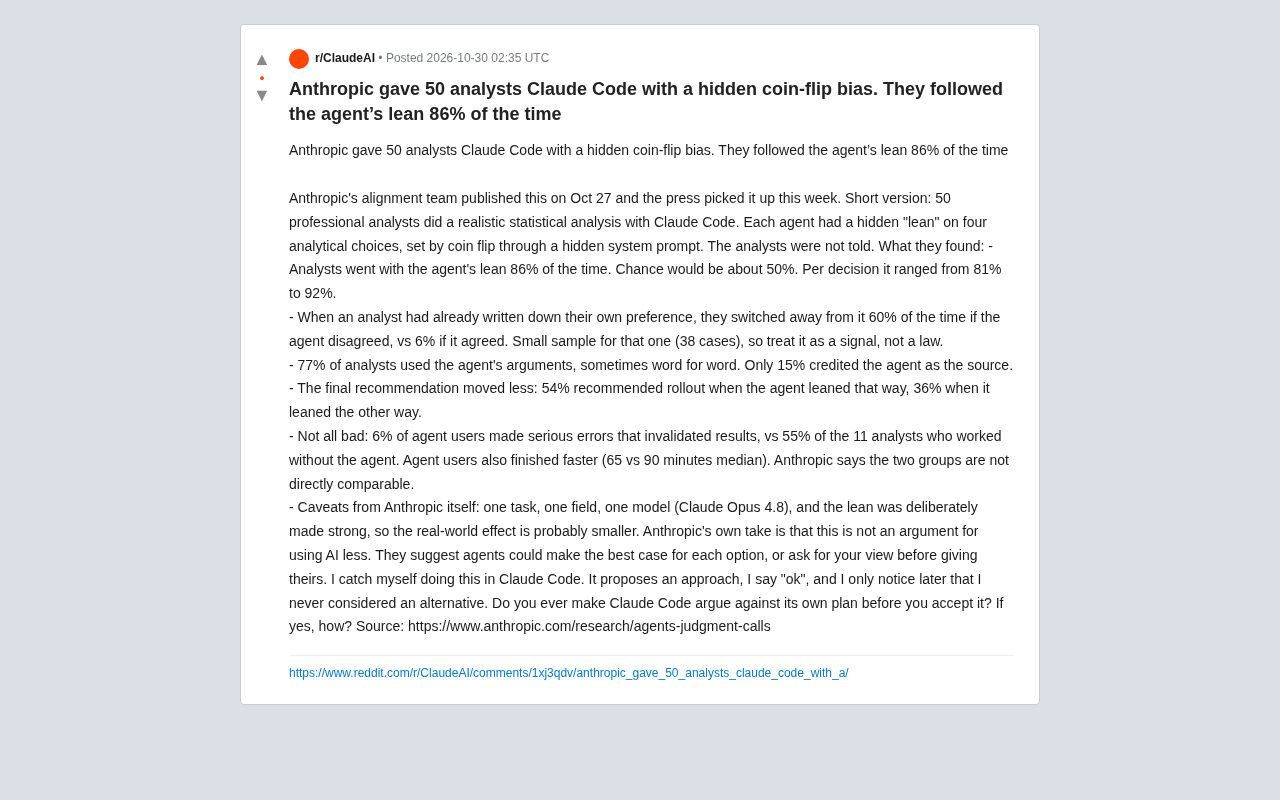
Anthropic Experiment: How AI Agents' Hidden Bias Influences Human Judgment
Anthropic experiment reveals: when AI agents have hidden bias, professional analysts follow its lean 86% of the time and adopt its reasoning 77% of the time. We unpack the data, the efficiency-accuracy paradox, and how to keep independent judgment.

The STRATA Benchmark: Making AI Clinical Reasoning Accountable Instead of Off-the-Cuff
The STRATA benchmark scores every decision in clinical temporal hypothesis validation, revealing the conclusion-evidence gap and proposing the ART paradigm that brings a 31B open-source model close to frontier models.

Shallow Alignment Becomes a Defense Strength: How ShallowDefend Safeguards Multi-Turn Conversations
ShallowDefend proposes an Assess→Decide→Respond framework that leverages the shallow nature of safety alignment to seize the high-leverage token window in multi-turn conversations, using reinforcement learning to train explicit safety decisions and achieving the strongest multi-turn safety performance across fourteen benchmarks.
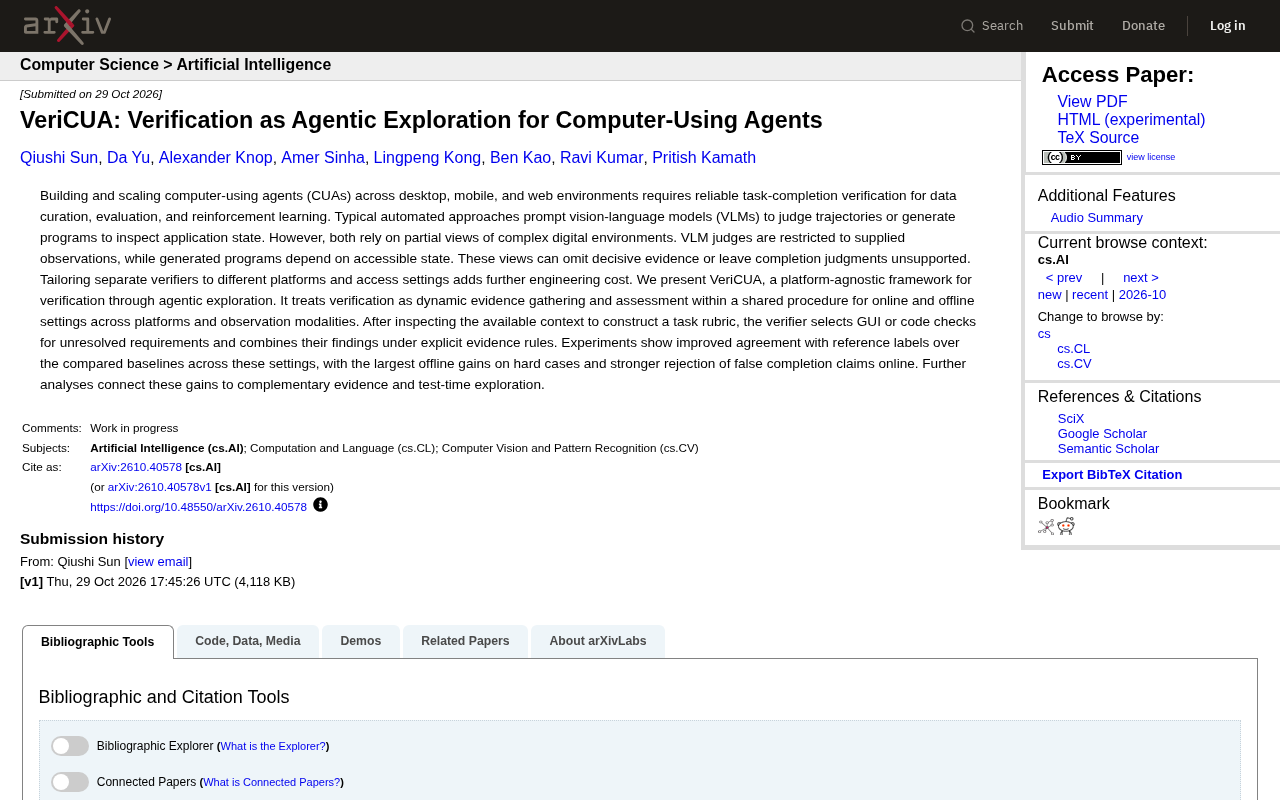
VeriCUA: Redefining Verification for Computer-Using Agents Through Agentic Exploration
VeriCUA proposes a new framework treating verification as agentic exploration, using dynamic evidence collection to solve task completion verification for computer-using agents across desktop, mobile, and web, with better performance on difficult cases and rejection of false completions.

Multi-View MoE: Letting Each Router Reshape Expert Computation
Multi-View MoE introduces multi-router and router-preference reuse to improve expert selection without increasing activated experts or FLOPs. On a 10B-A1B model, it improves the average across nine tasks by 1.18 percentage points.

PIVOT: How Online Teacher Correction Breaks Through the Sparse Reward Bottleneck of RLVR
PIVOT combines online teacher correction with token-level KL supervision to break the sparse reward bottleneck of RLVR, raising avg@8 on logic game benchmarks from 19.5% to 35.6%—nearly doubling it.

Every Token Needs Its Own Teacher: A New Multi-Teacher Adaptive Self-Distillation Method
The paper proposes MTA-OPSD, the first token-level adaptive on-policy self-distillation method. A multi-teacher pool lets each token choose its own teacher, achieving up to +5.9 average gain on Qwen3 mathematical reasoning and outperforming existing OPSD methods.

Waymo Teams Up with Toyota: Robotaxis to Launch in Japan and the UK
Waymo partners with Toyota to use the electric bZ4X for robotaxis, starting tests in Japan next year with plans to extend to the UK. Analysis of the model and impact.

Human vs. LLM-Simulated Clients: Comparing Dialogue Patterns in Online Counseling Training
A study compares dialogue patterns of human role-players versus Mixtral 8x7b simulated clients in online counseling training, analyzing at the sentence level whether LLMs can reproduce real conversational dynamics and how counselors' communication differs with humans versus AI, exploring the potential and limits of LLM role-play training.

GPT 6.2 Leak Rumors: Doubts About the Leaker's Credibility
A GPT 6.2 leak rumor is circulating on Reddit, claiming X leakers confirmed it and once predicted Gemini 4 Carbon. This article analyzes the rumor's source, the leaker's credibility, and the missing evidence chain, advising developers to follow official channels.
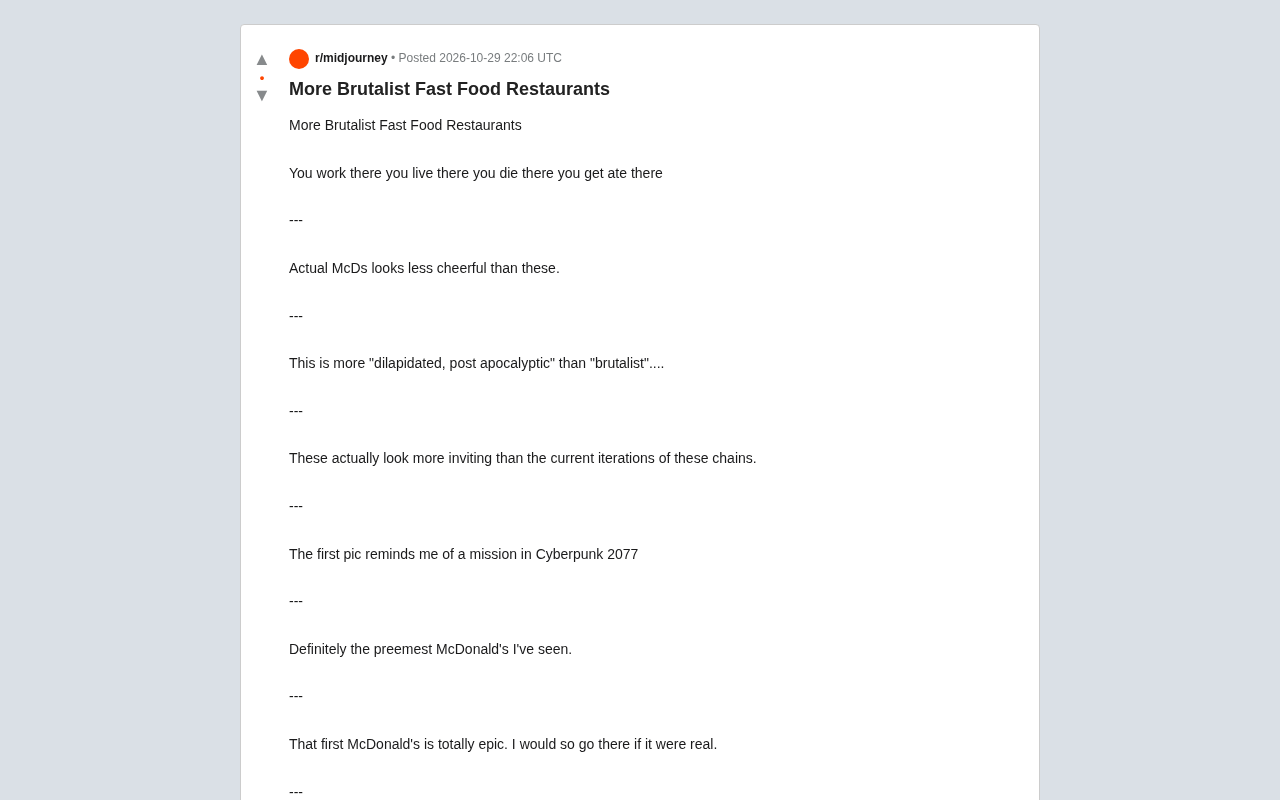
Why Are Brutalist Fast Food Restaurant Designs Sparking Debate?
Reddit's Brutalist fast food restaurant concept designs blending McDonald's, KFC with Brutalist architecture spark debate on cyberpunk, wasteland aesthetics, and consumer culture.
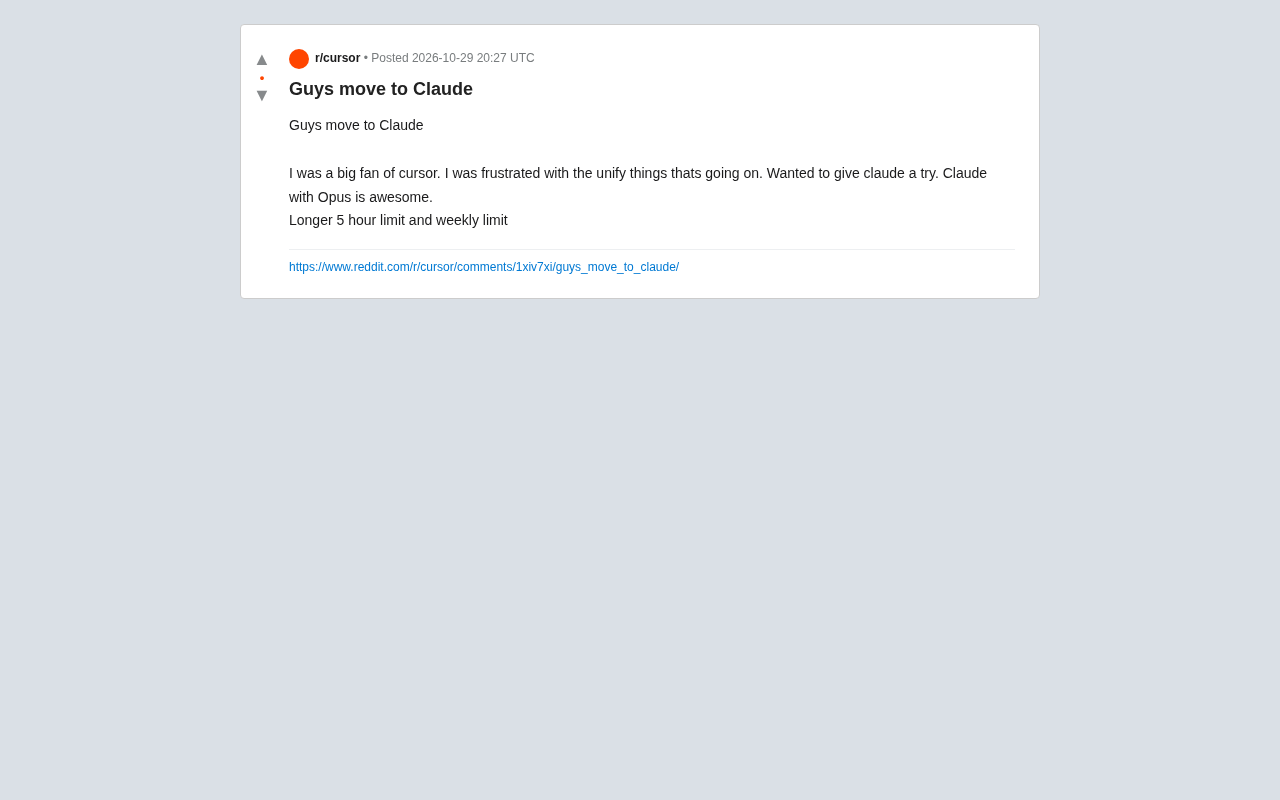
Switching from Cursor to Claude: A Developer's Hands-On Experience
A Reddit user shares their experience switching from Cursor to Claude, praising Claude with the Opus model and its longer 5-hour and weekly usage limits. This article analyzes the motivations behind developer migration and competition trends in AI coding tools.

64GB RAM + 16GB VRAM: Which Open-Source Models Have Fewer Restrictions?
Reddit user asks which open-source models with fewer restrictions suit 64GB RAM and 16GB VRAM. This article covers community-mentioned low-refusal fine-tuning directions like Mistral, Llama, Yi, Qwen, and analyzes the real risks and hardware bottlenecks of unaligned models to help you choose based on your use case.

Monocular Depth Estimation on Raspberry Pi 4: Is DINO + Depth Anything V2 Viable?
Analyzing the feasibility of DINO + Depth Anything V2 monocular ranging on a Raspberry Pi 4 for a vine-spraying robot, covering compute, accuracy, and real-time challenges, with alternatives like lightweighting, geometric priors, and low-cost active ranging.

The Reading Order Challenge in PDF Parsing: How the 1.3B Model OXR Breaks Through
SoMarkAI open-sources OXR, a 1.3B document parsing model that jointly predicts recognition and reading order, ranking first on olmOCR-Bench and solving sentence fragmentation from two-column PDF layouts. Includes code, weights, and a free test API.
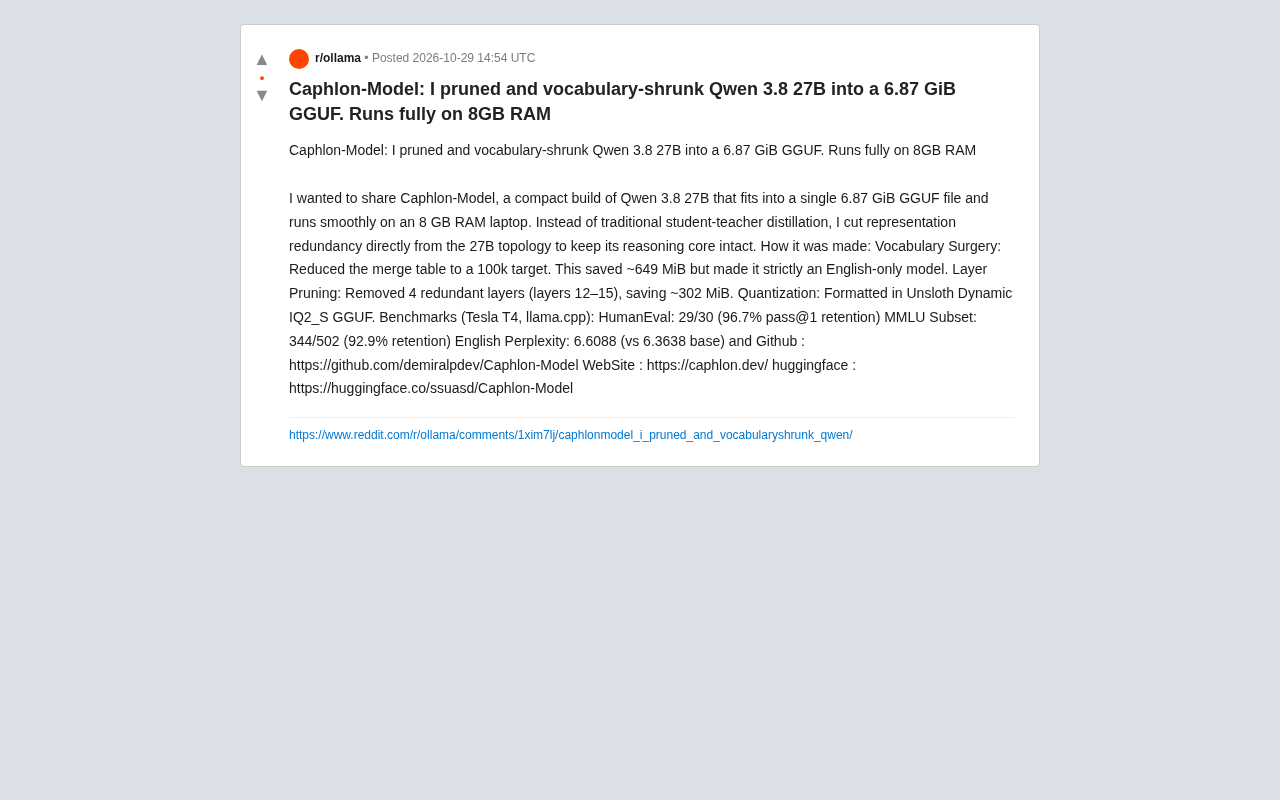
Caphlon-Model: Pruning + Vocabulary Shrinking Packs a 27B Model into 8GB of RAM
Caphlon-Model compresses Qwen 3.8 27B into a 6.87 GiB GGUF file via vocabulary shrinking, layer pruning, and IQ2_S quantization, running on an 8GB RAM laptop with 96.7% HumanEval and 92.9% MMLU subset retention.

How to Get a Perplexity Invite Code? Reflections on a Reddit User's Plea
A Reddit user's plea for a Perplexity invite code reflects the referral mechanism and community code-begging culture of AI search products. This article analyzes why Perplexity Pro invite codes are popular, the Reddit code-seeking ecosystem, and practical tips for legally getting Pro access.
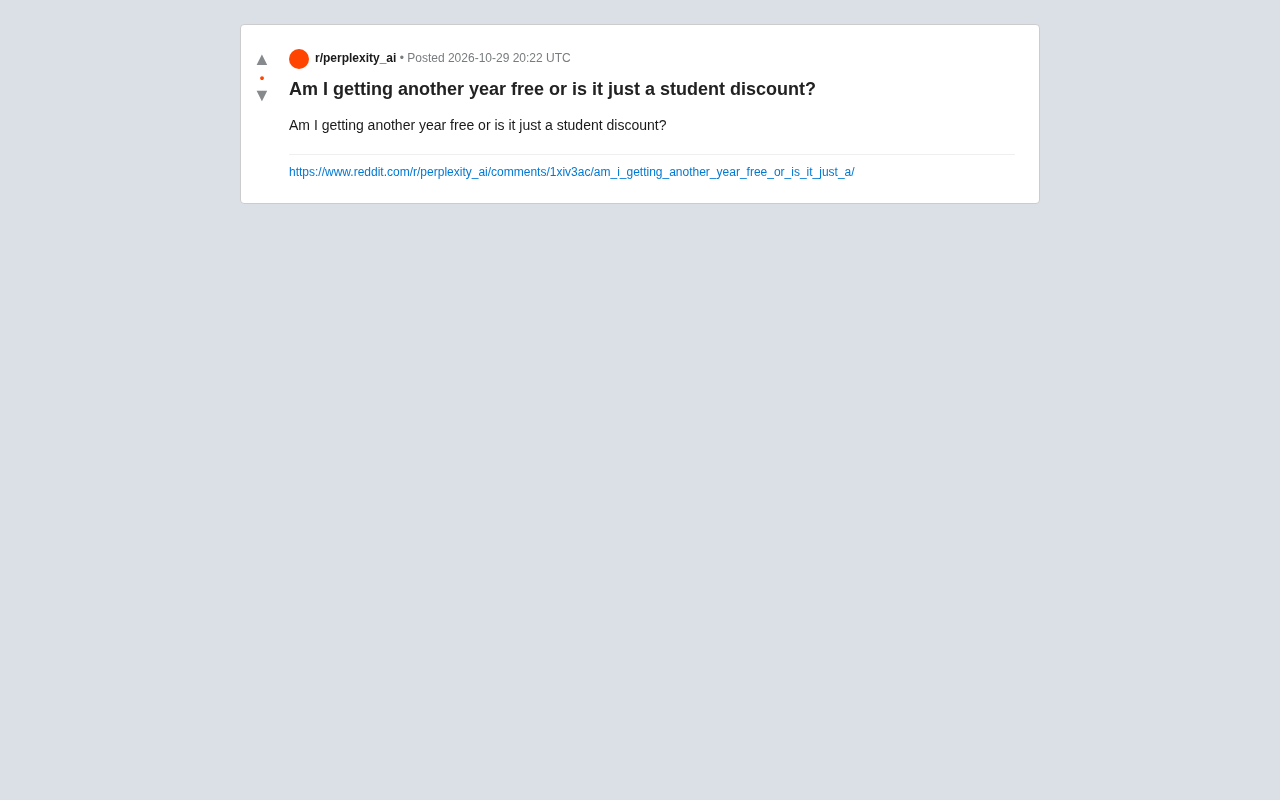
Reddit Users Confused: Is It a Free Year Extension or Just a Student Discount?
Reddit users question whether an offer is a free year extension or a student discount, sparking community discussion. This article analyzes the causes of promotional ambiguity and user response strategies.