#35B-A3B
54 related articles

·3 min
Qwen Developer Hints to Skip 35B-A3B: Three Community Theories Explained
A Qwen developer hints users shouldn't wait for the 35B-A3B model. The community speculates about larger MoE models or product line changes. We break down what it means.
Read more →

·3 min
Codex vs Claude Code Real-World Comparison: Efficiency and Quality Differences When Building Apps from the Same Prompt
Real-world test comparing Codex and Claude Code building a Typeform alternative from the same prompt, revealing major differences in quality, efficiency, and cost.
Read more →

·3 min
LangChain4j No AI Agent in Practice: Agent Architecture Without Accessing LLMs
Deep dive into LangChain4j No AI Agent implementation: inline tool methods as plain Java methods to avoid costly, slow high-frequency LLM calls in Agent systems.
Read more →

·4 min
Context Engineering in Practice: Why Keeping Everything Actually Costs Less
Towards AI tested that keeping full context with prompt caching beats summarization in cost, speed, and recall. Learn why compression can be a trap and how hybrid search solves scaling.
Read more →

·3 min
Where's the Value of ML Engineers in the Agent Era? The Shift from Executor to Problem Definer
As AI Agents independently handle training optimization, ML engineers must shift from code executors to problem definers—building tamper-proof evaluation systems and governing Agent behavior.
Read more →

·3 min
Advanced AI Programming: The Complete Path from Vibe Coding to Engineering-Grade Development
A deep dive into advancing AI programming from Vibe Coding to engineering-grade development, covering Brainstorming, SubAgent collaboration, and custom plugins to build deployable real-world projects.
Read more →
·3 min
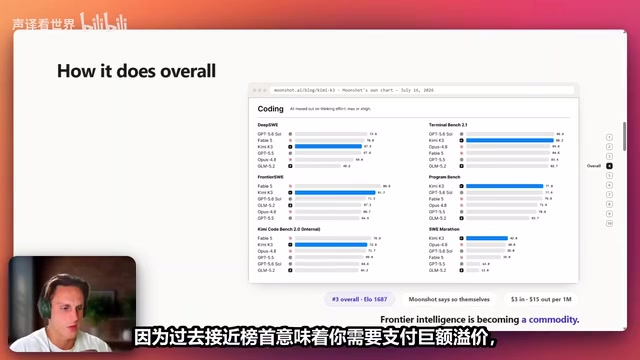
Kimi K3 Hands-On Tutorial: Claude Code Sub-Agent Configuration & GPT-5.6 Comparison Test
Complete guide to configuring Kimi K3 as a Claude Code sub-agent, including API setup, YFlow workflow building, and head-to-head comparison with GPT-5.6 and Claude Fable 5.
Read more →

·2 min
D-Flash: How Diffusion Drafting Delivers 3.5x Faster LLM Inference
D-Flash solves the autoregressive drafter latency bottleneck in speculative decoding via fast diffusion parallel drafting and target feature KV injection. 16 tokens in just 6ms, up to 3.5x speedup on HumanEval, beating EAGLE3 and MTP.
Read more →

·3 min
D-Flash: The Secret Behind 3.5x LLM Inference Speedup with Diffusion Drafting
D-Flash uses fast diffusion parallel drafting and target feature KV injection to solve the autoregressive Drafter latency bottleneck in speculative decoding. 16 tokens in just 6ms, up to 3.5x speedup on HumanEval, surpassing EAGLE3 and MTP.
Read more →

·5 min
DeepSeek's Liang Wenfeng Investor Meeting: Restrained Pricing and the AGI Roadmap Explained
An analysis of DeepSeek's Liang Wenfeng 4-hour investor meeting: restrained pricing with 10-month payback, why open source doesn't hurt revenue, the Agent–continual learning–self-iteration AGI roadmap, plus domestic chips, talent, and your moat.
Read more →

·5 min
The DeepSeek Investor Q&A with Liang Wenfeng: Decoding Restrained Pricing and the AGI Roadmap
Decoding DeepSeek's Liang Wenfeng 4-hour investor Q&A: 10-month-payback restrained pricing, why open source doesn't hurt revenue, the Agent-continual learning-self-iteration AGI roadmap, plus domestic chips, talent, and your moat.
Read more →

·6 min
30-Minute Hands-On: Building a Working AI Agent from Scratch
Skip the dry theory and get hands-on! This article demonstrates step by step how to build a working AI Agent from scratch in 30 minutes using AI coding tools—covering the agent skeleton, tool system, memory mechanism, Flask web UI, and DeepSeek API integration.
Read more →
·3 min
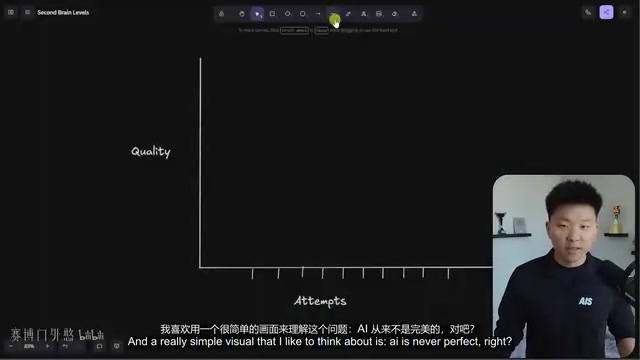
Agent Loop: A Design Guide for AI Autonomous Reasoning-Action-Verification Workflows
A deep dive into AI Agent Loops: from single loops to multi-agent collaboration. Master goal definition, validation mechanisms, and stop conditions to avoid blindly building agent fleets.
Read more →
·3 min
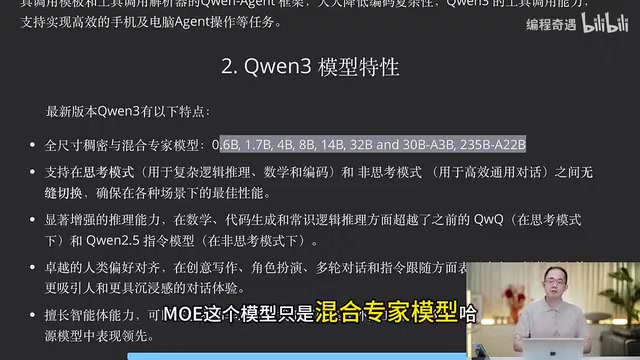
Qwen3 Deep Dive: A Complete Look at the Open-Source Hybrid Reasoning Model
Qwen3 deep dive: 6 Dense & MoE models from 0.6B to 235B, world's first open-source hybrid reasoning model, matching Gemini 2.5 Pro. Complete guide for developers and enterprises.
Read more →

·4 min
GPT-5.6 & OpenAI Super App Deep Dive: Loop Engineering as the New Paradigm Replacing Prompt Engineering
Deep dive into GPT-5.6 (Sol/Terra/Luna) and OpenAI's Super App: Loop Engineering, Parallel Agents, and Computer Use — unpacking the shift from prompt to loop engineering with real test cases and a startup framework.
Read more →

·4 min
AMD Ryzen AI Halo Real-World Test: Can a Non-Programmer Use Local AI to Write Code?
A non-programmer tests AMD Ryzen AI Halo by deploying local AI models to tackle a real dev task. After testing Ollama and Qwen3, the verdict: AI amplifies developers, it doesn't replace them.
Read more →

·3 min
GPT-5.6 Practical Guide: 7 Tips to Save Tokens and Boost Efficiency
7 practical GPT-5.6 optimization tips for Codex: control context windows, choose thinking modes, limit sub-agents, and trim agents.md to save tokens and cut costs.
Read more →

·2 min
Apple in Talks to Acquire PrismML: Can Extreme Quantization Really Run AI on an iPhone?
Apple is reportedly in talks to acquire AI startup PrismML, whose 1-bit extreme quantization could run large models on iPhone. Community tests reveal tool-calling failures and high hallucination rates.
Read more →

·3 min
Qwen3.5 Uncensored Version Local Deployment: Run a 35B Model on Just 6GB VRAM
Run Qwen3 35B-A3B uncensored locally on just 6GB VRAM using llama.cpp and GGUF quantization. Full deployment guide, code generation tests, and Agent integration walkthrough.
Read more →

·3 min
Meta Muse Spark 1.1 Deep Dive: The Platform Ambitions Behind Meta's First Closed-Source Model
Meta Muse Spark 1.1 deep dive: native multimodal architecture, platform tools, social data retrieval, e-commerce vision — Meta's first closed-source API model benchmarks against Anthropic Sonnet.
Read more →