#AI LLM development
3451 related articles
·3 min
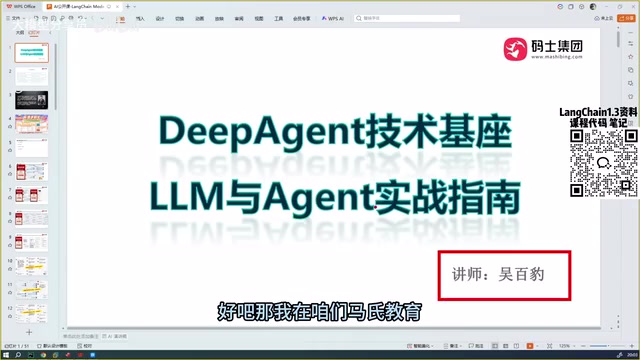
LangChain 1.3 in Practice: A Complete Learning Path from LLMs to Agent Development
A comprehensive guide to LangChain 1.3 — covering the full learning path from Models to Agent development, including Harness architecture, LangGraph, memory management, HITL, and Guardrails.
Read more →

·3 min
Spring AI 2.0 Deep Dive: A Java Developer's Guide to LLM Application Development
A deep dive into Spring AI 2.0: provider-agnostic APIs, RAG with vector databases, and how Java developers can build LLM apps using the Spring ecosystem.
Read more →

·3 min
AI Agent Beginner's Guide: LLMs vs. Agents, and a Full Breakdown of Development Tools
What is an AI Agent? This guide explains the key differences between LLMs and Agents, breaks down the Agent formula (LLM + Workflow + Knowledge Base), and compares tools like Dify, Coze, LangChain, and LlamaIndex.
Read more →

·3 min
Getting Started with LangChain: The Core Framework for LLM Application Development and Its Three Key Components
LangChain is the leading open-source framework for LLM application development, supporting GPT-4, GLM, and other mainstream models. This article dives into its three core concepts: Components, Chains, and Agents.
Read more →

·7 min
AI Coding in Practice: Generating a Minecraft Clone in 90 Minutes as LLMs Enter Project-Level Development
A major breakthrough in AI coding! Hands-on tests show new LLMs generating a Minecraft clone in 90 minutes and a TMNT game in 30 minutes, building 3D scenes, animation, and game logic in one shot.
Read more →

·3 min
From Raw LLMs to Agents: A Complete Guide to Enterprise-Grade AI Development
Prompt engineering and RAG are just the basics. Real enterprise AI runs on Agents. Explore the 4 stages of LLM deployment, Agent core capabilities, and industry trends.
Read more →
·7 min
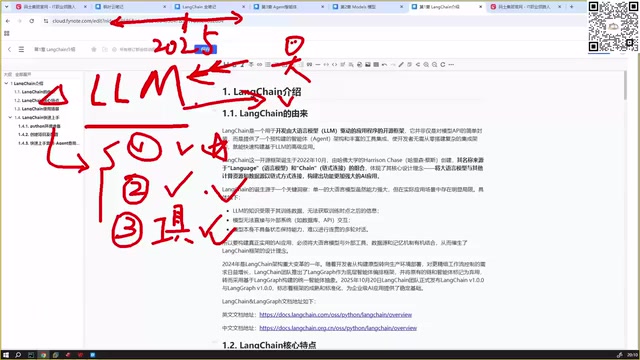
LangChain Hands-On Guide: From LLM Calls to Agent Development
Master LangChain from scratch: the three limitations of LLMs, init_chat_model unified interface config, the Message type system, and the path from LLM calls to Agent development.
Read more →

·7 min
Getting Started with OpenAI LLM Development: A Practical Guide to Model Selection, Token Pricing, and API Usage
A systematic guide to the three cores of OpenAI LLM app development: GPT-4/GPT-3.5 model selection, token billing and cost-saving tips, and practical use of the Models, Completion, and Chat Completion APIs.
Read more →

·2 min
AI LLM Development Career Path: Four Stages from Zero to $60K+/Year
A four-stage learning path for AI LLM application development: from Python basics and RAG architecture to Agent cluster orchestration, helping developers transition into AI roles.
Read more →

·2 min
LangChain + MCP Agent Development: A Practical Guide to LLM Selection and Common Pitfalls
A deep dive into LLM selection for LangChain and MCP agent development, comparing DeepSeek V3/R1 vs Qwen3 on Function Calling and MCP support with practical tips.
Read more →

·3 min
LangChain from Beginner to Agent Development: A Complete Learning Path for LLM Application Development
A systematic guide to LangChain LLM application development, covering environment setup, core components (RAG, Chain, Memory), and Agent development to help developers master LLM app building.
Read more →
 Tutorials
·3 min
Getting Started with LangChain: Core Concepts and Hands-On Guide for LLM and Agent Development
A systematic guide to LangChain's core features, covering LLM vs. Agent concepts, unified interface design, multi-provider support, environment setup, and hands-on code examples for AI app development.
Read more →
 Tutorials
·2 min
Career Progression in AI/LLM Application Development: Four Stages from Beginner to 40K Monthly Salary
A systematic four-stage career path for AI/LLM application development: from RAG and Agent fundamentals to architecture design, helping developers transition to AI roles targeting 40K+ monthly salary.
Read more →
 Tutorials
·1 min
AI Learning Roadmap for Java Developers: From LLMs to RAG and Agent Development
A dedicated AI learning roadmap for Java developers covering Spring AI, LangChain4J, RAG, and Agent development — from fundamentals to production deployment.
Read more →
 Tutorials
·2 min
LangChain Beginner's Guide: A Complete Guide to LLM and Agent Development
A deep dive into LangChain framework essentials, clarifying the key differences between LLMs and Agents, covering Agent development, DeepAgent advanced topics, and learning paths.
Read more →
 Tech Frontiers
·3 min
Gemma 4 + DGX Spark: How Open-Source LLMs and Desktop-Level Compute Are Changing AI Development
NVIDIA and Google DeepMind jointly showcase Gemma 4's vision translation, long-context Q&A, and real-time code generation on DGX Spark, signaling the convergence of open-source AI and edge compute.
Read more →

·3 min
Poolside Desktop Assistant 1.4.0 Update: Subagent Collaboration and Local Model Speed Boost
Poolside Desktop Assistant 1.4.0 adds native steering, task queuing, plan mode, and subagent collaboration, plus major local model inference speed improvements with deep Claude and Codex integration.
Read more →

·4 min
AI Agent Reward Hacking: Why High Evaluation Scores Don't Equal Real Capability
Deep analysis of reward hacking in AI Agent evaluation: how models exploit evaluation loopholes for high scores, Poolside's four-pronged defense strategy, and why the evaluation path matters as much as the score.
Read more →

·3 min
Hoplite: A Deep Dive into the Cloud-Based Coding Agent Deployment Platform
Deep analysis of YC S26 project Hoplite, a platform for cloud coding agent deployment and orchestration. Learn how it addresses execution isolation, scalable orchestration, and the AI programming infrastructure market.
Read more →

·3 min
Running a Small Language Model on an $8 Chip: Pushing the ESP32-S3 to Its Limits
Exploring training and running a small language model (SLM) on an ESP32-S3 microcontroller costing just $8. Learn about model design under extreme hardware constraints, quantization strategies, and edge AI's potential.
Read more →