#AI computer control
1603 related articles
·3 min
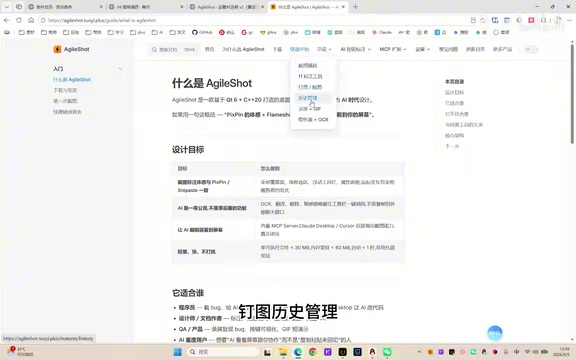
A Giant Shot: An AI Screenshot Tool with Built-in MCP That Lets AI Directly Control Your Computer
A Giant Shot is a desktop screenshot tool with a built-in MCP Server, offering 11 annotation tools, smart OCR, AI chat, and desktop automation for Cursor and Claude Desktop.
Read more →

·3 min
Codex Capabilities Explained: From Code Writing and Browser Automation to Controlling Your Computer and Phone
Deep dive into OpenAI Codex desktop's three core capabilities: AI coding & debugging, browser automation, and computer/iPhone control. Includes ChatGPT comparison and membership tips.
Read more →
 Product Reviews
·3 min
Picaboo: An Open-Source AI Desktop Automation Tool That Directly Controls Your Computer
Picaboo is an open-source AI desktop automation tool that controls your computer like a human through screenshot recognition and intelligent operations. Learn how it works, its use cases, and security considerations.
Read more →
 Industry Insights
·3 min
US vs. China AI Computer Control Divergence: Why Programming Tools Still Haven't Integrated GUI Agents
AI computer control success rates surpass humans, yet Cursor and Copilot still lack GUI Agent integration. Deep analysis of US product packaging vs. China's open-source ecosystem, plus three bottlenecks blocking the path to autonomous software engineers.
Read more →
 Product Reviews
·2 min
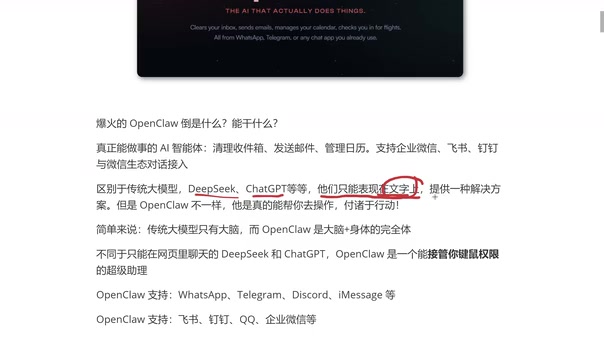
OpenClaw Hands-On Review: An AI Agent That Controls Your Computer — A New Benchmark for Office Automation
In-depth review of OpenClaw AI Agent: it takes over your keyboard and mouse to operate your computer directly. Covers environment setup, data scraping, file management, security, and cross-platform support.
Read more →
 Product Reviews
·2 min
MiniMax Agent Desktop Hands-On: A Chinese AI Assistant That Can Control Your Computer
Hands-on review of MiniMax Agent desktop's computer control capabilities, covering web data collection, file organization, and report generation scenarios.
Read more →
 Tutorials
·2 min
Codex Computer Use Tutorial: Let AI Automatically Control Your Computer to Complete Tasks
A detailed guide to OpenAI Codex's new Computer Use feature: setup, configuration, and practical demos including AI-controlled app launching and commanding Cursor to create projects, plus privacy tips.
Read more →
 Product Reviews
·3 min
DeepAgent In-Depth Review: An AI Agent That Controls Your Computer for $10/Month — Is It Worth It?
In-depth review of DeepAgent's Computer Use Agent: tested across property search, Excel dashboard building, and flight comparison. Is this $10/month AI agent platform worth it?
Read more →
 Product Reviews
·3 min
Hands-On with OpenAI Codex Computer Use: Full Walkthrough of AI Autonomously Controlling a Mac Desktop
In-depth hands-on review of OpenAI Codex Computer Use: AI autonomously controls Mac apps via virtual cursor, supports parallel multitasking, per-app security, and superhuman speed with Spark model.
Read more →
 Deep Dives
·4 min
Kortix Open-Sources Agent Computer Use: A Rust-Powered CLI Tool for AI Computer Control
Kortix AI open-sources Agent Computer Use, a high-performance Rust CLI tool enabling AI agents to control computers. Explore its architecture, advantages over Anthropic's Claude Computer Use, and future of open-source computer control tools.
Read more →
 Tech Frontiers
·3 min
OpenAI Codex Adds Computer Use: AI Agents Autonomously Control Mac in the Background
OpenAI adds Computer Use to Codex, enabling AI agents to autonomously click, type, and operate across Mac apps in the background without taking user control.
Read more →
 Deep Dives
·3 min
Open-Source Replication of OpenAI Operator: Building a Computer-Controlling AI Agent in 48 Hours
A developer open-source replicated OpenAI's $200/month Operator in 48 hours using Anthropic Computer Use, building a full-stack Dockerized computer-controlling AI Agent with deep analysis of architecture and industry trends.
Read more →
 Deep Dives
·3 min
Open Computer Use: An Open-Source Framework for AI Agents to Autonomously Control Computers
Open Computer Use is an open-source TypeScript AI agent framework enabling automated computer control via browser, terminal, and desktop. Learn about its features, architecture, and comparison with Claude Computer Use.
Read more →
 Deep Dives
·2 min
Computer Agent: An Open-Source Rust AI Desktop Agent That Automatically Controls Mouse, Keyboard, and Browser
Computer Agent is an open-source AI desktop agent built in Rust that controls terminals, browsers, mice, and keyboards via natural language. Explore its features, architecture, and security.
Read more →

·3 min
Deep Dive into vLLM Architecture: How PagedAttention Enables High-Throughput LLM Inference
Deep analysis of vLLM's high-throughput inference engine architecture, covering PagedAttention paging, KV Cache memory management, and continuous batching scheduling strategies.
Read more →

·2 min
AMD Acquires Taalas: What Does Etching AI Models Into Silicon Mean?
AMD acquires chip startup Taalas to etch AI models directly into silicon for extreme inference efficiency. We analyze the technology, tradeoffs, and AMD's differentiated AI strategy.
Read more →

·3 min
DDoS Attack on Norwegian Government IT Infrastructure: Incident Analysis and Defense Insights
Norway's government IT infrastructure hit by DDoS attack. This article analyzes the incident, DDoS attack types, why governments are targeted, and explores multi-layer defense strategies including traffic scrubbing, CDN deployment, and AI-based detection.
Read more →

·3 min
Must-Watch for Self-Learning AI: Top 10 YouTube Channels & A Complete Learning Path
A widely shared AI learning YouTube channel list from Reddit and X, covering 10+ quality channels from 3Blue1Brown to Andrej Karpathy, with a complete self-study learning path from math foundations to LLM engineering.
Read more →

·3 min
The eBay Harassment Scandal Explained: Executive-Directed Cyberstalking and a $56 Million Penalty
Deep analysis of the eBay harassment scandal: executives directed employees to stalk, send threatening packages, and surveil critics, resulting in $56 million in fines and settlements.
Read more →

·3 min
How to Choose a Research Direction for Your AI Master's? A Practical Decision Framework for Employment
How should employment-focused AI master's students choose research directions? Analyzing action recognition, EEG image generation, affective computing, and causal inference from a skill transferability perspective.
Read more →