#AI ensemble learning
102 related articles
·3 min
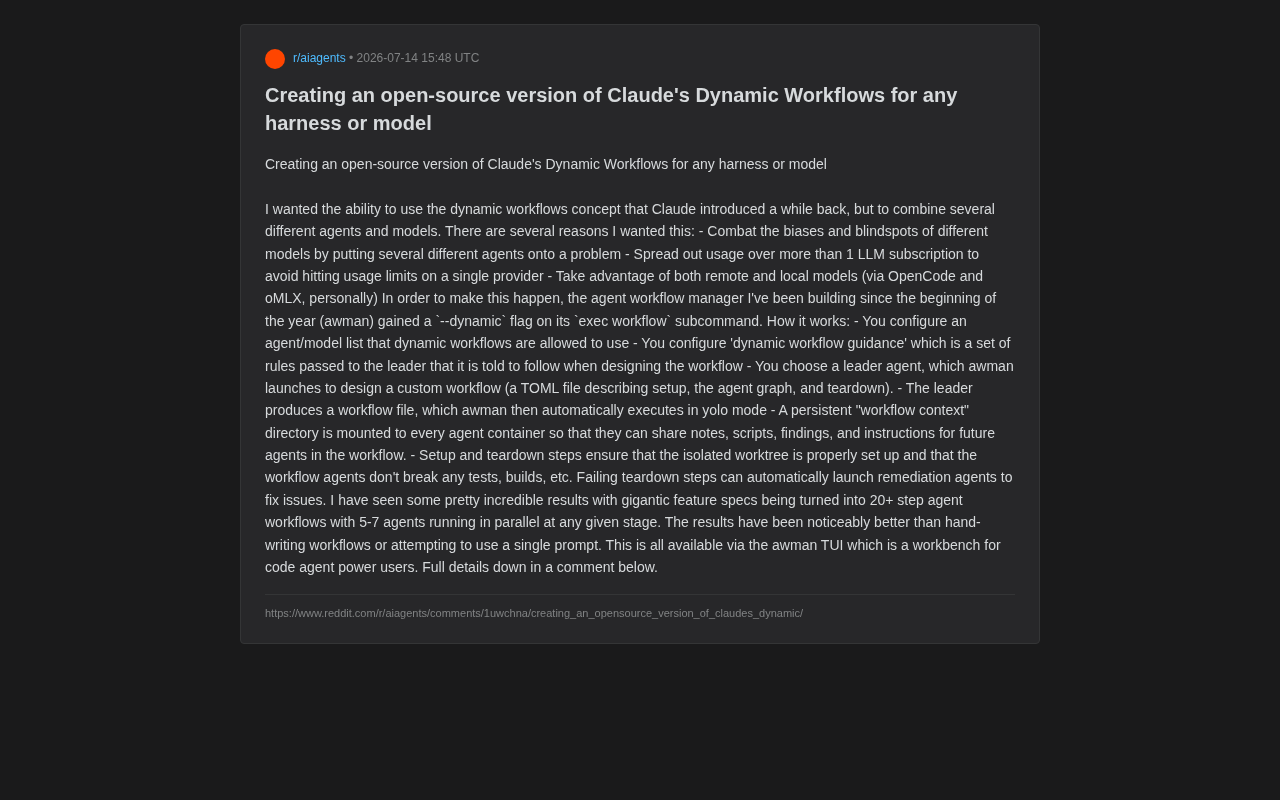
Open-Source Dynamic Workflows: How awman Enables Multi-Model Collaborative AI Programming
awman's --dynamic flag enables cross-framework dynamic workflows with multi-model collaboration. Explore its leader agent architecture, shared context design, and auto fault-tolerance mechanisms.
Read more →

·6 min
Multimodal and Embodied Intelligence: A Comprehensive Look at Progress, Pitfalls, and Opportunities
At the Microsoft Research India summit, top experts explore the real progress of multimodal AI and embodied intelligence: fusing classical robotics with large models, healthcare AI deployment challenges, perceptual bottlenecks in reasoning, and possibilities beyond scaling.
Read more →

·2 min
Vibe Coding in Practice: AI Agents Complete Full Research Experiments in Minutes
No coding required — just describe your needs in natural language. AI Agents handle data cleaning, model training, and visualization automatically. We tested Codex and Claude Code on a heart disease prediction task.
Read more →
Training an RL Agent That Can Do RL: A…
·2 min
Training an RL Agent That Can Do RL: A Deep Dive into Meta-Reinforcement Learning Self-Improvement
An independent developer ran a meta-RL experiment at near-zero cost — training an agent to autonomously perform RL training. Explore the technical depth, cost model, and industry implications.
Read more →

·2 min
Hermes MoA Multi-Model Collaboration: A Real-World Test of Quality Leaps on Complex Problems
Real-world test of Hermes 0.18 MoA (Mixture of Agents): multiple models collaborate, advisors answer independently, a decision-maker synthesizes. Covers setup, speed, cost trade-offs, and best practices.
Read more →
LLM Juries: How Multi-Model Voting Bui…
·2 min
LLM Juries: How Multi-Model Voting Builds Reliable Metadata
Single LLMs risk hallucinations and bias in metadata generation. This article breaks down the LLM Jury mechanism — using multi-model voting and consensus to boost annotation accuracy, with real engineering insights for food, medical, and e-commerce use cases.
Read more →
Hands-On ML Chapter 2 Practical Guide:…
·2 min
Hands-On ML Chapter 2 Practical Guide: Key Takeaways from an End-to-End Project
A deep dive into Chapter 2 of Hands-On ML — California housing price prediction. Covers feature engineering, preprocessing pipelines, cross-validation, and building a complete ML workflow.
Read more →
After Getting Started with AI/ML: Shou…
·3 min
After Getting Started with AI/ML: Should You Pursue an Internship or Continue Studying?
Already trained models and implemented neural nets from scratch — should you apply for internships or keep studying? A practical guide to entry-level AI roles and how to advance.
Read more →

·3 min
How to Systematically Learn Machine Learning After Mastering Math and Python
Already know math and Python? Learn the complete machine learning roadmap: from data science tools and classical algorithms to deep learning frameworks and specialization.
Read more →

·2 min
A Beginner's Guide to Grokking Machine Learning: Self-Study Paths and Resource Recommendations
Why Grokking Machine Learning is a top pick for ML beginners — covering the author, content, legal access options, and an effective self-study roadmap.
Read more →

·2 min
AI Predicts Football Matches: The Reasoning Process Is More Valuable Than the Result
AI football prediction's true value lies not in guessing scores, but in breaking down complex variables and revealing reasoning logic. Explore how multi-model aggregation delivers explainable sports analysis.
Read more →

·4 min
Do You Still Need to Hand-Code Machine Learning Algorithms in the AI Era? The Answer and the Method
With AI tools everywhere, is it still worth hand-coding SVM, decision trees, and other ML algorithms? This article explores the real value of hand-coding, the limits of AI tools, and smarter learning strategies for beginners in the AI era.
Read more →
·4 min
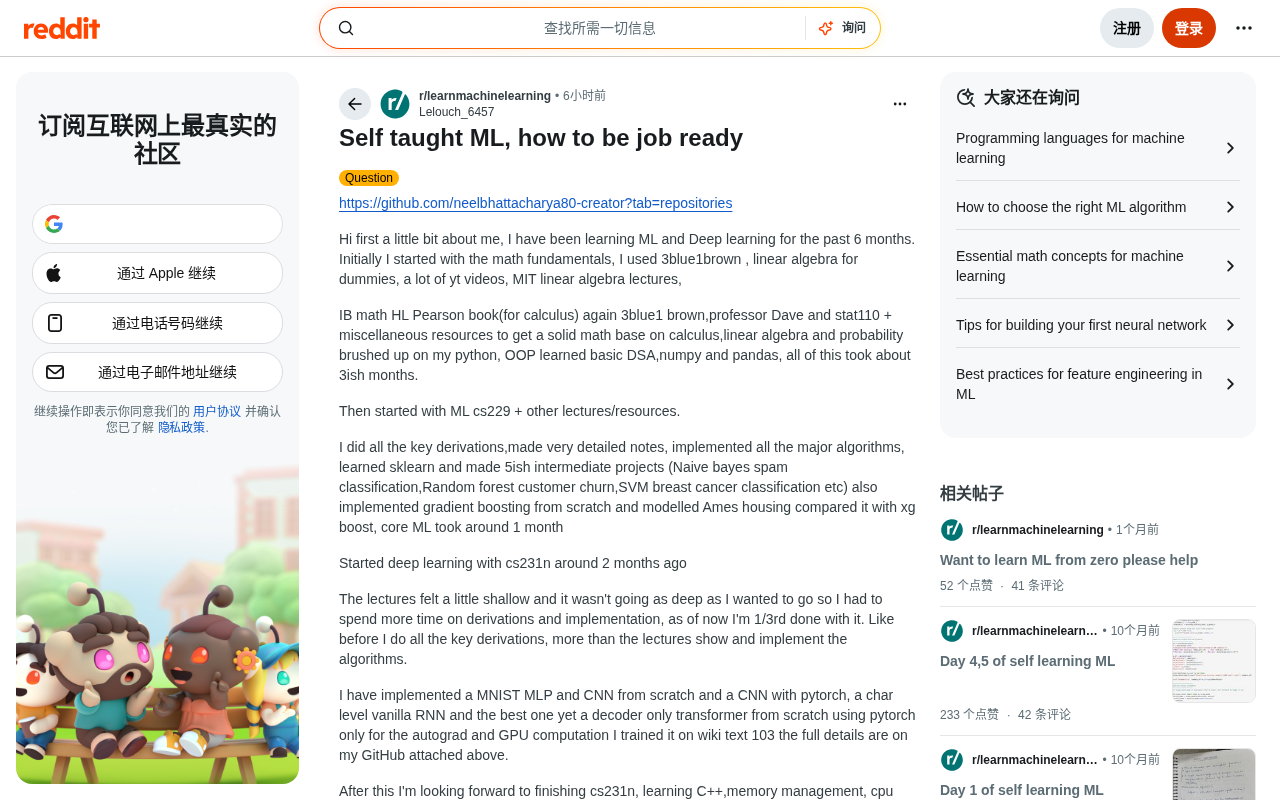
6 Months of Self-Taught Machine Learning: A Complete Roadmap from Zero to Job-Ready
A self-learner completed a full progression from math foundations and core ML to deep learning in 6 months—hand-writing a Transformer and implementing gradient boosting from scratch. This article breaks down the highlights and blind spots of this real roadmap.
Read more →

·6 min
Introducing Consistency Regularization to YOLOv8: Principles, Practice, and Performance Trade-offs
An in-depth analysis of introducing consistency regularization into YOLOv8, covering dual-branch augmentation, consistency loss construction, robustness gains, and training cost trade-offs for object detection optimization.
Read more →

·5 min
Can a Mixture of Experts Beat a Single Large Model? A Deep Dive into the Hermes 2.0 Architecture
A hands-on analysis of the Hermes 2.0 hybrid multi-agent system: can multi-model collaboration beat a single top-tier LLM? We break down how the Mixture of Experts (MoE) architecture works, AgentOS features, and model-agnostic design.
Read more →

·3 min
TabFM: A Zero-Shot Foundation Model for Tabular Data That Disrupts Traditional Modeling
TabFM is a zero-shot foundation model designed for tabular data, enabling direct prediction without retraining on new datasets. This article analyzes TabFM's positioning, its relationship to TabPFN, key strengths, and real-world challenges.
Read more →

·5 min
Advanced Machine Learning Reading List: How to Choose the Right Book Among These 4 Classics?
Torn between Géron, Chollet, and Raschka? This article breaks down 4 classic ML books for self-learners aiming at finetuning and small language models (SLM), helping you find the best advanced path.
Read more →

·6 min
An Efficient Learning Guide for Data Science: Study Partnerships and Hands-On ML in Practice
Struggling to learn data science alone? This article explores the value of study partnerships and pairs them with the classic Hands-On ML textbook to offer a phased learning plan from math foundations to deep learning.
Read more →
·4 min
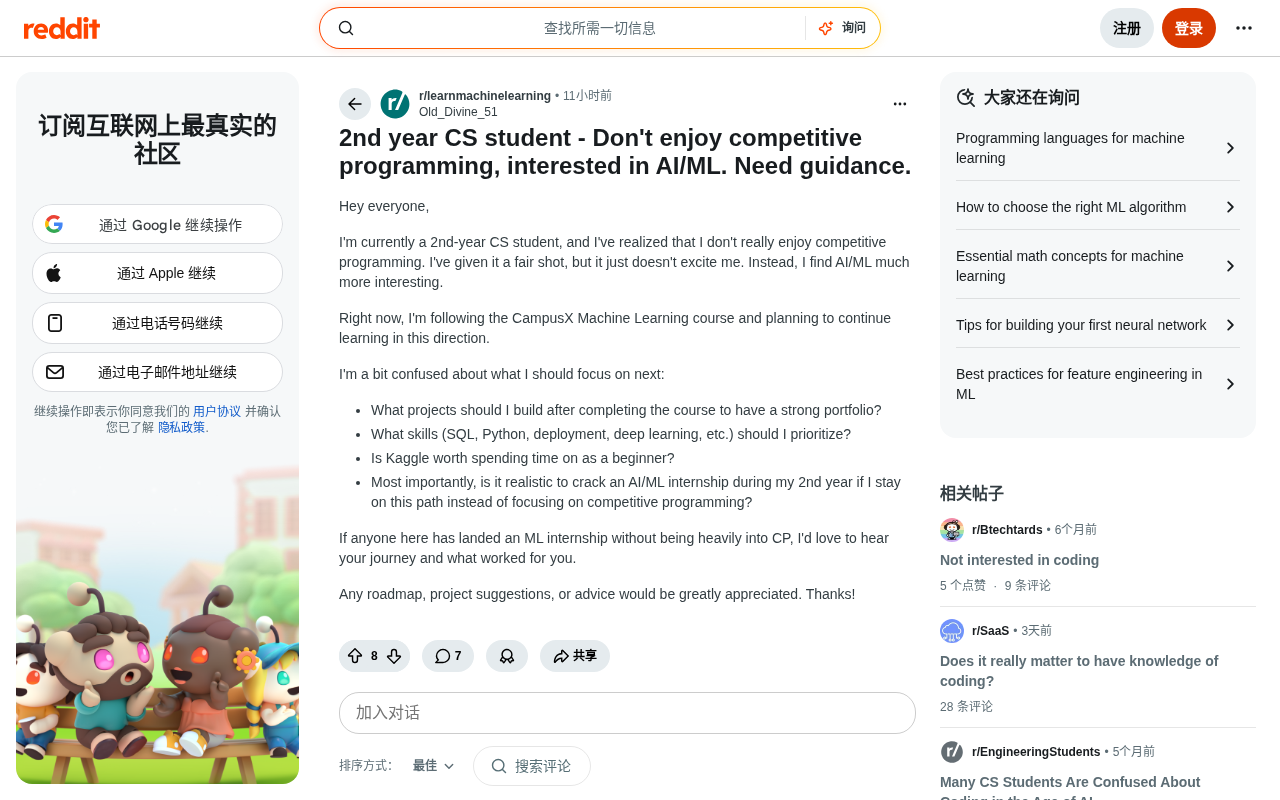
No Competitive Programming Required: How CS Students Can Pivot to AI/ML and Land Internships
How can CS students who dislike competitive programming systematically pivot to AI/ML? This guide covers skill priorities (Python/SQL/ML/deployment), portfolio strategy, Kaggle tips, and real paths to landing AI/ML internships.
Read more →

·3 min
WorldBench Open-Sourced: A Standardized Evaluation Toolkit for Robot World Models
WorldBench is an open-source Python toolkit for evaluating robot world models, covering prediction fidelity, long-horizon consistency, physical plausibility, and more—enabling standardized comparisons across teams and papers.
Read more →