#AI frontend
1710 related articles

·4 min
Frontend Engineer Driven to Homelab by AI: From React Specialist to Full-Stack Self-Rescue
A 7-year frontend engineer, fearing AI-driven job loss, builds a homelab to learn Docker, databases, and networking. A pragmatic roadmap for developers building breadth in the AI era.
Read more →

·3 min
The Software 3.0 Era: An AI Programming Evolution Guide for Frontend Engineers
Natural language programming is reshaping frontend development. This article explains AI code generation, Prompt formulas, pitfall avoidance, RAG, Agent orchestration, and skill maintenance.
Read more →

·3 min
Vibe Coding at Big Tech: Frontend Practices and an AI Programming Interview Guide
An in-depth look at Vibe Coding (AI-assisted programming) at major tech companies. With three real AI coding interview questions from firms like ByteDance, we analyze how frontend developers can master AI programming and rebuild core competitiveness.
Read more →

·1 min
A Practical Guide to Vibe Coding: How AI Is Reshaping the Frontend Engineer's Skill Model
An in-depth look at the Vibe Coding paradigm: how AI tools shift engineers from 'writing code' to 'directing AI,' exploring frontend skill tiers, polarization trends, and building irreplaceable value.
Read more →

·2 min
FastAPI Fundamentals: Frontend-Backend Separation and RESTful Design Explained
Learn the core concepts behind FastAPI: frontend-backend separation, API interface design, and RESTful specification. Master resource-oriented design before writing your first line of code.
Read more →

·3 min
Frontend Developers Transitioning to AI: A Complete Three-Phase Minimalist Roadmap
A structured 3-phase roadmap for frontend developers transitioning to AI: master Transformer fundamentals, build RAG & Agent skills, then advance to model fine-tuning.
Read more →

·3 min
Modern Web Guidance: Helping AI Stop Writing Outdated Frontend Code
Chrome's Modern Web Guidance offers 100+ expert-reviewed guides to help AI Agents adopt modern web practices, fixing training data lag and legacy pattern recommendations with semantic search and Baseline compatibility checks.
Read more →

·3 min
Frontend to AI Agent: Why TypeScript + Zod Have Become Non-Negotiable
Frontend engineers pivoting to AI Agent development: TypeScript and Zod are now must-have skills. Explore the full progression from API calls to building LangGraph-style frameworks, and nail the 3 core interview topics.
Read more →

·3 min
Vibe Coding: Enterprise-Level Practices and a Skill Progression Guide for AI-Driven Frontend Development
A deep dive into Vibe Coding: how AI-led development workflows are reshaping frontend engineers' value. From interview hot topics to a three-tier competency model for the AI era.
Read more →

·3 min
Four Paths for Frontend Engineers to Level Up in AI: From RAG to Vertical Agents
How can frontend engineers transition into AI development? This guide covers four agent development directions: RAG, workflow agents, vertical agents, and general-purpose agents — with framework picks like LangChain.js.
Read more →

·6 min
Vibe Coding in Practice at Big Tech: How Frontend Engineers Can Avoid Being Replaced in the AI Era
A big-tech interviewer reveals: junior/mid frontend dev is being replaced by AI. This article breaks down 3 core Vibe Coding interview questions to help you master key skills for the AI-assisted coding era.
Read more →
·7 min
LangChain.js + Nuxt.js: An AI Full-Stack Advancement Path for Frontend Engineers
Frontend hiring now treats AI capabilities as a core assessment, covering RAG knowledge bases, AI Agent development, and LangChain.js engineering. Learn how LangChain.js + Nuxt.js helps frontend developers build memory- and retrieval-capable AI full-stack apps.
Read more →

·6 min
From Frontend Engineer to AI Agent Developer: A Complete High-Paying Skill Tree Breakdown
Pure frontend roles are shrinking; AI Agent development is the high-salary divide. This guide breaks down the full skill tree for frontend engineers pivoting to AI: TypeScript, frameworks, AI productivity, and Agent core concepts (MCP, Tool Calling, Skill).
Read more →
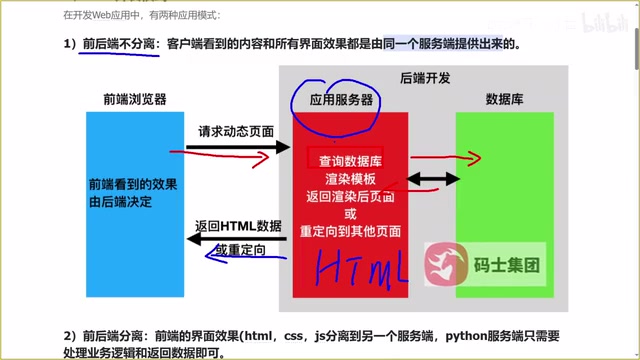
·2 min
FastAPI Fundamentals: Frontend-Backend Separation and RESTful API Design Explained
A comprehensive introduction to FastAPI's core concepts: frontend-backend separation, RESTful API design, JSON data exchange, HTTP methods, and idempotency explained clearly.
Read more →

·4 min
Frontend to Full-Stack AI: A Complete NestJS + LangChain Roadmap
Pure frontend roles are shrinking fast. Learn how mastering NestJS and LangChain AI agent development can unlock a 20–30% salary boost on your full-stack AI transition path.
Read more →

·4 min
LangGraph.js Practical Guide: A Frontend Engineer's Path to AI Agent Development
A practical LangGraph.js guide for frontend engineers covering LangGraph vs LangChain comparison, workflow vs general-purpose agent types, and layered Agent architecture design.
Read more →

·3 min
From Frontend Developer to AI Architect: A Complete Guide to Codex Programming Agent Design
A complete guide for frontend developers advancing to AI architects, covering the three-tier competency framework, Codex-like agent design, agents.md configuration, Skills systems, and core AI architect capabilities.
Read more →

·4 min
Building a WeChat Mini Program with AI + Cursor: A Full Workflow from Ideation to Frontend
A hands-on guide using DeepSeek, Claude, and GPT for product ideation, then Cursor to build a WeChat Mini Program. Four iterations from zero to frontend.
Read more →

·2 min
Frontend to AI Agent Architect: A Complete 3-Month Learning Roadmap
How can frontend engineers transition to AI Agent development? A systematic 3-month roadmap covering AI concepts, model selection, team productivity, and Agent architecture.
Read more →

·3 min
Four Core Advantages Frontend Developers Have When Transitioning to AI Agent Development
Frontend developers have key advantages for AI Agent development: TypeScript ecosystem fit, low-barrier full-stack bridging, and state management isomorphism. Learn the transition path here.
Read more →