#AI over-engineering
77 related articles

·2 min
Open Source Project "done": Satirizing AI Tool Metric Obsession With a Single Word
A Claude Code plugin called "done" went viral on Reddit by replying to every request with just "Done." — a sharp satirical take on AI tool hype and metric obsession.
Read more →

·3 min
AI Second Brain Tech Stack: Building a Proactive Intelligent Assistant for ADHD Users
How to build a true AI second brain for ADHD users: LangGraph, n8n, RAG, vector databases, and layered architecture for a proactive personal assistant.
Read more →

·3 min
40-Hour Stress Test: An In-Depth Evaluation of GPT-5.6's Coding Capabilities
A developer spent 40 hours exhausting Codex Pro's weekly quota to benchmark GPT-5.6 on real enterprise projects. Key findings: proactive root cause tracing, stronger global codebase understanding, and stable long-task execution.
Read more →
AI Agent in 100 Lines of Lisp: Minimal…
·2 min
AI Agent in 100 Lines of Lisp: Minimal Code Reveals the True Nature of Intelligent Agents
A fully functional AI Agent in just 100 lines of Lisp reveals the essence of the ReAct loop. Deep dive into Agent architecture, Lisp's unique strengths, and minimalist engineering philosophy.
Read more →

·2 min
A Guide to Selecting AI Agent Memory Strategies: A Deep Dive into the Decision-Tree Methodology
How do you choose the right memory strategy for an AI agent? This article uses a decision-tree methodology to analyze the use cases and trade-offs of short-term memory, vector retrieval, and structured summaries.
Read more →

·2 min
The Real Bottleneck for AI Adoption: Context Engineering, Not Model Capability
How you use AI determines whether it's just a gimmick. This article breaks down three real business scenarios showing how context engineering turns Claude from a hallucinating toy into an operations partner saving 5-10 hours a week.
Read more →

·3 min
Vibecoding in Practice: Task Concurrency Splitting Makes AI Inference 3x Faster
Learn how to split AI reasoning tasks by act and character, run 14 concurrent streams, and cut processing time from 100s to 30s — a reusable schedule-concurrency-aggregate methodology.
Read more →

·6 min
Cross-Model Review Between Claude and Codex: A Practical Workflow to Systematically Eliminate AI Code Bugs
Vibe Coding saves time but leaves piles of bugs? This article details the cross-model review workflow: Claude generates, Codex auto-reviews, with Stop Hook and Skill mechanisms building an AI code review system that intercepts problems automatically.
Read more →

·5 min
Postgres Is Enough More Often Than You Think: Stop Piling On Your Tech Stack
Many teams add message queues, search engines, and caches before they ever need them. This article maps out what Postgres can cover—task queues, full-text search, JSON storage—and when you actually need Redis, Kafka, or Elasticsearch.
Read more →

·7 min
ManagedAgents.sh: A Deep Dive into the Model-Agnostic Open-Source Managed Agent Platform
ManagedAgents.sh is a model-agnostic managed agent platform from OpenComputer, supporting Claude, Pi, and Codex runtimes with Slack and GitHub integration.
Read more →

·6 min
Rereading The Mythical Man-Month in the AI Era: Can the Strongest Copper Bullet Break Brooks's Law?
Does The Mythical Man-Month still hold 50 years on? A deep analysis of Brooks's Law, the second-system effect, and conceptual integrity in the AI coding era.
Read more →

·4 min
Hackathons Are Back: The Value and Lessons of Community-Driven AI Innovation
Behind every hackathon lies a deeper story about AI innovation ecosystems. This article examines why hackathons are surging in the generative AI era, their core value, and key lessons for AI developers and founders.
Read more →

·3 min
Python for Absolute Beginners: A Complete Breakdown of a 10-Hour Systematic Course
Breaking down a 10-hour Python course for absolute beginners — covering syntax, OOP, functional programming, web scraping, and automation, with mind maps and exercises.
Read more →

·7 min
Single-Responsibility Component Design: Learning Abstraction and Reuse from message-scroller
Through the practical case of the message-scroller component, this article delves into applying the Single Responsibility Principle in front-end component design—how to abstract scrolling logic independently and balance cost with long-term returns.
Read more →

·6 min
Coze from Scratch: A Complete Guide to Building Multi-Agent Collaboration
A detailed guide to Coze's core features: cross-platform interoperability, the Skills system, multi-agent collaboration, and workflow building. Compare Coze and Dify to build practical AI apps with zero coding.
Read more →
·3 min
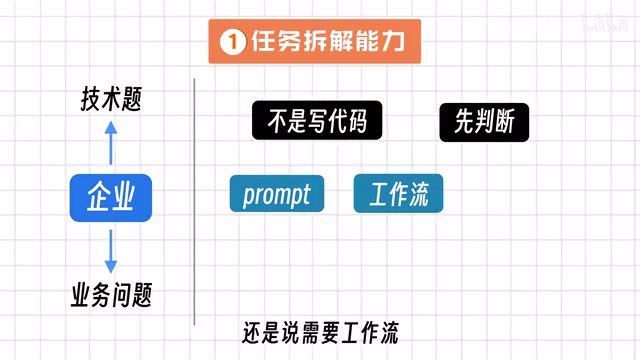
4 Core Competencies Every High-Value LLM Application Engineer Must Have
Why can't companies find qualified AI engineers? Discover the 4 core competencies every high-value LLM application engineer needs: task decomposition, tool calling, observability, and production readiness.
Read more →

·2 min
OpenCQRS 2.0: Write Tests in Business Domain Language and Let the Code Speak for Itself
OpenCQRS 2.0 introduces a testing DSL that aligns with business domain language. Explore how Given-When-Then maps to CQRS/Event Sourcing and enables living documentation.
Read more →
Smart Routing to Cut Claude Code Token…
·2 min
Smart Routing to Cut Claude Code Token Costs: How It Works and How to Apply It
Learn how smart routing reduces Claude Code token costs through tiered model scheduling, context compression, and request caching — a practical guide for developers and teams.
Read more →
Self-Maintaining Database Partitioning…
·3 min
Self-Maintaining Database Partitioning: Core Principles for Ditching Manual Babysitting
Tired of babysitting database partitions? Explore the 3 core pain points of manual partitioning and learn how to build a self-maintaining partition architecture with automation, smart key selection, and monitoring.
Read more →

·2 min
Troubleshooting Dependency Conflicts in AI Agent Projects: A Hands-On Environment Setup Guide
Learn how to resolve dependency conflicts when setting up AI Agent projects — covering pip list audits, handling selenium version issues, and using Chinese PyPI mirrors.
Read more →