#BERT vs GPT
72 related articles

·4 min
Heretic Uncensoring Technology Explained: Practical Applications on Jamba2 and Qwen3.5 Open-Source Models
Deep dive into Heretic uncensoring technology applied to Jamba2-Mini, Qwen3.5-9B, and 27B open-source models, exploring how refusal rates dropped from 97% to 4% and the safety debates involved.
Read more →

·2 min
Pinery Prose: Redefining the AI Book-Writing Experience with Diff Review
Pinery Prose is a Mac AI book-writing assistant using code diff review mechanics, letting authors accept or reject each AI edit. Supports Markdown, ePub/PDF export, and covers the full self-publishing workflow.
Read more →

·6 min
Harness Engineering: From Context Engineering to the Third Phase of AI Programming
Explore Harness Engineering: the next evolution beyond context engineering for AI programming. Learn how to build enterprise-grade Skill systems and deliver real projects with mid-tier models.
Read more →

·4 min
Cursor Start India Plan at ₹649/Month: Decoding the Regional Pricing Strategy for AI Coding Tools
Cursor launches its Start plan for India at ₹649/month (~$7.70), featuring Grok 4.5 and Composer Agent. A deep dive into the PPP pricing strategy and its market implications.
Read more →

·3 min
A Beginner's Guide to AI Agents: Two Learning Paths for Developers and Practitioners
How to learn AI Agents from scratch? This guide covers two clear paths: developers go from Python to LLMs to open-source framework source code; practitioners use Claude Code or similar tools to get results fast.
Read more →

·5 min
Multiway Turing Machines: A New Paradigm from Single Computation to Multiple Possibilities
An in-depth analysis of Wolfram's multiway Turing machines, exploring how computation expands from single paths to multiway graph structures, and deep connections to AI search algorithms and quantum computing.
Read more →

·3 min
The Rise of General AI: Breakthroughs in Mathematical Reasoning and Competitive Programming
Frontier AI is going general: costs are dropping, general models are beating specialized ones in math and competitive programming, and multi-agent workflows are maturing fast.
Read more →

·6 min
Making Money with AI Coding Gigs: A Sober Breakdown and Honest Assessment of the Four-Week Learning Path
Can beginners really earn over 10,000 yuan in their first month with AI coding gigs? This article breaks down the four-week AI coding learning path week by week and objectively assesses the real monetization barriers.
Read more →

·7 min
Getting Started with Claude Code: Five Dimensions That Show Why It Outperforms Ordinary AI
Claude Code isn't just a chat AI—it can directly read projects, modify code, and run commands. This article compares Claude Code with ordinary AI across five dimensions: interaction, context, execution, memory, and tool calling.
Read more →

·7 min
Getting Started with Claude Code: Five Dimensions to Understand Why It Outperforms Regular AI
Claude Code isn't just a chat AI—it can directly read projects, modify code, and run commands. This article compares Claude Code with regular AI across five dimensions to help you decide if it's worth trying.
Read more →

·5 min
From Vibe Coding to AI Engineering: A Complete Guide to Enterprise-Grade Development
In the AI programming era, Vibe Coding alone can only build toys. This article deeply analyzes the complete engineering path from Vibe Coding to SDD spec-driven development, covering Claude Code and Codex tool selection, the SuperPower plugin, and domestic LLM comparisons.
Read more →
Kronos Financial Foundation Model: Usi…
·7 min
Kronos Financial Foundation Model: Using AI to Read the Market Language of Candlesticks
Kronos is the first open-source foundation model treating candlestick data as the "language of financial markets," using an autoregressive Transformer and earning 32K GitHub Stars. A deep dive into its principles, applications, and limits.
Read more →

·6 min
Tongyi Qianwen Qwen-Image-3.0: The Leap of AI Image Generation from Toy to Productivity Tool
Tongyi Qianwen Qwen-Image-3.0 image generation model gets a comprehensive upgrade: supporting 4,500-token ultra-long instructions, pixel-level detail rendering, 12-language knowledge understanding, and ancient painting restoration. This article analyzes its three core capabilities.
Read more →

·4 min
Getting Started with AI Test Development: Core Principles and Underlying Logic of Large Language Models
New to AI test development? This article breaks down the differences between machine learning and traditional programming, the origins of AI hallucinations, and the core principles of NLP/NLU/NLG to help test engineers build a solid AI knowledge framework.
Read more →
Block Low-Rank Compression: A Guide to…
·2 min
Block Low-Rank Compression: A Guide to Accelerating Large Model Inference on Memory-Constrained GPUs
Learn how Block Low-Rank (BLR) decomposition compresses large model memory usage and accelerates GPU inference, including CUDA kernel optimization and combination with quantization and pruning.
Read more →

·2 min
19-Year-Old AI Learner: How to Balance Passion and Employability?
A 19-year-old AI learner torn between passion for LLMs and job market pressure. This article breaks down AI Engineering vs. research paths and offers actionable strategies.
Read more →
After Getting Started with AI/ML: Shou…
·3 min
After Getting Started with AI/ML: Should You Pursue an Internship or Continue Studying?
Already trained models and implemented neural nets from scratch — should you apply for internships or keep studying? A practical guide to entry-level AI roles and how to advance.
Read more →

·3 min
AI-Powered OSINT in Practice: A Learning Path and Tool Guide for CS Professionals
How can OSINT practitioners with a CS background automate intelligence with AI? This guide covers computer vision, VLMs, and Agent frameworks including YOLO, SAM, and Grounding DINO.
Read more →
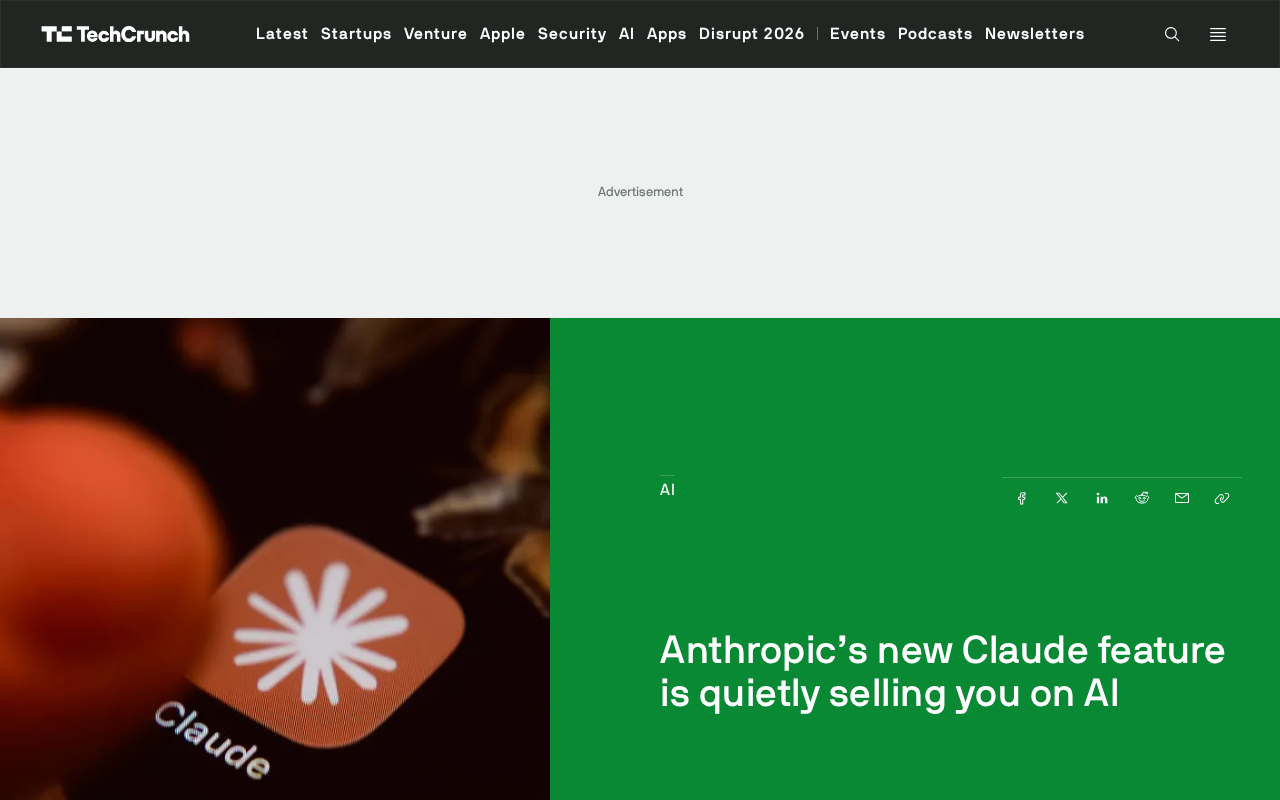
·4 min
Claude's New Reflect Feature: Visualizing the AI Dependency Loop Behind Your Data
Anthropic's Reflect feature visualizes Claude usage data — but it's also quietly building dependency and driving paid conversion. A deep dive into the design ethics and psychology behind it.
Read more →

·4 min
E2AM: An Open-Source Tool to Quantify AI Training Energy Consumption and Carbon Emissions in Two Lines of Code
E2AM is a Green AI open-source tool that monitors AI model training energy use, carbon emissions, and accuracy-per-joule metrics in just two lines of code. Supports PyTorch and Hugging Face, runs locally with no server needed.
Read more →