#Chinese GPU
647 related articles

·2 min
Speech To Markdown: Local AI Voice-to-Structured Markdown Note-Taking Tool
Speech To Markdown is a free macOS/iOS app that converts voice to structured Markdown notes using local LLMs. Fully offline, no API keys needed, with global hotkey dictation.
Read more →

·2 min
AI Circular Deals: The Boom and Bubble Risk Behind the Commoditization of Intelligence
Deep analysis of AI circular deals: how mutual investments and procurement among chip makers, cloud providers, and model companies inflate valuations, and the bubble risks amid intelligence commoditization.
Read more →

·2 min
AI Circular Deals: The Boom and Bubble Risk Behind the Commoditization of Intelligence
Deep analysis of AI circular deals: how mutual investments and procurement among chip makers, cloud providers, and model companies inflate valuations, and the bubble risks amid intelligence commoditization.
Read more →

·2 min
Qwen Scribe: A Deep Dive into the Local Speech Transcription Tool for Apple Silicon
Qwen Scribe is a local speech transcription tool optimized for Apple Silicon, running fully offline with Qwen models. Explore its technical features, privacy benefits, and comparison with Whisper.
Read more →
·2 min
Qwen Scribe: A Deep Dive into the Local Speech Transcription Tool for Apple Silicon
Qwen Scribe is a local speech transcription tool optimized for Apple Silicon, powered by Qwen models for fully offline use. Explore its technical features, privacy benefits, and comparison with Whisper.
Read more →

·3 min
Is LLM Inference Actually Profitable? Breaking Down the Cost Structure and Business Logic of Large Model Inference
A deep dive into LLM inference cost structure and profitability models—from GPU throughput, MoE architecture, and KV Cache to scale effects—revealing the business logic behind API price wars.
Read more →

·2 min
Is a $200/Month AI Subscription Worth It? A Guide to Cost Anxiety and Rational Spending
More users are questioning whether $200/month AI subscriptions are worth it. This article analyzes the rise of open-source alternatives and provides a framework for evaluating AI subscription value.
Read more →

·3 min
Moonshot AI Open-Sources FlashKDA: A Deep Dive into High-Performance CUDA Kernels for KDA Attention
Moonshot AI open-sources FlashKDA, providing high-performance CUDA kernels for Kimi Delta Attention. Learn about its technical principles, performance gains, and value for long-context training and inference acceleration.
Read more →

·3 min
Moonshot AI Open-Sources FlashKDA: A Deep Dive into High-Performance CUDA Kernels for KDA Attention
Moonshot AI open-sources FlashKDA, providing high-performance CUDA kernels for Kimi Delta Attention. Explore its technical principles, performance gains, and value for long-context training and inference.
Read more →

·3 min
GitHub Daily · July 29: Voice AI and On-Device Training Take Flight as Open-Source Alternatives Rise
GitHub Trending July 29: Microsoft's VibeVoice leads voice AI open-source wave, MoonshotAI's FlashKDA CUDA kernel surges 25%, and open-source alternatives rise.
Read more →

·2 min
Grok 4.6 and 4.7 Roadmap Leaked: Analyzing xAI's Rapid Iteration Strategy
Reddit leaks suggest Grok 4.6 arrives around August 7 and Grok 4.7 in early September. This article analyzes xAI's rapid iteration strategy and token efficiency improvements.
Read more →

·3 min
Antigravity CLI Weekly Usage Limits in Practice: A Practical Guide to Maximizing Quota for Ops Workflows
Analyzing Google Antigravity CLI weekly usage limits, Flash vs Pro quota weights, and practical tips like trimming context and batching requests to help sysadmin and homelab users maximize subscription quotas.
Read more →

·3 min
Antigravity CLI Weekly Limit Real-World Testing: A Practical Guide to Maximizing Quota for Ops Workflows
Deep analysis of Google Antigravity CLI weekly usage limits, Flash vs Pro quota weights, and practical tips for sysadmin/homelab users to maximize subscription quota.
Read more →

·3 min
Kimi Delta Attention Explained: The Evolution from Standard Attention to Linear Attention
Deep dive into Kimi Delta Attention (KDA): from standard Softmax attention's quadratic bottleneck through linear attention, Delta Rule, and gated decay mechanisms — the complete evolution explained.
Read more →

·2 min
Google Invests $40 Million in AI Tokens to Power the U.S. Department of Energy's Genesis Mission
Google commits $40M in AI tokens and Google Cloud credits to the DOE's Genesis Mission, deploying Gemini AI models to help lab researchers accelerate scientific discovery over the next decade.
Read more →

·1 min
AI Model Iteration Accelerates: Has GPT-5 Already Been Surpassed by Smaller Models? The Rise of Open Source
Exploring the accelerating AI model iteration trend: open-source models like Qwen3.6 27B rival GPT-5 in benchmarks. Analysis of the technical reasons, open-source rise, and future competition.
Read more →

·1 min
AI Model Iteration Accelerates: Has GPT-5 Already Been Surpassed by Smaller Models? The Rise of Open Source
Exploring the accelerating AI model iteration trend: open-source models like Qwen3.6 27B rival GPT-5 in benchmarks. Analysis of the technical reasons, open-source rise, and future implications.
Read more →
·3 min
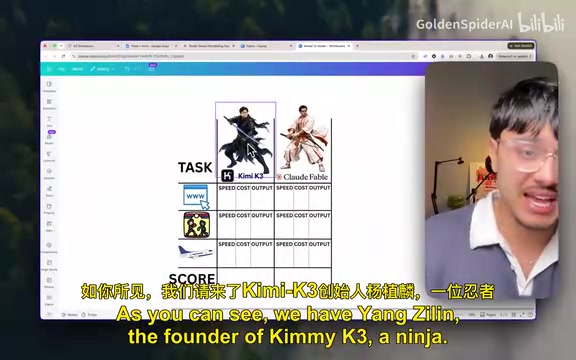
Kimi K3 vs Claude Real-World Test: Near-Equal Performance at 1/8 the Price
Real-world comparison of Kimi K3 vs Claude flagship across e-commerce pages, 3D fighting games, and flight simulators. Kimi K3 delivers 90% output quality at 1/8 the price with faster speeds and local deployment support.
Read more →

·3 min
Kimi K3 Reaches 2.5T Parameters, MiniMax M3 Pro Brewing Simultaneously: China's LLM Arms Race Escalates
Kimi K3 adopts new architecture with 2.5T parameters and 1M token context. MiniMax M3 Pro targets 2.7-3T. OpenAI surpasses 7M users, HY-OCR 1.5 achieves SOTA, Amap launches world model.
Read more →

·3 min
Kimi K3 Hands-On Review: 2.5 Trillion Parameter Open-Source Model Challenges Claude
Kimi K3 hands-on review: Moonshot AI's 2.5T parameter MoE model matches Claude in coding, surpasses it in 3D game development, with API pricing at one-tenth the cost of competitors.
Read more →