#Codex CLI session management
218 related articles

·2 min
tablo: A Desktop Cat Widget That Monitors Your AI Coding Assistants
tablo is a desktop monitoring widget for AI coding assistants, tracking Claude Code and Codex sessions with real-time context progress bars and tool approval alerts.
Read more →

·3 min
Medley: A Deep Dive into the Multi-Agent Orchestration Plugin for Claude Code
Medley is a free Claude Code plugin that decomposes complex dev tasks into live task graphs via /mission, orchestrating multiple AI agents with BYOK model support and built-in review cycles.
Read more →

·2 min
MemoryCustodian: A Repo-Native Persistent Memory Store for Coding AIs
MemoryCustodian is an open-source tool that stores AI memory as Markdown files in your code repo, solving cross-session amnesia for Claude Code, Codex, and other coding assistants.
Read more →

·2 min
BlackFlare: A Powerful macOS Menu Bar Tool for Managing Claude Code and Codex
BlackFlare is a native macOS menu bar app for Claude Code and Codex users. It keeps your Mac awake, sends task notifications, monitors usage, and switches configs—all running locally for privacy.
Read more →

·3 min
Agent-Manager: Unified Management of Multiple AI Coding Assistants with Tmux
Agent-Manager is an open-source Tmux-based terminal tool for managing multiple AI coding agents like Claude Code, Codex, and OpenCode in a unified interface with quick switching and session persistence.
Read more →

·3 min
Agent-Manager: Unified Management of Multiple AI Coding Assistants with Tmux
Agent-Manager is an open-source Tmux-based TUI for managing multiple AI coding agents like Claude Code, Codex, and OpenCode in a unified terminal interface with quick switching and session persistence.
Read more →

·2 min
CodexBar Lite: An Open-Source macOS Menu Bar Tool for Monitoring Codex Usage
CodexBar Lite is a privacy-first macOS menu bar app that reuses Codex CLI sessions for real-time usage monitoring — no API Key or browser cookies needed. Open-source and built for security-conscious developers.
Read more →

·2 min
ADE: An Open-Source Cross-Device Sync Platform That Unifies All Your AI Coding Subscriptions
ADE is a free open-source platform that unifies AI coding subscriptions like Claude, GPT, and Cursor into one app with cross-device session sync across web, desktop, terminal, and mobile.
Read more →

·2 min
Capsomnia: An Open-Source Tool That Uses Caps Lock to Prevent Mac Sleep When Closed
Capsomnia is a free open-source Mac sleep-prevention tool that turns Caps Lock into a physical switch, keeping MacBook awake with lid closed for AI agents, builds, and SSH sessions.
Read more →

·2 min
agent-manager: An Open-Source Tool for Managing Multiple AI Coding Assistants with tmux
agent-manager is a lightweight tmux-based TUI tool that helps developers manage multiple AI coding assistants like Claude Code, Codex, and OpenCode from a unified interface for status monitoring, interaction, and code review.
Read more →

·5 min
Loop Engineering Explained: The New Programming Paradigm Where AI Prompts Itself
Loop Engineering is a paradigm shift in AI usage. Learn how to build automated loops where agents explore, execute, and verify tasks autonomously, with a hands-on e-commerce case study.
Read more →

·4 min
OpenAI Employee Shares How to Build an AI Work Operating System with Codex
OpenAI's Jason Liu shares how he uses ChatGPT Workbench and Codex to build an AI work OS: Chief of Staff automation, persistent threads, Skills/Plugins, browser control, and app-building methodology.
Read more →

·4 min
Fable 5 vs GPT-5.6: An In-Depth Head-to-Head Comparison of Two Top-Tier Coding Models
In-depth comparison of Fable 5 vs GPT-5.6 (Sol) for AI coding. Covering token efficiency, code quality, design, cost, and safety based on $10K+ real usage data.
Read more →

·4 min
Fable 5 vs GPT-5.6: An In-Depth Head-to-Head Comparison of Two Top-Tier Coding Models
In-depth comparison of Fable 5 vs GPT-5.6 (Sol) for AI coding. Real-world data on token efficiency, code quality, design capability, and cost from $10K+ testing.
Read more →

·3 min
Getting Started with Codex: A Zero-to-Hero Guide to AI Agentic Coding Tools
A detailed guide to getting started with Codex and Claude Code—two leading AI agentic coding tools. From environment setup to hands-on practice, even beginners with no coding experience can master AI programming assistants.
Read more →
·4 min
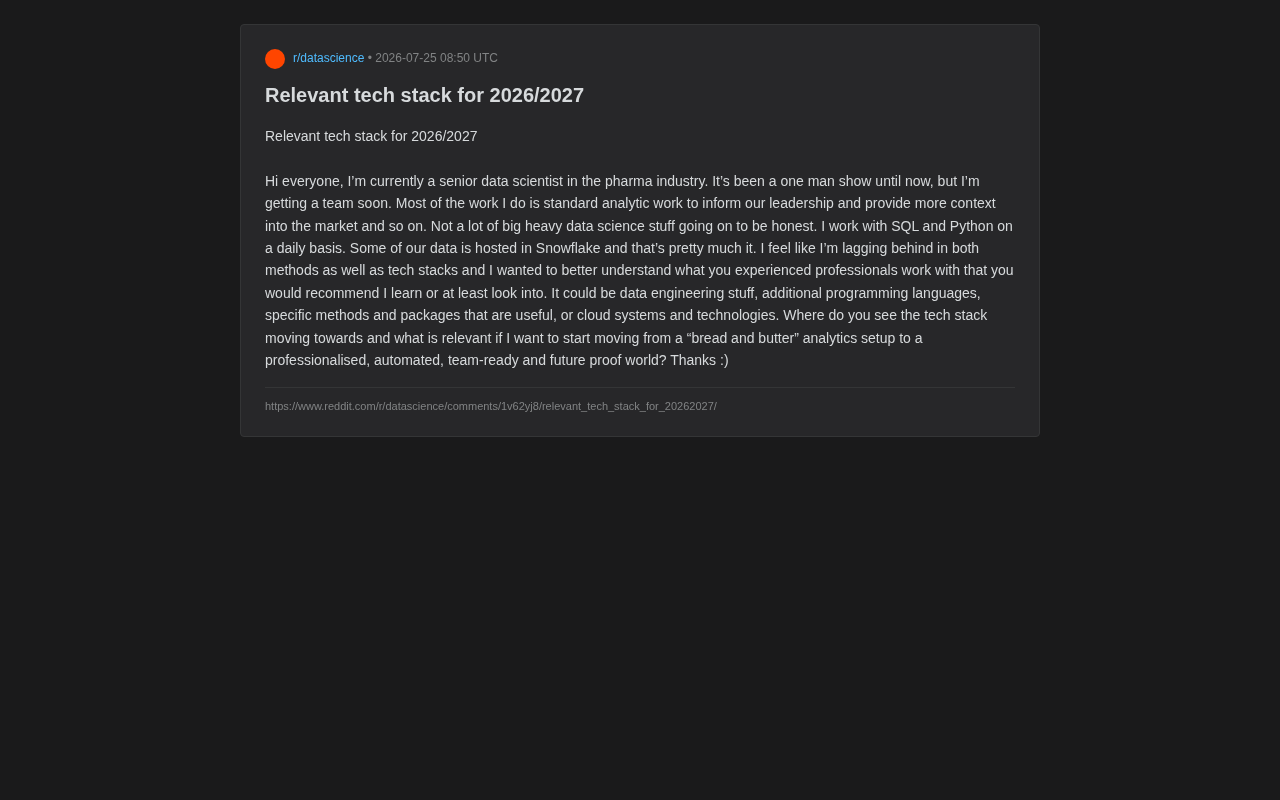
From Solo Analyst to Team Data Platform: A Practical Guide to Leveling Up Your Tech Stack
How should a data scientist upgrade their tech stack when transitioning from IC to team lead? A phased roadmap covering Git, dbt, Snowflake, modern data stack, and generative AI.
Read more →

·5 min
From Chat to Agent: Automating Your Entire Business Workflow with AI Agents
Veteran AI practitioner Remy breaks down the leap from chat models to AI agents: how agents work, the three pillars of context, tools, and skills, MCP connections, and hands-on architecture to make you a 100x employee.
Read more →

·3 min
Herder: The Open-Source Terminal Tool for Unified Management of Multiple AI Coding Agents
Herder is an open-source terminal multiplexer for macOS and Windows that unifies management of Claude Code, Codex, OpenCode, and other AI coding agents—with persistence and remote reconnection.
Read more →

·2 min
GitHub Weekly Trending: 5 AI Coding Tools from Beginner to Advanced
This week's GitHub trending focuses on AI coding: Skills sets rules for Agents, Omniroute is a never-down AI gateway, Code Review Graph is a code knowledge graph, PI is an open-source Agent toolbox, and AI Engineering from Scratch teaches from zero.
Read more →

·2 min
GitHub Weekly Trending: 5 AI Coding Tools from Beginner to Advanced
This week's GitHub trending focuses on AI coding: Skills sets rules for Agents, Omniroute is a never-down AI gateway, Code Review Graph builds a code knowledge graph, PI is an open-source Agent toolkit, and AI Engineering from Scratch teaches from the ground up.
Read more →