#Codex enhancement
75 related articles

·3 min
GLM-5.2 Coming Soon? Domestic GPU Code LLM MUSA Coder Goes Open Source
GLM-5.2 enters internal testing; Moore Threads open-sources MUSA Coder, China's first code LLM trained on domestic GPUs; Google backs Anthropic with $35B in guarantees.
Read more →

·7 min
GPT-5.6 In-Depth Hands-On Review: How Do Soul, Tara, and Luna Really Perform?
OpenAI releases GPT-5.6 preview with three models: flagship Soul, balanced Tara, and lightweight Luna. Based on real KingBench 3 testing, this article breaks down each model's performance on math, front-end, and agentic tasks, and compares them with Anthropic Fable.
Read more →

·5 min
GPT-5.6 Launches: Three Product Lines + Government Approval — The Rules of the AI Industry Are Being Rewritten
OpenAI releases GPT-5.6 with three models — Sol, Terra, Luna — bringing major gains in coding and cybersecurity. More critically: the U.S. government now reviews AI model releases, making frontier AI regulation the new industry norm.
Read more →

·6 min
The Seven Core Components of Building Long-Running AI Agents
An in-depth look at the seven core components for building long-running AI agents: Goal, Evaluator, Verifier, Outer Loop, Orchestration, Observability, and Memory. Master this control system for reliable autonomous agents.
Read more →
GPT-5.5 and Codex: The Paradigm Shift …
·4 min
GPT-5.5 and Codex: The Paradigm Shift from Executor to Director in AI Programming
Deep analysis of an OpenAI interview: how GPT-5.5's multimodal creativity breaks new ground, and how Codex multi-agent workflows are reshaping software development — from executor to director.
Read more →

·3 min
GitHub Daily · July 6: The Agent Skill Ecosystem Explodes — AI Evolves from 'Capable' to 'Expert'
GitHub Trending July 6: Agent skill ecosystem explodes with taste-skill, marketingskills, dotnet/skills; multi-Agent orchestration matures; privacy-first projects thrive.
Read more →

·2 min
Claude Code Deep Dive: Why It's the Most Powerful AI Coding Tool
A deep dive into Claude Code's core strengths: agentic coding, full project context, and auto-debugging — compared against Cursor, Trae, and Codex to help developers choose the best AI coding tool.
Read more →
GPT-5.6 Sol Deep Dive: Major Upgrades …
·3 min
GPT-5.6 Sol Deep Dive: Major Upgrades Across Coding, Science, and Cybersecurity
OpenAI previews GPT-5.6 Sol, featuring major upgrades in coding, scientific research, and cybersecurity alongside its most advanced safety stack yet.
Read more →

·3 min
GitHub Daily · July 4th: The Agent Skills Ecosystem Explodes
GitHub Trending July 4: The AI Agent ecosystem explodes across specs, frameworks, and apps — from agentskills to Vibe-Trading, a full Agent tech stack emerges.
Read more →

·2 min
Codex Skill for Auto-Organizing Plug-and-Play Modules: A Practical Guide to Boosting Research Efficiency
Learn how to use OpenAI Codex Skills to auto-organize deep learning plug-and-play modules, including paper figure location, code extraction, verification, and Feishu doc integration.
Read more →

·3 min
Getting Started with Claude Code: AI Programming Tools Comparison & Core Principles Explained
In-depth comparison of Claude Code, Cursor, and Codex AI programming tools, with practical guidance on AI Coding principles and Vibe Coding methodology to boost development efficiency.
Read more →

·4 min
From Vibe Coding to Enterprise-Grade AI Programming: A Complete Progression Path with Practical Analysis
Deep analysis of Vibe Coding's limitations, comparison of Claude Code vs Codex, and a three-layer AI engineering methodology for progressing from casual AI coding to enterprise-grade development.
Read more →

·2 min
AI Programming Learning Roadmap: A Complete Six-Stage Guide from Beginner to Expert
A systematic breakdown of the six-stage AI programming learning roadmap, from zero-code start to mastering Cursor and professional tools, methodology frameworks, advanced patterns, and project practice.
Read more →

·3 min
CodeGraph: The 50K-Star Open-Source Tool That Cuts AI Coding Token Usage in Half
CodeGraph is a 50K-star open-source tool that builds a code knowledge graph so AI coding assistants can locate code instantly—cutting Token usage by 47%, boosting speed by 22%, all running 100% locally.
Read more →
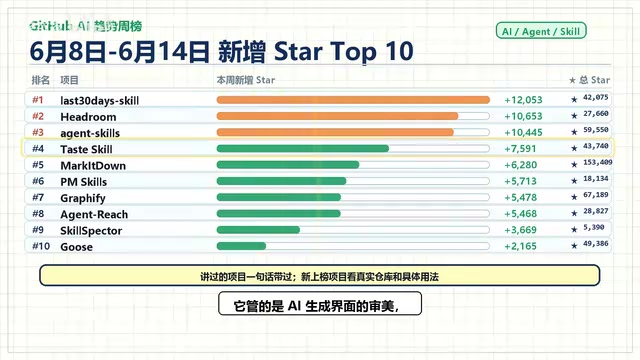
·4 min
GitHub AI Weekly: Agent Ecosystem Support Tools Explode onto the Scene
June 2026 GitHub AI trends: Agent ecosystem middleware tools surge — PM Skills, Agent Reach, Graphify, and Skill Spectre signal the Agent middleware era.
Read more →

·3 min
Pi: A Lightweight AI Coding Agent Framework — Setup & Hands-On Guide
A deep dive into Pi, a minimalist AI coding Agent framework covering multi-model support, extensions, skill loading, and hands-on custom extension building with model mixing strategies.
Read more →

·4 min
HAMAS Multi-Agent Framework in Practice: A Guide to Building 5 AI Personas Working in Harmony
Learn how to build a multi-Agent AI team with the HAMAS framework: 5 role configurations, Skill mechanisms, gradient model scheduling, and solutions for AI hallucination and deception.
Read more →

·4 min
Codex Hands-On Tutorial: From Installation and Configuration to Enterprise-Level Project Development
A complete guide to OpenAI Codex covering installation, CLI interaction, agents.md design, Rules governance, MCP protocol integration, and multi-agent collaboration, with a hands-on RAG customer service project.
Read more →

·2 min
OpenCode In-Depth Review: Hands-On with a Free Open-Source AI Coding Assistant
In-depth review of OpenCode, an open-source AI coding assistant. Covers its three-layer architecture, setup, building a to-do app, and model comparisons with DeepSeek Flash and more.
Read more →

·3 min
Freely Switch Between Claude/DeepSeek and Other AI Models in Codex: CPA Deployment Guide
Learn how to use CLI Proxy API (CPA) to aggregate Claude, DeepSeek, Grok, and Gemini models into OpenAI Codex via VPS deployment, Docker setup, and Codex++ integration.
Read more →